Why BGPT?
logo

Review papers with raw data transparency

Quickly verify claims by accessing the underlying experimental data and figures.


Press Enter ↵ to solve


    Fuel Your Discoveries


     Quick Explanation


    Gut–brain interactions: a 4-route mechanistic map
    This review organizes gut→brain signaling into hormonal, neuropod/neuronal, microbiome/metabolite, and immune pathways, then links these routes to disease contexts (IBS/IBD, PD/MS, depression/schizophrenia, obesity) and discusses examples of gut–brain–targeted pharmacology (GLP-1R agonists; GUCY2C agonists).


     Long Explanation


    Paper Review (JCI): Mechanisms and clinical implications of gut-brain interactions
    DOI: 10.1172/JCI196346
    Type: narrative mechanistic review (no original dataset collected by the authors).
    Known (from the paper) vs inferred vs uncertain
    • Known (synthesized evidence): the review proposes four main signaling modalities for gut–brain communication—hormonal, neuropod/neuronal, microbiome/metabolite, and immune—each with mechanistic subroutes.
    • Inferred (mechanistic links across systems): the review frequently connects pathway-level findings (e.g., enteroendocrine/neuropod excitability; immune permeability/inflammation) to disease phenomenology (IBS symptoms; PD prodromal gut changes). These are plausible but rely on cross-study inference rather than a single causal human experiment.
    • Uncertain / actively contested: for some disease directions (notably PD), there is explicit controversy about whether α-synuclein pathology spreads primarily gut→brain or brain→gut.
    Paper-level score radar (from provided extraction)
    These score values are taken from the provided extraction metadata (not computed from the full manuscript text).
    1) Mechanisms: a structured decomposition (the paper’s core contribution)
    Mechanism class Primary gut sources Primary brain/ENS routes What the review claims it enables
    Hormonal Enteroendocrine cells (EECs) releasing gut hormones (e.g., GLP-1, ghrelin, CCK, PYY). CNS/ENS receptors; circumvention of BBB via circumventricular organs and other routes are discussed. Coordination of feeding/metabolism and peripheral-to-central state signaling.
    Neuropod-mediated direct signaling EEC-derived neuropod cells with close neural coupling. Vagal afferents for proximal nutritive info; spinal/DRG pathways for distal mechanosensory signals. Fast luminal sensing → neural coding for motility and visceral pain pathways.  
    Microbiome/metabolite signaling Microbes and metabolites that affect EECs, epithelial integrity, and immune tone. Local epithelial effects and systemic immune/metabolic pathways. Diet–microbiome state shifts that alter gut-to-brain circuits (not yet uniquely species-causative in DGBIs).
    Immune signaling Gut immune surveillance (resident immune cells) and cytokine production under barrier disruption. Cytokines/immune cell trafficking to brain-relevant sites; neuroinflammation pathways.   Explains stress-linked visceral hypersensitivity and sickness behavior phenotypes.
    2) Disease contexts: where the framework is used (and where it’s weakest)
    The heatmap is a text-parsing transformation of the review’s visible Table 1 excerpt (binary flags for whether each mechanism category is listed for each disease in the excerpt).
    3) Gut-brain-directed pharmacotherapy: what’s mechanistically argued vs what remains open
    3a) GUCY2C agonists (example: linaclotide) and neuropod/DRG pain circuits
    • The review argues that guanylyl cyclase C agonists target GUCY2C receptors on neuropod cells to inhibit sensory neuron excitability, reducing visceral pain in IBS with constipation.  
    3b) GLP-1 receptor agonists and vagal/CNS incretin circuits
    • The review presents GLP-1R agonists as gut hormone pathway mimics, citing the presence of GLP-1 receptors in brain-related sites (including circumventricular organs) and vagal links.
    • It also notes mechanistic uncertainties: efficacy likely reflects multiple widespread effects (e.g., delayed gastric emptying and glucose changes), and not all GLP-1 effects can be reduced to a single circuit.
    • Separate lines of work support the plausibility that peripheral hormones can access CNS through BBB exceptions and receptor-mediated pathways, consistent with the review’s mechanistic gating discussion.
    4) Skeptical critique: what this review does well, and where it’s vulnerable
    Strengths (mechanistic clarity + explicit uncertainty)
    • Framework-driven synthesis: the four-pathway organization helps reduce narrative sprawl and encourages circuit-level thinking.
    • Mechanistic anchors to known biology: ENS diversity, gut neuroanatomy, and enteroendocrine/neuro-sensing are discussed with references to specific experimental paradigms.
    • Explicit caveats about causality: the review notes the difficulty of proving causative microbial species for DGBIs and highlights reproducibility/translation challenges.
    Vulnerabilities / blind spots to watch
    • Review-level evidence stacking: narrative synthesis can overweight prominent mechanistic stories and underweight null/negative results unless the author explicitly performs systematic risk-of-bias screening. The provided text does not show a PRISMA-like protocol.
    • Species translation risk: the review uses extensive mouse/rat mechanistic literature; gut innervation and receptor distribution can differ across species, and the text itself flags that extent of innervation may vary.
    • Neural vs paracrine precision: for EEC→nerve interactions, the review describes that distance/contact and synaptic classification can be debated, implying that “directness” may be pathway- and subset-specific.
    5) What evidence would most convincingly falsify key claims?
    • Neuropod/direct-route necessity: demonstrate that disabling neuropod-linked afferent signaling does not alter visceral pain/neuronal coding in relevant models. The review points to neuropod hyperexcitability as a mechanistic target, so direct-route necessity is a high-value falsification target.
    • Microbiome causality in DGBIs: identify consistent causal species/metabolites across cohorts and show that targeted disruption (not just correlation) reverses DGBI-like gut–brain phenotypes. The review explicitly says no unique causative species is proven yet, so “proof of causality” is the falsification axis for the microbiome narrative.
    • PD directionality: in humans and mechanistic models, show that the observed α-synuclein propagation direction is invariant to intervention and measurement, contradicting gut→brain vs brain→gut alternatives. The review flags this controversy, meaning clean causal direction tests are essential.


    Feedback:   

    Updated: April 20, 2026

    BGPT Paper Review


    Study Novelty

    70%

    Novelty is moderate: while it refreshes the field by emphasizing neuropod/EEC direct signaling and mapping four modalities across multiple diseases, the overall framework resembles earlier gut–brain axis paradigms rather than being fully new.


    Scientific Quality

    90%

    High quality for a narrative review: it uses a coherent mechanistic taxonomy, anchors claims to mechanistic studies, and explicitly notes key controversies/unknowns (e.g., PD directionality; microbiome causality in DGBIs). Main limitation is lack of explicit systematic review protocol in the provided excerpt.


    Study Generality

    80%

    General in that it applies a unified communication framework to multiple organs and disease categories, but not maximal because it focuses on selected mechanisms and emphasizes particular therapeutic exemplars (GLP-1R agonists; GUCY2C agonists).


    Study Usefulness

    90%

    Practically useful as a mechanistic roadmap: it helps researchers identify which gut-to-brain route to test in which disease context and provides plausible mechanistic handles for experimentally distinguishing routes.


    Study Reproducibility

    70%

    Moderate reproducibility for a narrative review: it cites many mechanistic studies, but reproducibility of the review’s synthesis is limited by the absence of explicit systematic inclusion criteria and by heterogeneity among cited studies (especially microbiome methods).


    Explanatory Depth

    90%

    Deep mechanistic explanatory value: the review discusses the ENS architecture, neural afferent routes, enteroendocrine subtypes, and immune/barrier logic, then connects these to disease phenotypes and therapeutic circuit targeting.


    🎁 Authors: Collect 500 Free Science Tokens (≈ $50.0 USD)

    Claim My Author Tokens

    Use for 125 days of free BGPT access (4 tokens = 1 day) or trade/sell (≈ $50.0 USD)

     Top Data Sources ExportMCP


     Analysis Wizard


    Parses the review’s Table 1 mechanism labels into a structured disease×mechanism matrix, then visualizes mechanism emphasis as heatmaps and outputs a CSV for downstream hypothesis testing.


     Hypothesis Graveyard


    The “single causal microbial species” explanation for DGBIs: the review states no unique causative species has been proven and that microbiome effects appear heterogeneous across studies and likely depend on diet/context.


    A purely hormonal-only gut→brain model (excluding immune and direct neural routes): the review emphasizes multiple distinct categories and argues immune/barrier and direct EEC–neuron logic contribute meaningfully, making a single-route hormonal story incomplete for the diseases discussed.

     Science Art


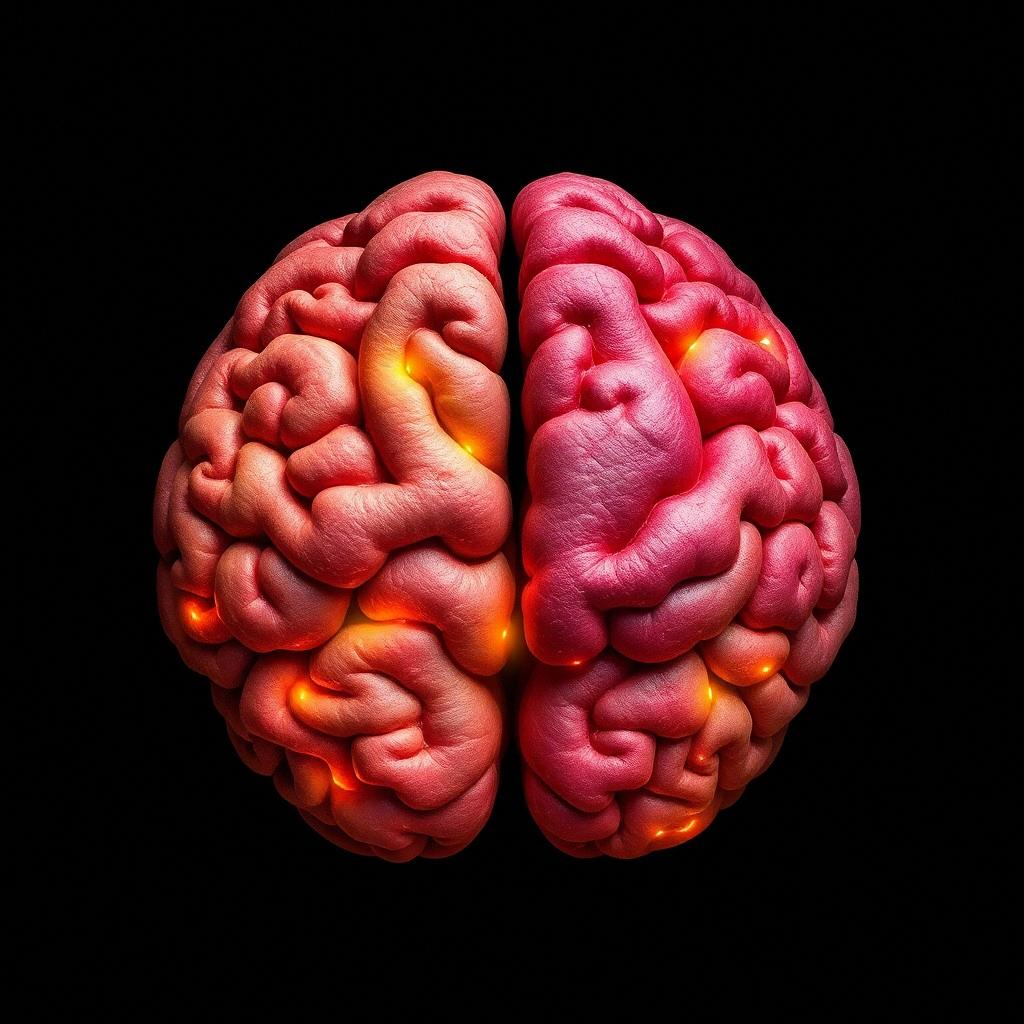
    Paper Review: Mechanisms and clinical implications of gut-brain interactions Science Art

     Science Movie


    Make a narrated HD Science movie for this answer ($32 per minute)


     Discussion


    Get Ahead With Science Insights

    Custom summaries of the latest cutting edge Science research. Every Friday. No Ads.


    My BGPT