Check each claim against its experiments, reported results, scope, and stated limitations.Know what the science actually supports before you trust the answer.
Press Enter ↵ to start review
Explore by Goal
"If the brain were so simple we could understand it, we would be so simple we couldn't."
- Lyall Watson
Quick Explanation
Copied
This bioRxiv preprint introduces mechanical shearing for ASLM, scanning samples simultaneously along S and Z' axes to eliminate computational shearing, interpolation, and data inflation, achieving ~460 nm isotropic resolution over a 774 x 435 µm field of view (~3.2-fold larger than prior ASLM builds) with demonstrations on beads, cleared human kidney, and expanded mouse liver tissue [10.1101/2024.04.10.588892].
Long Explanation
Core Contribution
The Dean laboratory presents a mechanically sheared acquisition format for upright/open-top light-sheet microscopy: instead of scanning the sample only obliquely (S axis) and later computationally shearing stacked images into spatial register, the specimen is scanned simultaneously along S and Z', placing data in its correct spatial context from acquisition [10.1101/2024.04.10.588892]. This removes interpolation (which acts as a low-pass filter), eliminates empty-space data inflation, and avoids post-processing delays.
Key Quantitative Evidence
Using 200 nm beads (n=713), the upright diSPIM-like ASLM achieved mean FWHM of ~460 nm (X), ~460 nm (Y), and ~483 nm (Z) across a 774.14 x 435.46 µm field of view — ~3.2-fold larger than previous ASLM variants [10.1101/2024.04.10.588892]. A controlled head-to-head comparison showed computationally sheared data had slightly better lateral resolution (473/468 nm) but significantly worse axial resolution (723 nm vs 632 nm mechanically sheared), attributed to interpolation. Benchmarks (Table 1) show GPU shearing fails beyond ~2500 slices due to VRAM limits, while CPU methods take up to ~5964 s for large stacks [10.1101/2024.04.10.588892].
Biological Demonstrations
Applications include BABB-cleared FLARE-stained human kidney (whole nephron in one acquisition, erythrocyte biconcave morphology resolved) and 4.5x protein-retention expanded mouse liver with melanoma micro-metastases, resolving nucleoli and myosin IIA-labeled metastatic clusters [10.1101/2024.04.10.588892].
Critical Assessment
Strengths: a properly controlled bead comparison isolating the shearing variable, quantitative PSF mapping across the full chip, and practical benchmarking of existing shearing software (LLSM5D, Python, CLIJ). Blind spots: (1) the preprint is not peer-reviewed; (2) resolution gains in the head-to-head are modest in Z and lateral values slightly favor computational shearing — the authors attribute this to optical alignment differences, but alignment was not independently verified; (3) specimen thickness is limited to ~2 mm by NA 0.7 objective working distances; (4) no biological replication or downstream quantitative biology is demonstrated — all applications are illustrative; (5) the claim that multi-axis scanning was 'surprisingly not utilized' previously is asserted without exhaustive prior-art discussion; (6) resolution in BABB (~330 nm) is anticipated but not directly measured. Related work (AS-DiLS, ~2.5 µm near-isotropic resolution over centimeter ranges; MCT-ASLM multiscale platform) shows the ASLM space is rapidly evolving, and mechanical shearing is complementary rather than superior in throughput or range [10.1101/2025.10.13.682248] [10.1101/2025.01.23.634600].
Bottom Line
A simple, elegant, and well-characterized engineering improvement that meaningfully simplifies oblique light-sheet workflows; its broad impact depends on adoption and on demonstrations beyond proof-of-principle imaging.
Author Reviews
Feedback:
Updated: September 18, 2026
BGPT Paper Review
Study Novelty
60%
Mechanical (multi-axis simultaneous) shearing is an incremental engineering innovation — the concept is simple vector addition of stage motions — but its first application to ASLM, plus the demonstrated FOV increase and interpolation-free acquisition, is genuinely new to light-sheet microscopy.
Scientific Quality
70%
Controlled bead comparisons, adequate n=713 statistics, software benchmarking, and quantitative PSF mapping are strengths. Weakened by non-peer-reviewed preprint status, unverified alignment confound in the shearing comparison, illustrative-only biology, and an anticipated-but-unmeasured BABB resolution.
Study Generality
70%
The technique applies to any oblique-scan light-sheet geometry (open-top, upright, diSPIM-like) and benefits tissue clearing and expansion workflows broadly, though demonstrated only on beads, kidney, and liver.
Study Usefulness
80%
Eliminates a real, quantified bottleneck (up to ~100 min CPU shearing per stack) and preserves axial resolution; directly useful for labs building or operating ASLM/open-top LSFMs.
Study Reproducibility
70%
Explanatory Depth
60%
Clear mechanistic explanation of why interpolation degrades axial resolution (low-pass filtering in frequency space) and geometric rationale for oblique vs axial scanning, but no theoretical/PSF modeling beyond Zemax simulations.
We'll email you the results when your analysis is finished.
Hypothesis Graveyard
Computational shearing inherently destroys resolution — falsified partly by the authors' own data: lateral FWHM was statistically slightly better after computational shearing, isolating axial interpolation as the sole resolution cost.
Science Art
Science Movie
Make a narrated HD Science movie for this answer ($32 per minute)

 Explore by Goal
 Quick Explanation
 Long Explanation
 Top Data Sources
 Ask a Follow-Up
 Key Insight
 Keep Exploring
 Hypothesis Graveyard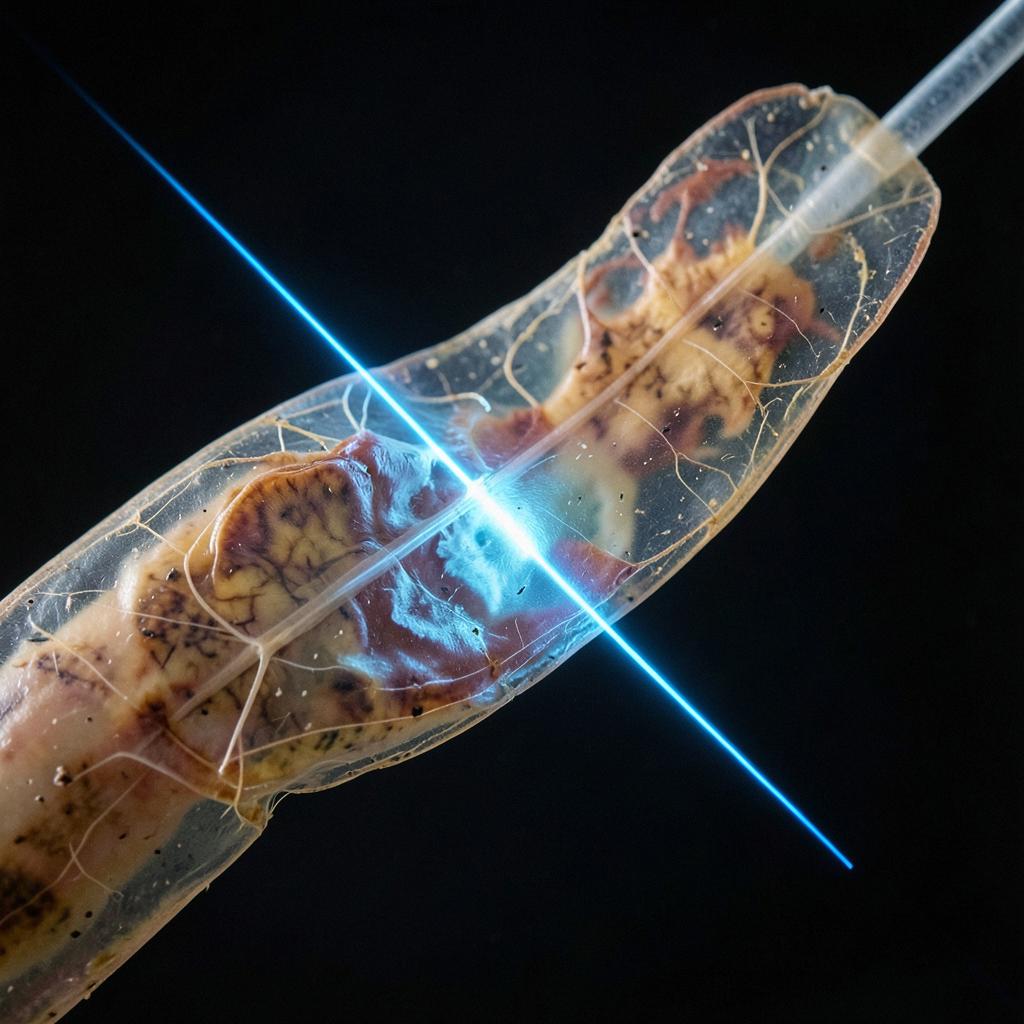
 Discussion