Why BGPT?
logo

Review papers with raw data transparency

Quickly verify claims by accessing the underlying experimental data and figures.


Press Enter ↵ to solve


    Fuel Your Discoveries


     Quick Explanation


    Paper reviewed
    “Marine Natural Products from Tunicates and Their Associated Microbes” (Mar. Drugs, 2021) is a narrative, database-augmented synthesis emphasizing (i) chemical diversity in tunicates and (ii) the ecological/biogenetic plausibility that many metabolites originate from tunicate-associated microbes—highlighting several clinically used molecules such as trabectedin/ET-743 and its microbial origin claims.
    Main strengths: wide scope, explicit database mining workflow description, and recurring “host–microbe chemical defense” framing with concrete compound examples.
    Main scientific concern: as a narrative review, it inherits uneven primary-data quality, possible taxonomic/attribution errors (host vs symbiont vs diet), and does not provide a quantitative, quality-weighted meta-synthesis; many biological activities are presented without uniform assay context or normalized potency comparisons.
    DOI: 10.3390/md19060308
    Primary paper cited:


     Long Explanation


    Marine Natural Products from Tunicates & Their Microbes — Scientific Review Critique
    Mar. Drugs review (2021-05-26), DOI 10.3390/md19060308.
    Known vs inferred vs uncertain (what the paper claims)
    • Known (with citation basis): Tunicates and associated microbes are repeatedly reported to produce diverse bioactive secondary metabolites (antimicrobial/anticancer/antiviral/antifouling examples are enumerated in the review).
    • Inferred (and biologically plausible): Symbiotic bacteria/fungi/cyanobacteria can be sources of metabolites observed in tunicates, including classical “microbial origin” narratives for certain pigments and drugs (e.g., trabectedin/ET-743 discussed as associated with microbial symbionts).
    • Uncertain / not fully resolved: Whether a given metabolite in tunicate tissue is biosynthesized by the symbiont vs transferred from diet vs produced by host pathways is often difficult to prove; the review notes research gaps and hurdles (taxonomic uncertainty, low quantities, instability, and potential artifacts) that can degrade attribution confidence.
    Counts are computed only from the provided “list_of_extracted_data” entries in the prompt (not from the full paper tables), and many examples carry multiple bioactivity labels (so a single compound can increment multiple categories).
    1) What the review contributes (strengths)
    • Integrated scope: Covers tunicate ecology, chemical defense logic, antimicrobial/antifungal, antiviral, anticancer/antitumor, antifouling/antideterrent, and also highlights invasive species exploitation and stated research gaps.
    • Explicit database mining description: The review states it explored 20 public chemical databases and lists the tunicate-related records used to populate tables for known/unknown compound counts.
    • Mechanistic/biological framing: The review repeatedly ties metabolite classes to defense functions (predators, pathogens, fouling, and environmental stress) and discusses host–microbe symbiosis as a route to chemical innovation.
    2) Scientific quality & critical checks
    2.1 Narrative review limitations (major)
    • No quantitative, quality-weighted synthesis: Potency values (e.g., IC50/MIC/EC50) are scattered across different assay formats and not normalized, making direct cross-compound comparisons weak. This is consistent with a narrative review rather than a systematic review/meta-analysis.
    • Attribution problem (host vs symbiont vs diet): The review itself states that microbial acquisition mechanisms and pigment biosynthesis by associated microbes are not fully resolved, and it highlights taxonomic/identification hurdles.
    • Taxonomic uncertainty affects reproducibility: Misidentification of tunicate hosts or symbionts can cascade into “metabolite origin” claims, especially when coupled with low quantities and labile compounds producing artifacts.
    2.2 Credibility anchors (where the review aligns with stronger primary evidence)
    • Case study logic (trabectedin/ET-743): The review states trabectedin is approved and discusses microbial association for its origin. In the broader literature, trabectedin’s ET-743 production is strongly linked to an uncultivated/associated bacterium in tunicate consortia via metagenomic/meta-omic work; one representative mechanistic anchor is the identification and characterization of the bacterial endosymbiont specialized for ET-743 production.
    • Known tunicate ecology constraints: Tunicates are filter feeders shaping particulate flux, providing a plausible ecological context for host–microbe chemical defense and for consistent recruitment of microbes.
    3) Evidence structure diagram (host–microbe–metabolite–function)
    This diagram is a faithful abstraction of the review’s logic: symbiosis/colonization → metabolites → bioactivity; and it explicitly marks mechanistic attribution bottlenecks (the review notes unresolved pigment acquisition/biosynthesis and multiple extraction/identification issues).
    4) Targeted critique: what would most likely change the review’s practical conclusions?
    • Stronger, standardized attribution assays: Many claims hinge on “origin” (host vs symbiont vs uncultivated producer). If future studies employ multi-evidence attribution (stable isotope labeling of biosynthetic precursors, genomic/metatranscriptomic linkage, and controlled isolation of producer strains/consortia), the ranking of “microbial origin” confidence for specific metabolites could shift. The current review explicitly acknowledges gaps in acquisition mechanisms.
    • Reproducibility and assay harmonization: If standardized assay panels and orthogonal potency measurement were applied consistently (instead of heterogeneous methods like disk diffusion vs MTT variants), the apparent breadth of bioactivity might narrow or broaden. The review’s tables show multiple assay formats and varied concentration reporting.
    • Database mining pitfalls: Public databases can contain misannotations, obsolete synonym mappings, and partial bioactivity curation; if tunicate-related keyword searches miss relevant records or overcount duplicates, the database-derived “known vs unknown” counts could be biased. The review states the database search approach and populates tables from database records (not literature references within those specific tables).
    5) What’s missing (blind spots)
    • Quantitative synthesis is absent: No meta-analysis, no effect-size aggregation, no formal risk-of-bias / assay-quality scoring across primary reports. This limits confidence about whether reported compounds are truly more “potent” than other marine sources.
    • Uncertainty in microbial identity/consortia composition: “Associated microbes” are not always shown to be the causal producers in the reviewed snippets; changes in culture conditions, lab adaptation, or depuration can alter microbial community composition and therefore metabolite output. The review’s own identification hurdles increase this concern.
    • Assay selection & positive-result emphasis: Reviews typically emphasize “interesting” bioactivities; compounds with null results may be underrepresented, inflating perceived coverage. The review does not provide a complete negative-data inventory.
    6) Mini-table of highlighted clinical/near-clinical anchors mentioned in the review excerpt
    Below table is restricted to compounds explicitly present in the paper text you provided (e.g., trabectedin/ET-743 and other named clinical-stage examples).
    Compound Host tunicate (as stated) Bioactivity / stage Evidence note (from cited primary work)
    Trabectedin (ET-743 / Ecteinascidin; Yondelis®) Ecteinascidia turbinata (review states) Approved anticancer; review discusses microbial association Microbial origin supported by endosymbiont identification for ET-743 production (primary study anchor).
    Aplidin® (Plitidepsin) Aplidium albicans (review states) Phase II clinical trials (review states) The review states phase II status; the primary mechanism and stage details are not re-validated within this excerpt beyond what the review claims.
    Author Reviews (BGPT)


    Feedback:   

    Updated: April 22, 2026

    BGPT Paper Review


    Study Novelty

    70%

    Novelty is moderate: it synthesizes an established research direction (tunicate natural products and microbial symbiont contributions) but adds database-mining across 20 chemical databases and consolidates multiple compound classes and application areas into one narrative review framework.


    Scientific Quality

    60%

    Scientific quality is constrained by the narrative-review format: heterogeneous assay methods and sparse standardized potency comparisons reduce evidential strength for cross-compound conclusions. The review is still informative and appropriately acknowledges extraction/identification hurdles that can affect metabolite origin claims.


    Study Generality

    70%

    Generalizable as a map of compound classes and host–microbe framing for tunicate-associated natural products, but limited as a decision engine for specific drug leads because it does not perform standardized quality weighting or quantitative comparisons.


    Study Usefulness

    80%

    High practical usefulness for researchers looking for structured entry points: named tunicate species, compound classes, application categories, and a described database search strategy that can support follow-up targeting.


    Study Reproducibility

    60%

    Moderate reproducibility: database sources and keyword strategy are described, but the review is secondary and many data points depend on the original primary assay details (which are not re-normalized here).


    Explanatory Depth

    70%

    Explanatory depth is moderate-to-high for ecological/biogenetic framing (defense roles, symbiosis narratives, and acquisition/biosynthesis uncertainties), but it does not deeply mechanistically resolve every host–microbe attribution claim.


    🎁 Authors: Collect 197 Free Science Tokens (≈ $19.7 USD)

    Claim My Author Tokens

    Use for 49 days of free BGPT access (4 tokens = 1 day) or trade/sell (≈ $19.7 USD)

     Top Data Sources ExportMCP


     Analysis Wizard


    It parses the review’s compound/species/activity tables you supply, normalizes activity units and assay labels, then outputs a ranked, origin-evidence-tagged compound matrix ready for downstream filtering and hypothesis testing.


     Hypothesis Graveyard


    “All tunicate metabolites are microbial in origin.” The review itself highlights unresolved acquisition mechanisms and identification hurdles, implying the blanket claim is too strong across metabolites and life stages.


    “Antifouling/antimicrobial assays directly predict clinical anticancer utility.” Because the review compiles heterogeneous assays without standardized potency/targets across endpoints, any presumed cross-endpoint predictive mapping is likely weak and could fail when mechanism-specific validation is applied.

     Science Art


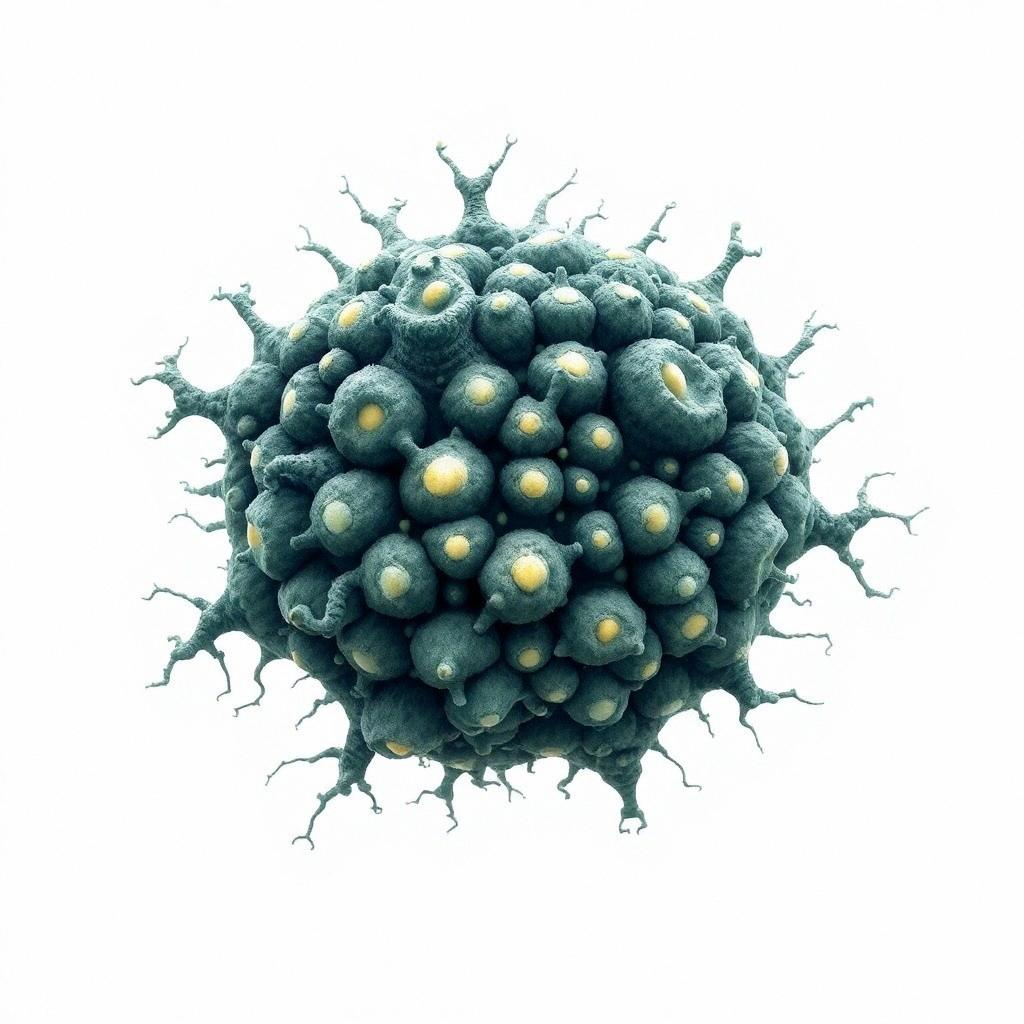
    Paper Review: Marine Natural Products from Tunicates and Their Associated Microbes Science Art

     Science Movie


    Make a narrated HD Science movie for this answer ($32 per minute)


     Discussion


    Get Ahead With Science Insights

    Custom summaries of the latest cutting edge Science research. Every Friday. No Ads.


    My BGPT