Check a paper's claims against linked experiments, exact results, stated scope, and limitations.Know what falsifiable science actually supports before you trust the answer.
Press Enter ↵ to search evidence
Explore by Goal
"The scientific man does not aim at an immediate result. He does not expect that his advanced ideas will be readily taken up. His work is like that of the planter - for the future. His duty is to lay the foundation for those who are to come, and point the way."
- Nikola Tesla
Quick Explanation
Copied
This 2026 Ukrainian Biochemical Journal narrative review competently synthesizes Kearns–Sayre syndrome (KSS) mechanisms, diagnostics (long-range PCR + NGS), and preclinical mtDNA-editing therapies, but its non-systematic design and reliance on older foundational sources limit novelty and reproducibility .
Long Explanation
What the review reports
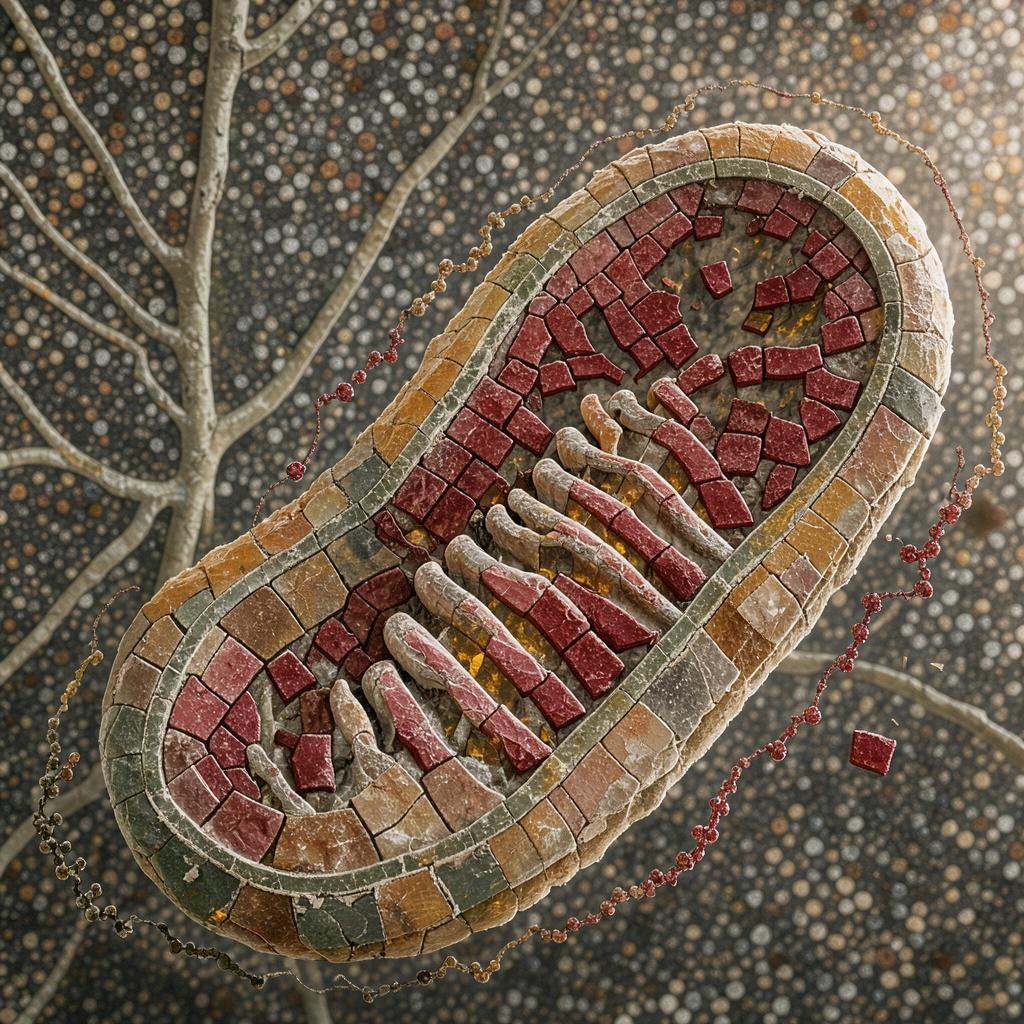
Syrvatka et al. frame KSS, Pearson syndrome, and CPEO as timing-dependent phenotypes of sporadic, large-scale single mtDNA deletions (typically the 4,997-bp 'common' deletion; >150 deletions reported), producing a triad of progressive external ophthalmoplegia, pigmentary retinopathy, and cardiac conduction block before age 20 . The mechanistic chain — complexes I/IV dysfunction → ROS (including reverse electron transport) → anaerobic glycolysis/lactic acidosis → cardiolipin oxidation, mPTP opening, apoptosis — is drawn largely from Turton et al. and Murphy's classic ROS framework .
Primary evidence underlying the field, contextualized here: the original 7-patient series found deletions of 2.0–7.0 kb in every KSS patient and none in controls ; single-patient studies report high heteroplasmy (84.65% for a novel 7,629-bp deletion ; 86–93% for a 5,025-bp deletion ). The review's treatment section accurately stresses that nuclease-based heteroplasmy correction (ZFNs, TALENs, mitochondria-targeted endonucleases) remains preclinical .
Critical assessment
Strengths: unusually candid limitations section (narrative design, KSS rarity, preclinical therapeutics); correct diagnostic algorithm (blood NGS → muscle if negative, to catch low-heteroplasmy false negatives); no funding or COI. Weaknesses: no PRISMA flow, no search-date transparency per source; epidemiology is internally inconsistent (prevalence quoted as 1.6/100,000 in Finns, 1–3/1,000,000 globally, then restated in conclusions as 1–3/100,000 — a likely transcription error); the 2022–2026 search window is contradicted by heavy reliance on 1995–2009 foundational sources; several sentences contain typographic noise ("Changings", "ternally inherited Leigh syndrome"), indicating weak editorial control. Notably, the review omits relevant primary records BGPT holds, e.g., KSS presenting as 2-oxoadipic aciduria , and nuclear-gene causes of multiple deletions (DGUOK) that broaden the differential . What would change the assessment: a systematic update showing LR-PCR/NGS has been superseded by muscle-free high-depth blood NGS thresholds, or human evidence for heteroplasmy-shifting therapy. Confidence: moderate — grounded in the full text, but novelty is low since most content recapitulates La Morgia, Viscomi/Zeviani, and GeneReviews.
Feedback:
Updated: November 22, 2026
BGPT Paper Review
Study Novelty
30%
A competent synthesis but no new data, classification, or hypothesis; content largely recapitulates La Morgia 2020, Viscomi/Zeviani 2020, and GeneReviews, with a 2022–2026 literature refresh as its main value-add.
Scientific Quality
40%
Internal inconsistencies (prevalence quoted as 1–3/1,000,000 vs restated 1–100,000), typographic noise, non-systematic search, and reliance on old sources despite a recent search window reduce quality despite an honest limitations section.
Study Generality
50%
Uses KSS as a model for all large-scale mtDNA deletion disorders, giving moderate breadth within mitochondrial medicine, but no cross-domain insight beyond rare-disease genetics.
Study Usefulness
50%
Useful as an accessible clinical/biochemical primer for trainees and clinicians in Ukrainian-language contexts; of limited value to specialists already familiar with GeneReviews and J Intern Med reviews.
Study Reproducibility
30%
Narrative reviews are inherently hard to reproduce: no PRISMA flow, no per-source search dates, no inclusion/exclusion criteria; conclusions cannot be independently reconstructed.
Explanatory Depth
50%
Mechanistic chain (complex I/IV defect → ROS modes 1/2 → lactic acidosis → cardiolipin oxidation → mPTP/apoptosis) is well explained but synthesized from prior reviews rather than critically re-analyzed.
We'll email you the results when your analysis is finished.
Hypothesis Graveyard
'ROS is the primary driver of KSS progression' — weakened by PolgA mutator-mouse data showing accelerated aging/apoptosis WITHOUT elevated oxidative stress markers, implying mtDNA mutation accumulation itself can be causal upstream of ROS.
'KSS is purely a mtDNA-deletion disease' — weakened by DGUOK/POLG nuclear-mutation phenocopies producing multiple deletions with PEO, showing nuclear maintenance genes must be excluded before attributing single-deletion causality.

 Explore by Goal
 Quick Explanation
 Long Explanation
 Top Data Sources
 Ask a Follow-Up
 Key Insight
 Keep Exploring
 Hypothesis Graveyard
 Potential Experiments
 Discussion
