Check a paper's claims against linked experiments, exact results, stated scope, and limitations.Know what falsifiable science actually supports before you trust the answer.
Press Enter ↵ to search evidence
Explore by Goal
"The universe is not only queerer than we suppose, but queerer than we can suppose."
- J.B.S. Haldane
Quick Answer
Copied
Seeman's 2003 invited review remains a high-quality, mechanistically deep synthesis arguing that osteoporosis arises from heterogeneous growth- and age-related structural failures—not BMD alone—with estrogen-driven remodeling imbalance and limited periosteal apposition explaining female fragility, conclusions still supported by later RANKL-pathway and ferroptosis-era research.
Long Answer
Core Argument and Evidence Structure
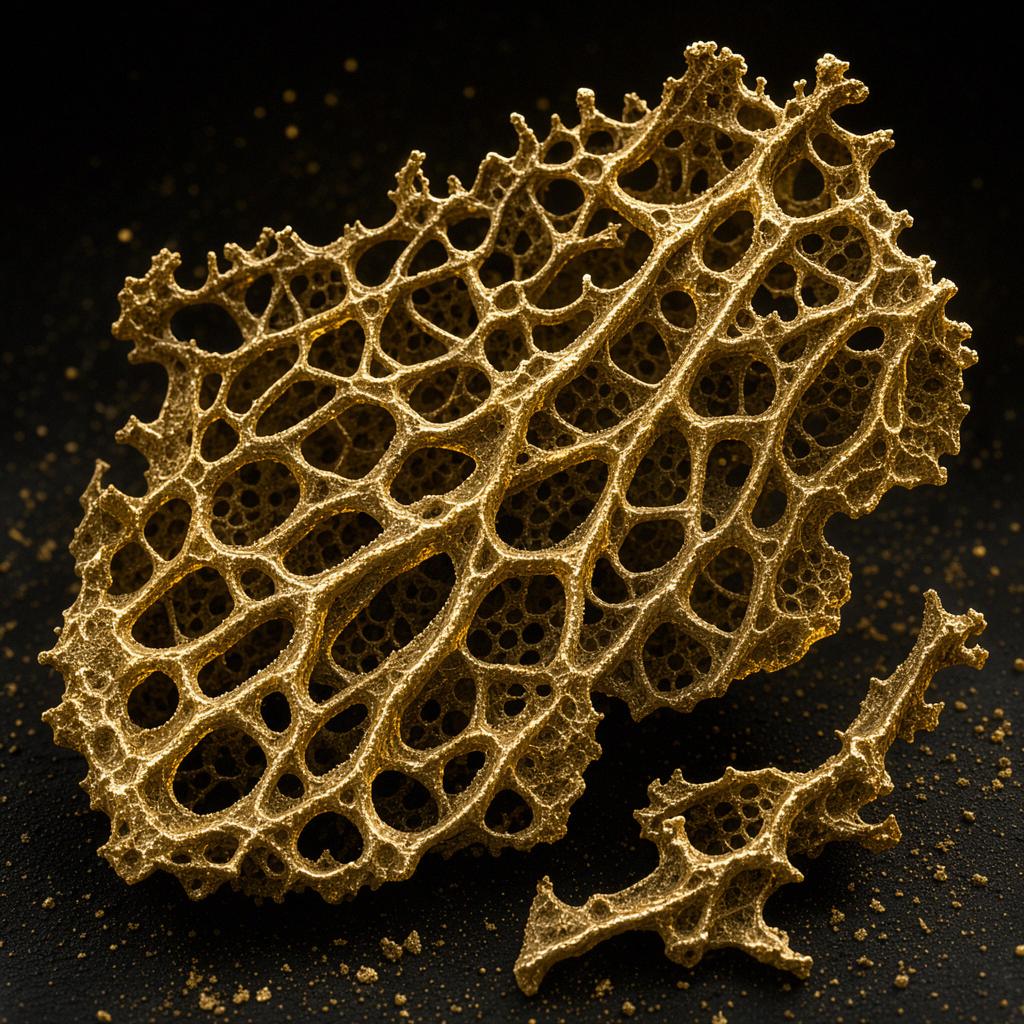
Seeman's invited review (J Appl Physiol, 2003; 76 references) builds a multifactorial model: fragility fractures reflect deficits in bone size, geometry, trabecular architecture, cortical porosity, mineralization, microdamage, and periosteal apposition—not BMD alone . Key mechanistic claims: (1) peak volumetric BMD is sex-independent—men's advantage is size and geometry, not density; (2) estrogen withdrawal at menopause raises remodeling rate and deepens the negative BMU balance; (3) women lose more net bone because they gain less periosteally, not because they resorb more endosteally; (4) men lose bone mainly via trabecular thinning from reduced formation, preserving connectivity.
Validation by Subsequent Work
The review's RANKL–RANK–OPG osteoclastogenesis framework (based on OPG/RANKL knockout phenotypes: osteopetrosis vs osteoporosis) was correct and became therapeutically central . Newer layers the review could not anticipate include ferroptosis—iron-mediated lipid peroxidation impairing osteoblast function and promoting osteoclasts via NF-κB/MAPK .
Limitations and Blind Spots
Narrative design: no systematic search; selective emphasis on the author's own family/cohort studies (daughters of fracture mothers) is possible.
Genetics section correctly skeptical: candidate-gene associations were inconsistent and no genotype-stratified randomized trials existed; still true in substance, but GWAS-era progress postdates it.
Cross-species inference: murine OPG/RANKL knockouts informed human claims despite species differences.
Unaddressed era limits: no high-resolution HR-pQCT data, no microbiome/immune (Th17/Treg) regulation, no ferroptosis mechanisms.
Confidence: high that the review's central model was validated; moderate on periosteal-apposition quantification (surface-based histomorphometry is invasive). Falsification of the multifactorial model would require showing one determinant fully predicts fracture across populations, or that RANKL/OPG manipulation does not alter remodeling—neither has occurred.
Feedback:
Updated: November 22, 2026
BGPT Paper Review
Study Novelty
80%
For 2003, reframing osteoporosis as heterogeneous structural/geometry failure rather than a BMD-deficiency disease was a significant conceptual shift; by now the framework is mainstream, so novelty is historical.
Scientific Quality
90%
Rigorous synthesis of 76 primary sources, mechanistically coherent, correctly distinguishes observational from mechanistic claims; limitations are its narrative (non-systematic) design and reliance on the author's own cohorts without formal bias assessment.
Study Generality
80%
Covers growth, puberty, menopause, male hypogonadism, race differences, and genetics—general across the human skeleton, though centered on vertebral/hip fracture rather than all fragility sites.
Study Usefulness
90%
Highly useful: reframed fracture prevention away from BMD-only thinking, articulated the RANKL/OPG therapeutic target landscape that underpinned later antiresorptive development, and remains a strong teaching resource.
Study Reproducibility
60%
A narrative review cannot be reproduced as an experiment; its claims are verifiable against the cited primary literature, but no systematic search protocol or data set is provided.
Explanatory Depth
80%
Provides cell-level mechanisms (BMU balance, osteoclast/osteoblast lifespan, RANKL axis) plus biomechanical reasoning (stress distribution, bending strength), though some mechanisms (periosteal signaling) are left undefined by the author himself.
We'll email you the results when your analysis is finished.
Hypothesis Graveyard
Osteoporosis as a simple mineral-deficiency disease (Type I/II estrogen vs calcium dichotomy): rejected because remodeling imbalance and geometry dominate, and the review itself was a key dissolution of this dichotomy.
Single-gene explanation of bone mass: the review showed candidate-gene associations were inconsistent and no gene reached clinical sensitivity/specificity; GWAS later confirmed polygenicity.

 Explore by Goal
 Quick Answer
 Long Answer
 Top Data Sources
 Ask a Follow-Up
 Key Insight
 Keep Exploring
 Hypothesis Graveyard
 Potential Experiments
 Discussion
