Analyze how experimental results and claims are presented, scoped, and limited in a paper.Know what the science actually supports before you trust the answer.
Press Enter ↵ to analyze
Explore by Goal
"The day science begins to study non-physical phenomena, it will make more progress in one decade than in all the previous centuries of its existence."
- Nikola Tesla
Quick Explanation
Copied
Patterson et al.'s 2015 review concluded that intermittent fasting (IF) produces modest weight loss (1.3–8.0% across 13 trials, 11 reporting significance) but no demonstrated superiority over continuous calorie restriction, and offered a prescient research agenda (circadian-aligned time-restricted feeding, long-term RCTs) that subsequent literature has largely confirmed .
Long Explanation
What the Evidence Shows
Patterson and colleagues at UCSD synthesized human IF trials by regimen type, explicitly stating it was not a formal review or meta-analysis because the studies were too heterogeneous to pool . Their central quantitative findings:
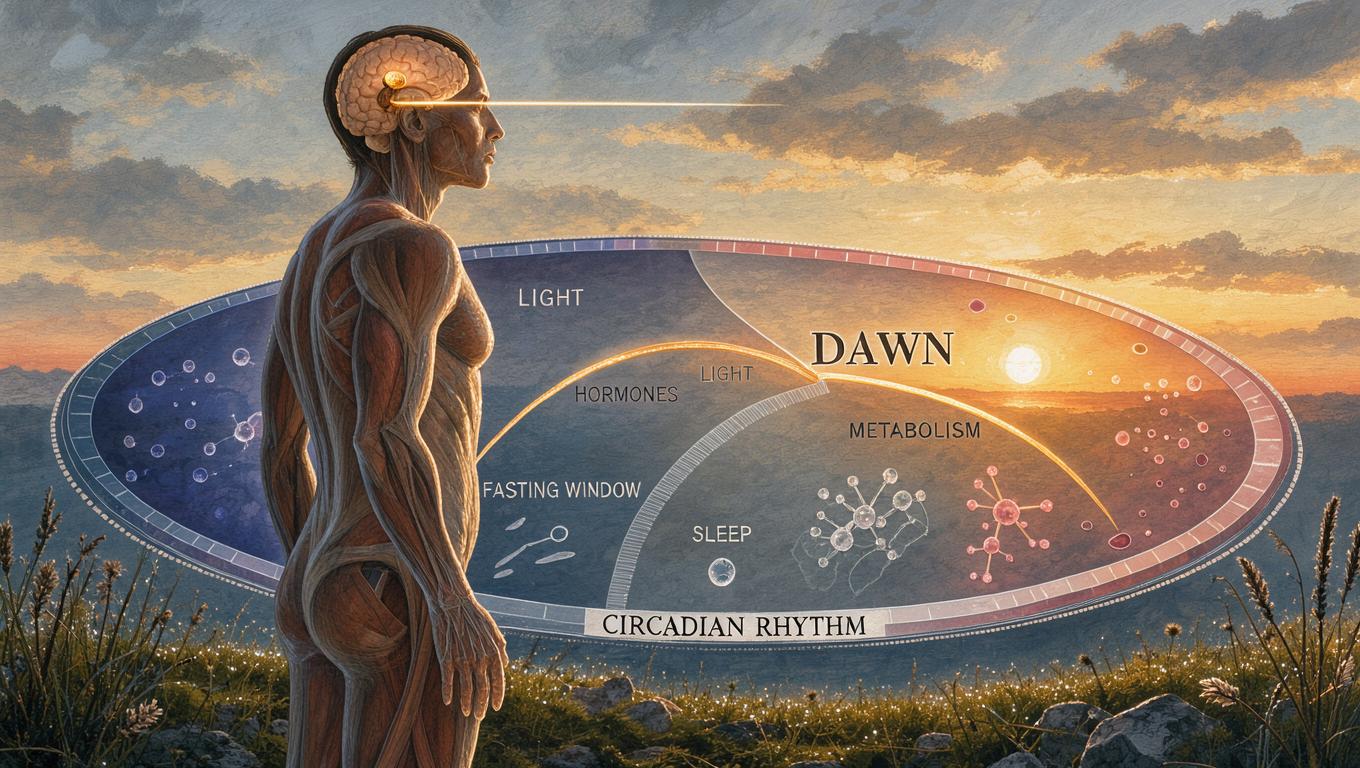
Alternate-day fasting (3 trials, n=8–30, normal-weight adults) produced 2.5% weight loss over 22 days but persistent fasting-day hunger, questioning feasibility . Modified fasting (8 trials, n=10–107, overweight/obese) achieved 3.2–8.0% loss, but in head-to-head comparisons only 1 of 3 beat standard continuous restriction . Time-restricted feeding had only 2 human trials (n=15 and 29) — the paper's most prescient section, flagging circadian alignment as the key untested hypothesis based on strong rodent data (Hatori 2012) .
Critical Assessment
Strengths: Honest null-result reporting (no superiority claim over CR), explicit non-meta-analysis declaration, structured mechanistic framing (circadian biology, gut microbiota, sleep) that aged well, and a concrete research agenda calling for ≥1-year RCTs with objective energy intake measures.
Weaknesses: Most included trials were small (n=8–30) and short (1 day to 6 months); six of eight modified-fasting trials were single-arm or uncontrolled; no clinical endpoints (only biomarkers); no meta-analysis possible so narrative vote-counting of "Y/NS" biomarker changes is weak inference; author Varady appears repeatedly as primary trialist of several included studies (self-citation cluster). Observational Ramadan data (1.24 kg transient loss, 0.72 kg regained in 2 weeks) is heavily confounded by healthy-user and seasonal factors .
What would change the conclusions: Large, ≥12-month RCTs with isocaloric designs showing IF outperforms CR — later trials (e.g., 2020–2022 TRE trials) showed effects mostly attributable to calorie reduction, consistent with this paper's cautious framing. The circadian-timing hypothesis remains the paper's most testable and still incompletely resolved claim.
Feedback:
Updated: November 01, 2026
BGPT Paper Review
Study Novelty
60%
Synthesized scattered small trials into the first broad human-IF framework and highlighted circadian timing before TRE became mainstream; however, it summarizes existing data rather than generating new evidence.
Scientific Quality
70%
Honest, transparent narrative synthesis with explicit non-meta-analysis declaration and balanced null reporting, but built on very small, heterogeneous, mostly uncontrolled trials and vote-counting of biomarker results.
Study Generality
70%
Applies broadly to obesity, diabetes, CVD, and cancer prevention research; its mechanistic framework (circadian, microbiota, sleep) spans multiple disciplines.
Study Usefulness
80%
Directly shaped the IF research agenda (circadian-timed eating, long-term RCTs) and remains a key citable baseline for evidence-graded IF claims.
Study Reproducibility
60%
Medline search terms documented but no PRISMA flow, no formal inclusion/exhaustion criteria, no study-quality appraisal; conclusions are not independently reproducible as a systematic synthesis.
Explanatory Depth
60%
Offers plausible mechanistic hypotheses (circadian desynchronization, gut microbiota dysbiosis, appetite hormones) but without quantitative mechanistic modeling or direct human testing of those pathways.
We'll email you the results when your analysis is finished.
Hypothesis Graveyard
'IF regimens produce superior fat loss vs continuous restriction via metabolic switching' — not supported by this review's head-to-head comparisons; later isocaloric trials confirmed equivalence when calories matched.
'Ramadan fasting evidence generalizes to health-beneficial IF' — rejected here due to nocturnal eating (circadian opposition), transitory effects, and observational confounding.

 Explore by Goal
 Quick Explanation
 Long Explanation
 Top Data Sources
 Ask a Follow-Up
 Key Insight
 Keep Exploring
 Hypothesis Graveyard
 Potential Experiments
 Discussion
