Why BGPT?
logo

Review papers with raw data transparency

Quickly verify claims by accessing the underlying experimental data and figures.


Press Enter ↡ to solve


    Fuel Your Discoveries


     Quick Explanation


    Skeptical read of the review
    This MDPI review argues that konjac glucomannan (KGM) is fermented by gut microbes into SCFAs and other metabolites, which then influence microbiota composition, intestinal barrier, inflammation, metabolic traits, and possibly the gut–brain axis. The core mechanistic claims are plausible and supported by diverse preclinical/human literature, but causality is often indirect, the included studies are heterogeneous (dose, molecular weight, preparations, models), and the review’s disease sections lean heavily on associative biomarkers and animal findings rather than tightly standardized human trials.


     Long Explanation


    Paper under review

    Yu Yufen; Jin Shuo; Yang Yi; Han Xiaodong; Guan Rongfa; Zhong Hao β€” Interaction Between Konjac Glucomannan and Gut Microbiota and Its Impact on Health
    Journal: Biology (2025), open-access review. DOI: 10.3390/biology14080923

    1) Visual map (what the review claims)

    KGM β†’ microbial degradation β†’ metabolites β†’ host pathways
    • Resistance to human digestion (indigestible polysaccharide; requires microbial fermentation).
    • Microbiota remodeling (reported enrichment of taxa like Bifidobacterium/Lactobacillus/Akkermansia; suppression of some opportunists).
    • Metabolite mediation: emphasis on SCFAs (acetate/propionate/butyrate) as signaling/metabolic regulators of barrier, immune pathways, and metabolic endpoints.
    • Downstream disease associations across obesity/diabetes/hyperlipidemia; IBD/CRC; immune regulation; and neurological disorder models.
    High-confidence mechanistic anchors (external support)
    • Acetate sensing β†’ inflammasome/barrier effects: dietary-fiber metabolites can signal via GPR43/GPR109A to influence gut homeostasis and inflammasome regulation.
    • Acetate/SCFA β†’ metabolic regulation: SCFA receptor signaling (e.g., GPR43) contributes to metabolic phenotypes in experimental systems.
    • Butyrate β†’ epithelial barrier/tight junction biology is widely supported in mechanistic literature (but the review’s disease translation depends on context).
    • KGM-specific fermentation/outputs exist: e.g., fecal microbiota in vitro fermentation can show SCFA pattern changes with konjac glucomannan hydrolysates.

    2) Visual evidence from included primary data snippets (not simulations)

    Plot A β€” In vitro fecal fermentation: early bacterial-probe readouts over time
    From the dataset provided in your prompt (konjac glucomannan hydrolysate fermentation). Values are probe intensity/relative abundance-like units as listed in the extracted table.
    Interpretation (skeptical)
    • These probe readouts are in vitro and do not directly establish host outcomes; they only show that the fecal community metabolically/permissively shifts during fermentation.
    • Probe-intensity style metrics can be affected by hybridization efficiency, sample handling, and community context; translation to vivo requires additional functional verification.
    Plot B β€” Rat mechanistic readout: liver cholesterol & absorption (viscosity/absorption pathway)
    From the extracted numbers of a rat study comparing control vs glucomannan (G) and chitosan (CH) (dual isotope cholesterol absorption; liver cholesterol; bile acid and fecal fat).
    Primary source cited in the prompt dataset.
    Plot B2 β€” Cholesterol absorption percentage
    How this bears on the review
    • The review emphasizes microbiota/SCFAs, but the rat data above supports a physicochemical viscosity mechanism for cholesterol changes in some settingsβ€”important because it means not all β€œhealth” effects require fermentation.
    • Because KGM physicochemical properties (viscosity/gelation) vary by extraction and molecular weight, the same β€œKGM” label may represent different mechanisms across studies.

    3) Scientific critique: what is strong vs what is weak

    Strengths (most defensible parts)
    • Mechanistic coherence of KGM fermentation: the paper’s structure (Ξ²-mannanase Ξ²-mannosidase Ξ²-glucosidase degradation logic; SCFA as outputs) is consistent with known glycan-degradation biochemistry and with external SCFA mechanistic literature (barrier/immune/metabolic signaling).
    • Links between SCFAs and host receptors are not merely asserted; the review’s pathways match established receptor-mediated immunometabolic concepts (e.g., GPR43/GPR109A, inflammasome relevance).
    • Realistic acknowledgement of limitations: the review explicitly notes tolerability (GI symptoms), nutrient absorption interference concerns, drug–fiber interactions, and variability by microbiota composition.
    Weaknesses / red flags (how conclusions may overreach)
    • Review-level causality risk: it compiles heterogeneous studies (different KGM MW, acetylation, dosing, delivery, models). This increases the chance of β€œmechanism stacking” where multiple plausible pathways are mentioned but not quantitatively weighed for causality in humans.
    • Associations vs interventions: many β€œdisease improvements” are inferred from animal outcomes, changes in microbial taxa, and biomarker shifts. Taxa-level changes do not guarantee functional changes (metagenomics/metabolomics depth varies), and microbiome signatures can be confounded by diet composition and baseline ecology.
    • Physicochemical effects can dominate: viscosity/gelation can alter absorption and transit independent of fermentation. If this is not separated experimentally, β€œmicrobiota mediation” can be over-attributed. The rat cholesterol study demonstrates a viscosity-centered mechanism.
    • Pathway breadth can reduce falsifiability: NF-ΞΊB/MAPK inhibition, GPR receptors, lipid genes, neurotransmitters (GABA/5-HT), bile acid signaling, and multiple immune nodes are discussed. When too many nodes are invoked, some can be downstream consequences of improved general gut state rather than specific KGM-mediated molecular targets.
    • Potential conflict-of-interest visibility: the review declares employment by KGM-related companies for two authors. That does not imply wrongdoing, but it raises the burden of proof for causal claims and the need to critically interpret dose/safety framing.
    What would disprove or sharply change the review’s direction?
    • Human causality failure: robust, well-powered RCTs showing no consistent microbiome-metabolite changes and no improvement in mechanistically linked endpoints (e.g., fecal/portal SCFAs, barrier biomarkers) would weaken β€œKGM therapeutic potential” claims.
    • Mechanism mismatch: if KGM effects persist when fermentation is blocked (or fail in fermentation-competent vs fermentation-incompetent strata), the microbiota-mediated model would need revision. The review itself points to interindividual fermentative responsiveness as a limitation.
    • Physicochemical-only effects: if viscosity/gelation fully explains the outcomes in vivo (with no metabolite shifts), then attributing primary effects to microbial fermentation would be overstated. The rat viscosity mechanism supports this as a plausible alternative model.

    4) How β€œKGM–microbiota interaction” should be studied more rigorously (falsifiable experimental focus)

    • Standardize the input polymer: molecular weight range and acetylation/degree of substitution change KGM properties; trials should document/stratify polymer chemistry.
    • Use causal microbiome designs: gnotobiotic or fecal-transfer designs can test whether KGM-induced changes are transferable and sufficient for phenotype changes (rather than being correlated with host state). The review’s interindividual response variability motivates this need.
    • Measure metabolite flux: not only taxa. Confirm SCFA profiles and key pathway intermediates in stool/portal compartments where feasible; otherwise, mechanism claims remain underdetermined.
    • Separate viscosity vs fermentation contributions: compare enzymatically/depolymerization-modified KGM forms and physiochemical matched controls to disentangle absorption effects from microbial fermentation effects. The review discusses KGM degradation and physicochemical properties together, implying both may matter; disentangling is needed.
    Bottom line (confidence-weighted)
    • Likely true (mechanistic plausibility): KGM can be fermented by gut microbes to generate SCFAs, and SCFAs can plausibly influence barrier/immune/metabolic pathways.
    • Uncertain (causal magnitude in humans): the review itself acknowledges clinical limitationsβ€”GI tolerability and interindividual variabilityβ€”and does not provide a systematic, quality-weighted causal estimate across diseases.
    • Key alternative model to keep: physicochemical viscosity/gelation can affect absorption and lipid-related outcomes without requiring microbiota-mediated fermentation.


    Feedback:   

    Updated: April 21, 2026

    BGPT Paper Review


    Study Novelty

    50%

    The article is a broad narrative synthesis of known KGM→microbiota→SCFA mediation themes across multiple disease areas, with no single clearly new experimental mechanism or dataset introduced. Novelty is mainly in breadth/organization rather than new discovery.


    Scientific Quality

    70%

    Mechanistic parts are generally coherent and supported by external SCFA/receptor and barrier literature, and the review acknowledges tolerability and variability limits. However, because it is a review with heterogeneous included studies and disease-spanning pathway lists, causal strength is limited and falsifiability is weakened.


    Study Generality

    70%

    Because it connects a dietary fiber’s chemical structure through microbial degradation to shared host pathway concepts (SCFAs, receptors, barrier/immune/metabolic regulation), it generalizes reasonably across disease categories. Still, disease-specific effect sizes and mechanisms are not standardized.


    Study Usefulness

    80%

    Useful as a mechanistic roadmap for what to measure (polymer traits, fermentation outputs, SCFA receptor pathways, barrier/immune markers) and as a catalog of candidate taxa/metabolites tied to disease categories. The biggest limitation is that it does not resolve contradictions/heterogeneity with formal meta-analytic rigor.


    Study Reproducibility

    60%

    Reproducibility is limited because narrative reviews don’t include full inclusion criteria, raw data, or standardized extraction. Individual mechanistic claims rely on diverse primary studies with varying KGM preparations and endpoints.


    Explanatory Depth

    70%

    The review offers a relatively deep mechanistic chain (structure→enzymatic degradation→SCFAs→receptor/immune/barrier/metabolic/neuro connections). Depth is moderated by the breadth of pathway claims and the frequent reliance on correlational disease biomarkers rather than pathway-validated causal experiments in humans.


    🎁 Authors: Collect 164 Free Science Tokens (β‰ˆ $16.4 USD)

    Claim My Author Tokens

    Use for 41 days of free BGPT access (4 tokens = 1 day) or trade/sell (β‰ˆ $16.4 USD)

     Top Data Sources ExportMCP


     Analysis Wizard


    Would compute and visualize time-resolved probe-score trajectories from the provided GMH fermentation extraction and summarize cholesterol/absorption contrasts from the rat dataset to flag mechanistic candidates for further pathway testing.


     Hypothesis Graveyard


    A single β€œuniversal beneficial” microbiome signature (same taxa increase in all people) explains KGM’s effects. This should fail if interindividual fermentative capacity dominates response variability.


    KGM’s lipid/glucose effects require fermentation to SCFAs (i.e., without metabolite changes there is no effect). Rat evidence supports viscosity-mediated absorption effects as an alternative sufficient mechanism.

     Science Art


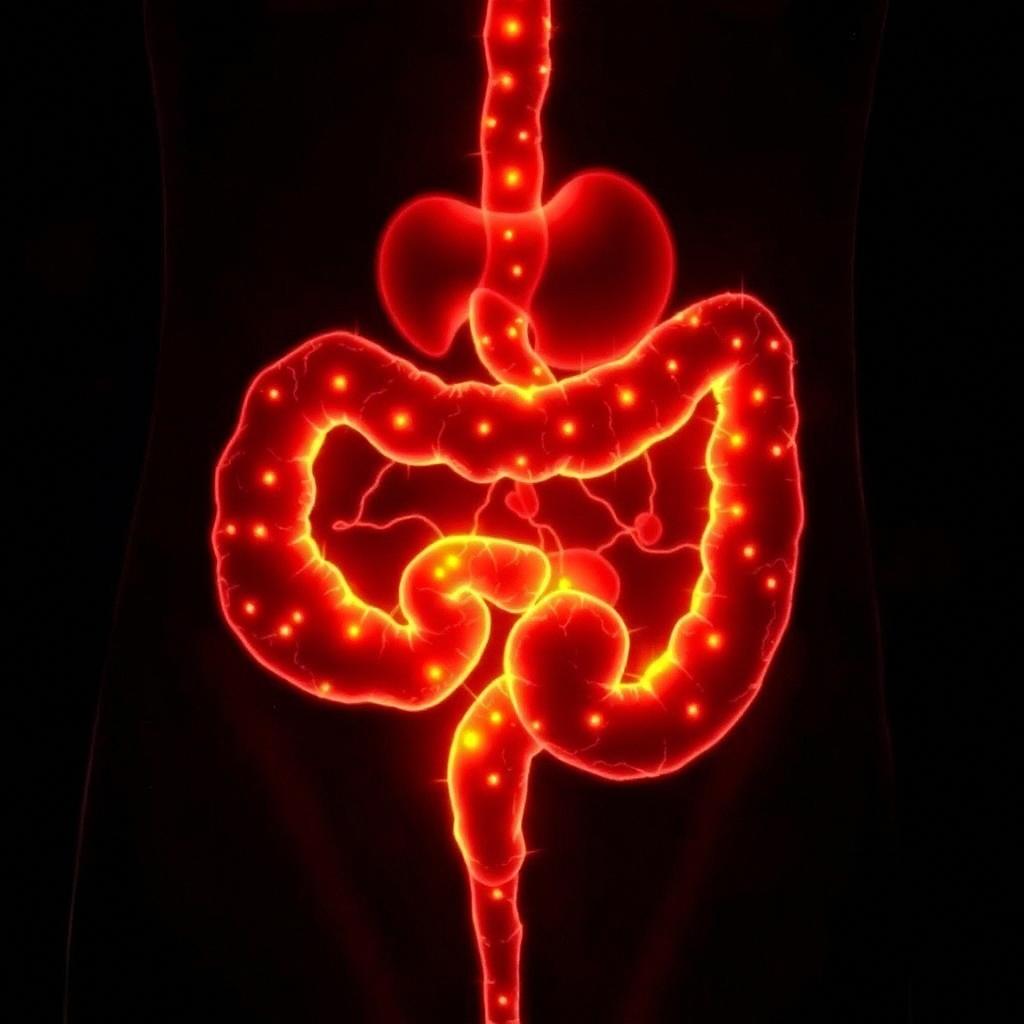
    Paper Review: Interaction Between Konjac Glucomannan and Gut Microbiota and Its Impact on Health Science Art

     Science Movie


    Make a narrated HD Science movie for this answer ($32 per minute)


     Discussion


    Get Ahead With Science Insights

    Custom summaries of the latest cutting edge Science research. Every Friday. No Ads.


    My BGPT