Why BGPT?
logo

Review papers with raw data transparency

Quickly verify claims by accessing the underlying experimental data and figures.


Press Enter ↡ to solve


    Fuel Your Discoveries


     Quick Explanation


    Concise critique: This 2025 review synthesizes scarce POWV-specific innate immune data and reasonably extrapolates from related flaviviruses to highlight TLRs (TLR3/7/8) as likely players and TLR agonists as promising adjuvants, but conclusions are limited by reliance on indirect data and preclinical studies only . Key experimental papers (murine lineage comparisons; auto-Abs to type I IFNs in severe cases) temper optimism: lineage differences alter inflammation and neuroinvasion and pre-existing neutralizing autoantibodies to type I IFNs can underlie severe human arboviral disease, implying host factors matter strongly


     Long Explanation


    Visual paper analysis β€” Innate Immune Response to Powassan Virus Infection (Vaccines 2025)

    One‑sentence take: The review compiles limited POWV-specific innate-immunity data, synthesizes TLR biology from related flaviviruses, and recommends TLR agonist–adjuvanted VLP/mRNA/DNA vaccine strategies while urging mechanistic in vivo validation

    What the paper does well

    • Comprehensive literature collation across POWV and other flaviviruses
    • Practical vaccine-focused recommendations (TLR agonists as adjuvants; platforms compared)

    Key limitations / blindspots

    • Heavy reliance on inference from mosquito‑borne flaviviruses; POWV-specific mechanistic data remain sparse.
    • Limited discussion of host-risk modifiers (e.g., autoantibodies to IFN‑I) that influence clinical severity
    • Few mechanistic diagrams or prioritized experimental paths (e.g., which TLR(s) to target first in vivo).

    Mechanistic priorities (actionable)

    1. Directly test TLR3 vs TLR7/8 roles in POWV neuroinvasion using lineage I/II in knockout and antagonist-treated mouse models (to resolve dual roles seen with other flaviviruses).
    2. Measure type I IFN autoantibodies prevalence in larger human POWV cohorts to assess host predisposition to severe disease .
    3. Validate promising adjuvants (e.g., INI-4001 TLR7/8) mechanism-of-action in POWV-VLP vaccination and map cellular targets (pDCs, cDC1) in draining lymph nodes .

    Critical synthesis (visual-first summary)

    1) The review is valuable as a practical roadmap for POWV vaccine developers: it collates preclinical vaccine platforms (VLP, nanoparticle EDIII, mRNA, DNA) and presents TLR agonists as promising adjuvants; these recommendations align with multiple preclinical studies cited within the review .

    2) The principal scientific weakness is extrapolation risk: TLR roles (e.g., TLR3) are highly context-dependent across flaviviruses (protective in WNV, permissive in ZIKV), so inference without POWV-specific mechanistic studies risks misleading vaccine-adjuvant selection .

    3) Host factors are under-discussed: the presence of IFN-I–neutralizing autoantibodies in some severe POWV cases implies that host immune status can drive disease more than viral factors in those patients; the review should integrate stratified-pathogenesis and diagnostic recommendations .

    Concrete, prioritized experiments the review should have proposed

    1. Head-to-head TLR3 KO vs TLR7/8 KO challenge with POWV lineage I and DTV lineage II in C57BL/6 and C3H mice to map protective vs pathogenic TLR roles.
    2. Test VLP+INI-4001 (TLR7/8) vs VLP+alum in C3H/HeJ and BALB/c with measurement of neutralization, neuroinvasion, scRNA-Seq of draining LN, and CNS immune infiltrates.
    3. Large case-control study measuring anti-IFN-I autoantibodies in human POWV cases vs controls to estimate effect-size on severe outcomes.

    Where the conclusions could be disproven

    • If controlled POWV in vivo experiments show TLR7/8 agonists increase CNS pathology despite higher antibody titers, adjuvant recommendations would require revision.
    • If population studies show IFN‑I autoantibodies are absent in most severe POWV cases, host-autoimmunity–centric stratification loses priority.

    Actionable next steps for researchers reading this review

    • Adopt lineage-aware in vivo testing (both POWV and DTV) when evaluating innate-sensing interventions.
    • Include assays for IFN-I–neutralizing autoantibodies in clinical POWV case series and vaccine trials.
    • Run mechanistic immunophenotyping (pDC, cDC1, microglia) after TLR-adjuvanted vaccination to anticipate CNS inflammation risks.

    Cited works (selected):


    Feedback:   

    Updated: March 11, 2026

    BGPT Paper Review


    Study Novelty

    70%

    The review assembles recent POWV vaccine and innate-immunity literature and highlights TLR agonist adjuvants; novelty lies in synthesizing scattered POWV-specific findings with up-to-date preclinical vaccine signals (VLP, mRNA, nanoparticle). However, it mainly extrapolates from other flaviviruses rather than presenting new experimental data.


    Scientific Quality

    80%

    Well-referenced narrative review with 105 references and balanced discussion; limitations include dependence on indirect evidence, limited quantitative synthesis, and the absence of a systematic review methodologyβ€”no evidence of data fabrication or prompt-injection; transparency about conflicts (none) is present.


    Study Generality

    60%

    Conclusions are broadly useful to flavivirus vaccine developers but may not generalize to POWV-specific mechanistic claims because many inferences derive from non-tick flaviviruses and different host/vector contexts.


    Study Usefulness

    90%

    Practical and timely for vaccine/adjuvant design teams: it identifies candidate platforms, TLR agonists, and experimental priorities; high translational usefulness despite mechanistic uncertainty.


    Study Reproducibility

    50%

    As a narrative review, reproducibility depends on readers’ ability to follow cited primary data; the paper compiles sources but does not produce new datasets or meta-analytic code, limiting exact reproducibility.


    Explanatory Depth

    70%

    Provides mechanistic framing (TLR pathways, TRAF6, RIG-I/MDA5, NS proteins antagonizing IFN) and vaccine immunology context, but lacks POWV-specific mechanistic experiments and quantitative synthesis required for deeper mechanistic claims.


    🎁 Authors: Collect 211 Free Science Tokens (β‰ˆ $21.1 USD)

    Claim My Author Tokens

    Use for 52 days of free BGPT access (4 tokens = 1 day) or trade/sell (β‰ˆ $21.1 USD)

     Top Data Sources ExportMCP


     Analysis Wizard


    Parsing POWV-related paper corpora to extract citation counts, reported assays, and numeric vaccine outcomes (neutralization titers) to produce meta-summary tables for prioritizing adjuvant candidates.


     Hypothesis Graveyard


    Single-TLR targeting (e.g., only TLR3 agonism) will be broadly protective: rejected because TLR3 shows context-dependent protective vs pathogenic roles across flaviviruses and POWV lineage differences demand nuanced targeting.


    VLP vaccination without adjuvant is sufficient for field-level protection across host genotypes: unlikely because preclinical data show adjuvants (e.g., TLR7/8 agonists) greatly enhance neutralization and protection at low doses.

     Science Art


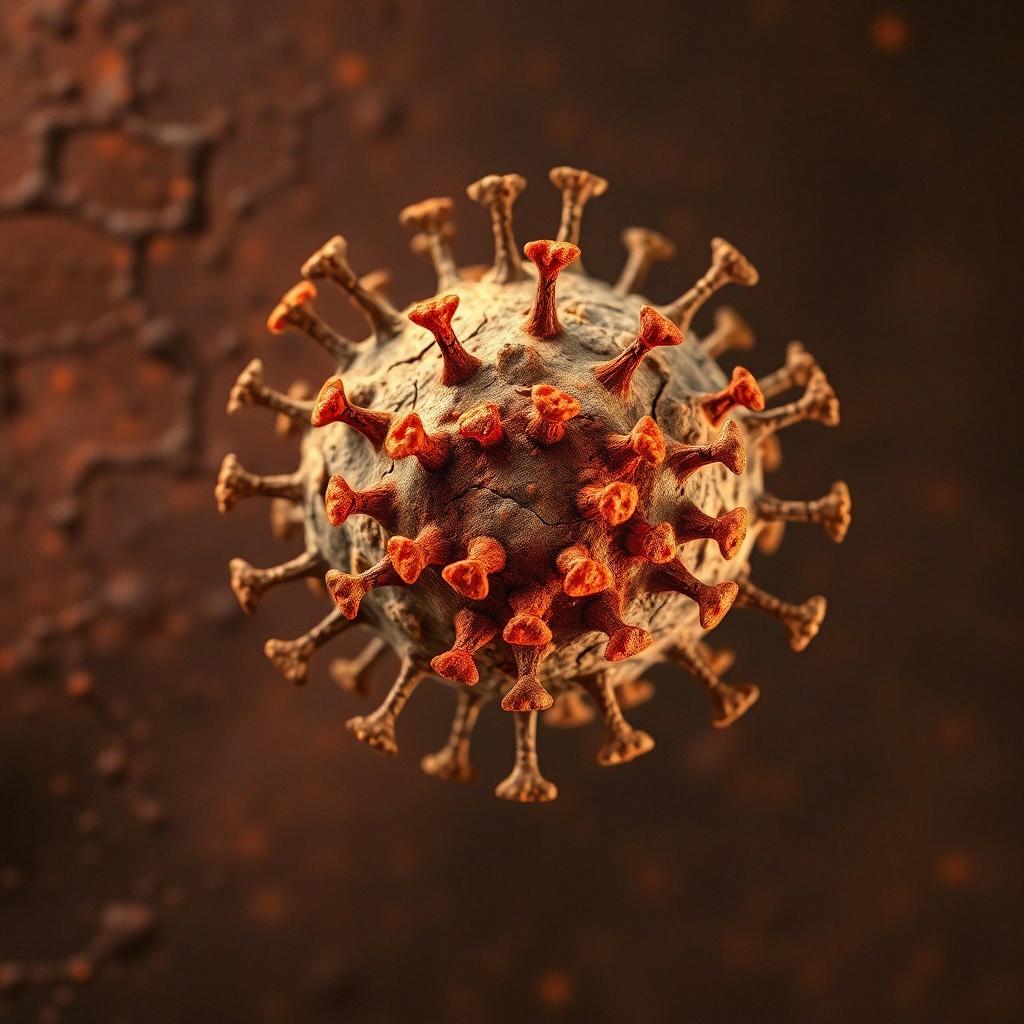
    Paper Review: Innate Immune Response to Powassan Virus Infection: Progress Toward Infection Control Science Art

     Science Movie


    Make a narrated HD Science movie for this answer ($32 per minute)


     Discussion


    Get Ahead With Science Insights

    Custom summaries of the latest cutting edge Science research. Every Friday. No Ads.


    My BGPT