Analyze how experimental results and claims are presented, scoped, and limited in a paper.Know what the science actually supports before you trust the answer.
Press Enter ↵ to analyze
Explore by Goal
"The art and science of asking questions is the source of all knowledge."
- Thomas Berger
Quick Explanation
Copied
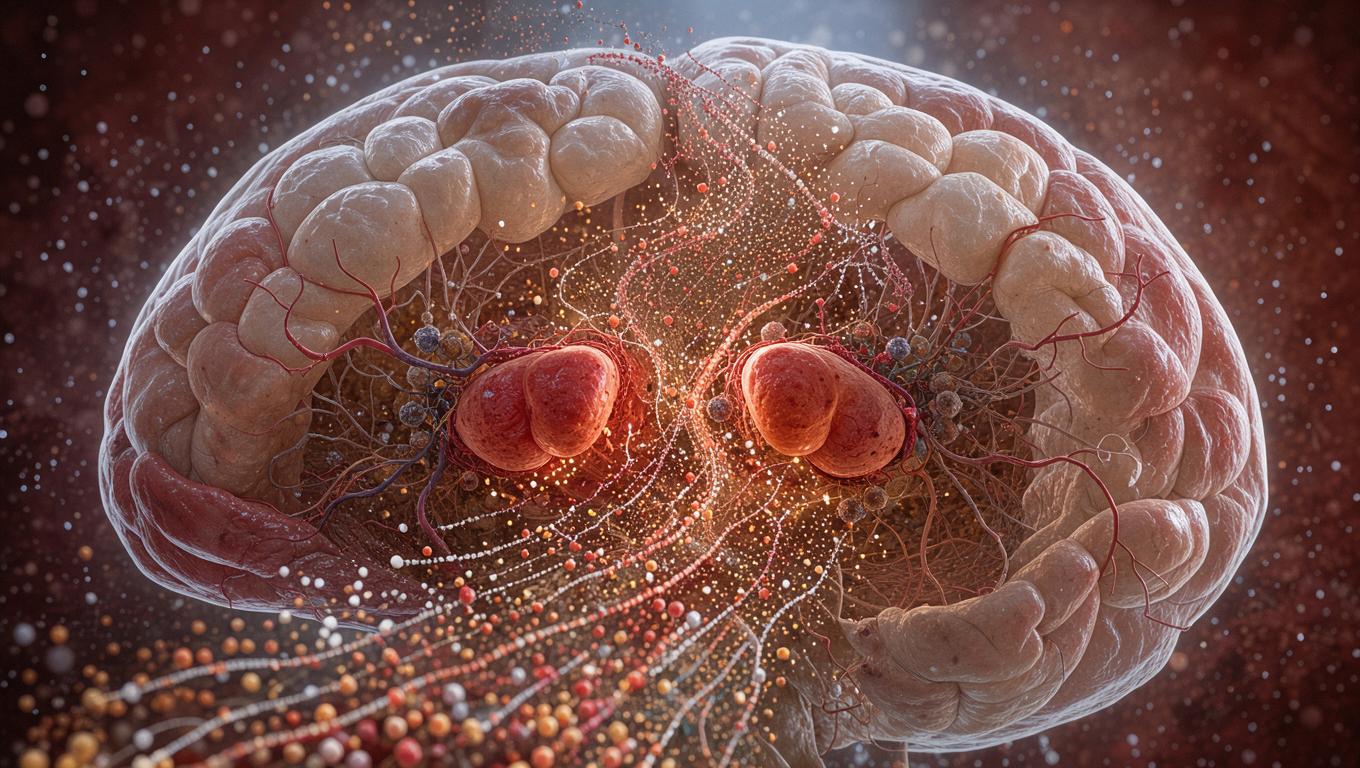
Michopoulos et al.'s 2016 review synthesizes evidence that PTSD shows the most consistent pro-inflammatory signature (IL-1β, IL-6, TNF-α, IFN-γ elevated in meta-analysis), while GAD, PD, and phobia inflammation data remain sparse and equivocal .
Long Explanation
Core Evidence Base
This is a non-systematic narrative review of ~263 references, NIH-funded (HD085850, MH102890, MH099211, MH071537, MH094757, MH100122), with authors declaring no conflicts . Its strongest pillar is the meta-analysis it leans on: 20 studies confirmed elevated IL-1β, IL-6, TNF-α, and IFN-γ in PTSD, sustained after subgroup analyses excluding medicated patients and comorbid depression, with illness duration positively associated with inflammation . Yet the review honestly tabulates contradictory results (e.g., some studies report lower or null CRP in PTSD), attributing heterogeneity to sample size, comorbidities, and uncontrolled confounders.
Replication cohorts reinforce the peripheral signal: 163 male combat veterans showed elevated WBC (6.2 vs 5.5 ×10³/mL, p=0.004) and RBC (4.9 vs 4.7 ×10⁶/mL, p=0.003) in PTSD, correlating with symptom severity (platelets: r=0.30, p=0.007) , and an independent 61-veteran cohort replicated elevated composite pro-inflammatory scores .
Where the Review Is Strong — and Fragile
Strengths: breadth across cellular, epigenetic, and neurocircuitry levels; explicit causal humility — most data are cross-sectional, and the authors stress that prospective findings (pre-deployment CRP predicting PTSD) suggest inflammation may precede disorder rather than result from it . Fragilities: for GAD/PD/phobias the evidence is equivocal (mixed TNF-α, IL-4 findings; no studies of social or specific phobias), so DSM-5-wide claims rest largely on PTSD data. Behavioral confounders (sleep loss raising CRP/IL-6, smoking, obesity) are acknowledged but not disentangled. A mechanistic blind spot the review itself admits: the kynurenine pathway, though documented in depression, had no published PTSD data at the time. The proposed therapeutic angle (ACE-I/ARBs) rests on observational medication data, not trials .
What Would Change the Verdict
Larger longitudinal studies showing no PTSD-inflammation association after controlling depression would falsify the central claim — notably, post-MI data show depressive symptoms substantially reshape (and can reverse) the PTSD–CRP/leptin relationships , and recovered women show normalized inflammation vs current-PTSD women .
Feedback:
Updated: November 01, 2026
BGPT Paper Review
Study Novelty
70%
First synthesis of inflammation across DSM-5 fear/anxiety disorders in 2016, extending the depression-inflammation literature to PTSD/GAD/PD; conceptually new framing though built from existing single-disorder findings.
Scientific Quality
70%
Rigorous, balanced narrative review that tabulates null and contradictory results and cites the Passos meta-analysis; however, it is non-systematic, PTSD-heavy, and relies on cross-sectional evidence without pre-registered protocols.
Study Generality
60%
Mechanistic framework (HPA axis, autonomic tone, NFκB, neurocircuitry) generalizes across disorders, but empirical support is largely PTSD-specific; GAD/PD/phobia sections remain thin.
Study Usefulness
80%
Directed attention to inflammation as a biomarker and candidate target (ACE-I/ARBs, anti-inflammatory strategies) in psychiatry, shaping later prospective and treatment research.
Study Reproducibility
70%
As a review it reproduces no data, but its claims are traceable to cited primary studies and one meta-analysis; the field's heterogeneity limits replication of any single association.
Explanatory Depth
70%
Offers multi-level mechanistic chains (stress → FKBP5/GR resistance → cytokines → glutamate/kynurenine → amygdala/ACC/insula dysfunction) but several links rest on rodent or inflammation-challenge extrapolations.
We'll email you the results when your analysis is finished.
Hypothesis Graveyard
PTSD inflammation is simply depression inflammation mislabeled: the Passos meta-analysis retained IL-1β/IL-6/TNF-α significance in PTSD without comorbid depression, though post-MI data show depression still modifies specific markers (CRP, sCD40L).
Lower cortisol in PTSD explains inflammation via weak glucocorticoid braking alone: basal cortisol findings are inconsistent across studies, so glucocorticoid receptor resistance is the better-supported mechanism.

 Explore by Goal
 Quick Explanation
 Long Explanation
 Top Data Sources
 Ask a Follow-Up
 Key Insight
 Keep Exploring
 Hypothesis Graveyard
 Potential Experiments
 Discussion
