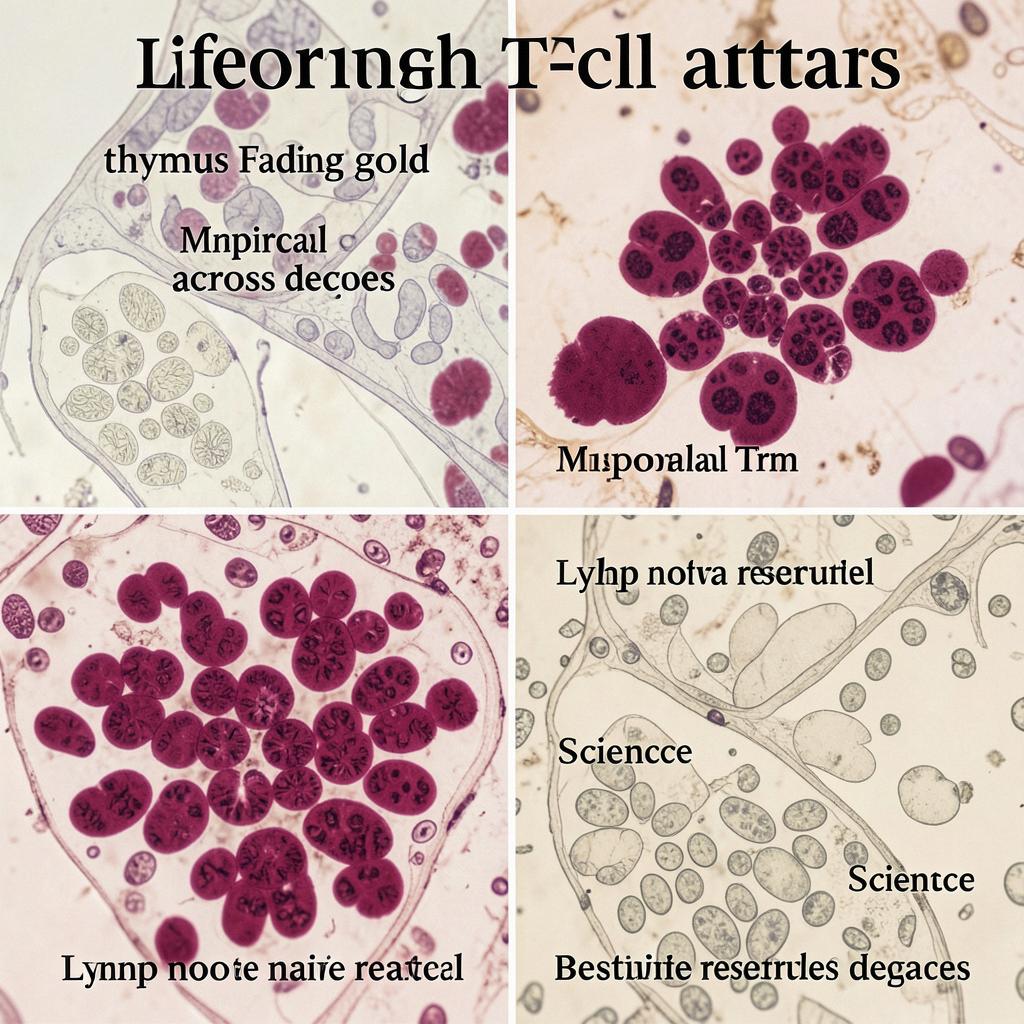
This review integrates organ-donor tissue immunology to challenge the blood-centric, mouse-model-dominated view of T cell biology. Key claims: (1) thymopoiesis effectively ceases after the fourth decade, with double-positive thymocytes detected at expected frequencies (60–80%) only in donors under 40 ; (2) human naive T cells persist 5–10 years via peripheral turnover, unlike 6–10 week mouse lifespans ; (3) Treg cells fall from 10–30% of CD4+ T cells in early life to under 5% in adults .
The paper's most novel synthesis is the human tissue-resident memory T (Trm) core signature—CD69+/CD103+, downregulated S1PR1/KLF2, upregulated CXCR6/CD49a, with a dual protective (IFN-γ, IL-17) and regulatory (IL-10, PD-1, CD101) profile . Notably, Hobit is dispensable in humans—a genuine human-mouse divergence.
Know what changed, what holds up, and what remains uncertain. Every Friday. No ads.