Check each claim against its experiments, reported results, scope, and stated limitations.Know what the science actually supports before you trust the answer.
Press Enter ↵ to start review
Explore by Goal
"In nature, nothing exists alone."
- Rachel Carson
Quick Explanation
Copied
This 2025 editorial (Cooley & Shore, Transl Androl Urol) traces prostatectomy evolution from Young's 1905 perineal approach to robotic-assisted surgery (>85% of US prostatectomies by 2013) and summarizes the Nahas et al. randomized trial showing better perioperative and functional outcomes with RALP but similar 36-month oncologic control
Long Explanation
What the Editorial Reports
This commissioned, peer-reviewed commentary narrates the surgical timeline: perineal prostatectomy (Young, 1905), retropubic (Millin, 1945), anatomic refinements (Reiner & Walsh, 1979), laparoscopy (1990s), and robotic-assisted laparoscopic prostatectomy (RALP) since 2000, which accounted for ~85% of US prostatectomies by 2013 .
Its evidentiary core is the Nahas et al. RCT (n=327; RRP 156, RALP 171): longer operative time with RALP (212 vs 120 min), less blood loss (220 vs 719 mL), faster continence (80.5% vs 64.7% at 3 months), higher potency (30.6% vs 6.9% at 6 months), and similar 36-month oncologic outcomes (20.5% vs 29.2% requiring additional treatment, P=0.069) . This aligns with earlier trials showing similar function at 24 months and 8-year LAPPRO follow-up favoring robotic continence without oncologic compromise .
Critical Assessment
The editorial is honest about its central caveat: the RCT involved experienced open and robotic surgeons, so results may not generalize to future trainees with declining open exposure . Blind spots it does not fully address: surgeon-experience confounding (which learning-curve data suggest dominates outcomes ), absence of cost-effectiveness discussion, and a large disclosed consulting-fee disclosure list for one author—relevant given the technology-favoring narrative. Meta-analytic evidence broadly corroborates lower blood loss and shorter stays with RALP .
Feedback:
Updated: September 14, 2026
BGPT Paper Review
Study Novelty
40%
A commissioned editorial without new data; its synthesis of the Nahas RCT is timely but the historical narrative is well-established.
Scientific Quality
60%
Accurate summary of cited trials with external peer review and available peer-review file; however, it is opinion commentary, relies on a narrow evidence base, and one author reports extensive industry consulting disclosures.
Study Generality
60%
Relevant broadly to urologic oncology practice and surgical training, but confined to one procedure and largely low/intermediate-risk disease.
Study Usefulness
60%
Useful context for clinicians and trainees; explicitly flags the coming training gap for open prostatectomy competence.
Study Reproducibility
50%
As an editorial with no original data or methods, reproducibility applies only to the citation trail, which is transparent but selective.
Explanatory Depth
30%
Descriptive historical and outcomes synthesis without mechanistic analysis of why robotic outcomes differ (visualization, pneumoperitoneum, surgeon factors are mentioned only superficially).
We'll email you the results when your analysis is finished.
Hypothesis Graveyard
'Robotic surgery improves cancer control.' Weaker than believed: large RCTs show equivalent oncologic outcomes; observed PSM differences in meta-analyses likely reflect selection and era effects, not technique.

 Explore by Goal
 Quick Explanation
 Long Explanation
 Top Data Sources
 Ask a Follow-Up
 Key Insight
 Keep Exploring
 Hypothesis Graveyard
 Potential Experiments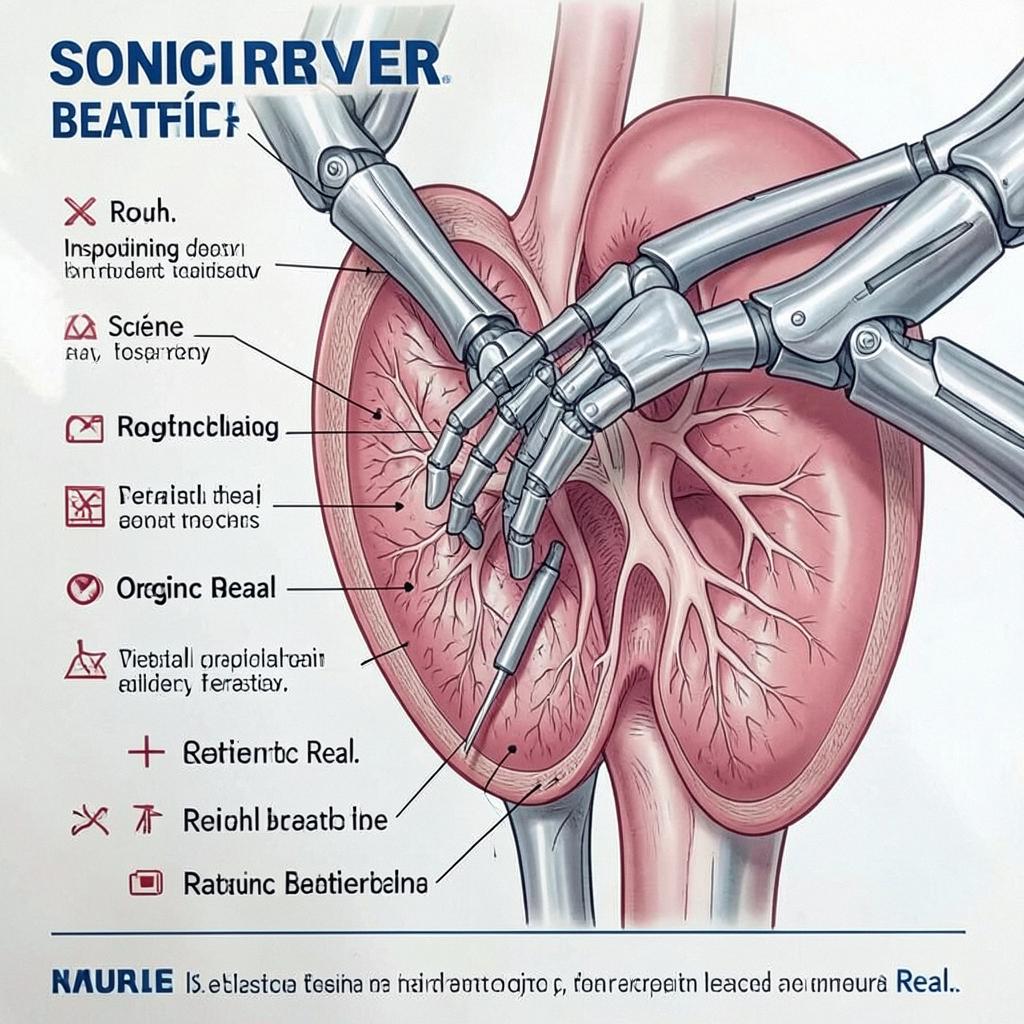
 Discussion