Check each claim against its experiments, reported results, scope, and stated limitations.Know what the science actually supports before you trust the answer.
Press Enter ↵ to start review
Explore by Goal
"Mood reflects the biology of the brain. How you feel is affected by the chemicals in the brain, and these are the same chemicals that form the basis of mood-altering drugs."
- Liz Miller
Quick Explanation
Copied
Key deliverable:
High-resolution human embryonic craniofacial ChIP-seq (6 histone marks; 17 embryos across ~4.5–10 post-conception weeks) integrated via imputation + ChromHMM to produce craniofacial-specific enhancer and chromatin-state maps, then tested for enrichment of orofacial cleft and facial-shape genetic associations.
Long Explanation
Paper Review (Evidence-Grounded): High-Resolution Epigenomic Atlas of Human Embryonic Craniofacial Development
What the figure encodes (from the paper text): CS13/14/15/17 span ~4.5–6 pcw with ≥3 embryos per stage, while CS20 (~8 pcw) and a 10-pcw point are single-sample time points.
Scale claims: The paper reports >5.3B ChIP-seq reads across 106 datasets from 17 embryos.
Counts stated in the paper: 75,928 enhancer-state segments; 6,651 craniofacial-specific enhancer segments (8.7%); 581 super-enhancer/enhancer-enriched windows with average size ~400 kb and up to 2 Mb.
Key outputs (as reported)
Component
Reported result
Evidence
Chromatin segmentation
25-state ChromHMM model selected for downstream analyses
Enhancer segments
75,928 enhancer-state segments identified
Craniofacial-specific enhancers
6,651 segments (8.7% of craniofacial enhancers) not annotated in other Roadmap tissues
Super-enhancers/windows
581 regions/windows (avg ~400 kb; up to ~2 Mb)
Public availability
GEO: GSE97752; UCSC Genome Browser track hub
The paper reports stronger enrichments for orofacial clefting SNPs in early samples (CS13–CS15), while craniofacial measure GWAS signals are more strongly enriched in later stages (CS17 and beyond).
What the study is really doing (mechanistic framing)
Generate chromatin-state segmentations for each sampled craniofacial embryo/time point by profiling multiple histone modifications using ChIP-seq, then imputing signals to a Roadmap-compatible set and applying ChromHMM.
Extract enhancer-like segments (from Roadmap-defined enhancer categories) and call craniofacial-specific enhancers via non-overlap with Roadmap’s 127-tissue segmentations.
Prioritize regulatory hypotheses by testing enrichment of GWAS tag SNP sets for orofacial clefting and facial shape against these enhancer annotations.
Strengths (skeptical but appreciative)
Direct primary human embryonic tissue rather than only cultured proxies: the study profiles craniofacial tissues from 17 embryos across multiple early stages (~4.5–10 pcw).
Multi-mark profiling (6 histone marks) and a bulk-reproducibility style evaluation: the paper reports that samples correlate well by mark and stage, and that enriched regions are found across ≥2 biological replicates per stage.
Transparent computational comparability with Roadmap Epigenome: imputation is used to create a uniform dataset enabling cross-tissue ChromHMM comparisons; and a specific state-count model (25-state) is chosen by stated similarity criteria.
Concrete numbers and deliverables: the atlas produces explicit counts of enhancers, craniofacial-specific enhancers, and super-enhancer/enhancer-enriched windows, and publishes data at GEO and via UCSC track hubs.
Limitations & potential blind spots (what could go wrong)
Bulk-tissue averaging: the paper explicitly notes (in its discussion) that due to heterogeneous tissue and bulk processing it is difficult to distinguish whether bivalent promoters reflect restricted expression patterns or poised genes.
Imputation uncertainty propagation: the segmentation depends on ChromImpute outputs to match Roadmap signals; imputed tracks are annotated as containing only imputed data (“asterisks indicate signals containing only imputed data”), meaning downstream state calls inherit modeling assumptions.
Specificity definition depends on Roadmap coverage: “craniofacial-specific” means not annotated across Roadmap’s 127 segmentations; this can under-call specificity if relevant enhancers are inactive or not assayed in Roadmap tissues.
GWAS overlap ≠ causality: the paper uses enrichment tests (including GREGOR) to prioritize regulatory regions; however, without direct perturbation of candidate enhancers in relevant human contexts, enrichment remains evidence for association between regulatory annotations and genetic signals rather than direct mechanism.
Reproducibility check (what is directly verifiable)
Raw data + processed tracks are deposited (GEO:GSE97752) and visible via UCSC track hubs.
Pipeline scripts are shared for processing ChIP-seq and generating chromatin states (generic scripts on GitHub).
Actionable follow-ups (what to test next)
Mechanistic testing of a shortlist of craniofacial-specific enhancers by directly perturbing them and measuring target gene expression in craniofacial-relevant models (the paper frames these maps as enabling such future enhancer-target studies).
Reduce bulk ambiguity by validating bivalent/promoter-state interpretations with higher-resolution approaches that can separate cell-type-specific usage (the paper itself calls for single-cell RNA-seq and related follow-ups).
Author Reviews (follow-up reading)
Feedback:
Updated: May 02, 2026
BGPT Paper Review
Study Novelty
90%
The novelty is driven by creating a primary-tissue high-resolution craniofacial epigenomic atlas across early human gestational stages and integrating it into tissue/disease-specific enhancer/chromatin-state resources used for GWAS enrichment prioritization.
Scientific Quality
80%
Scientific quality is strong on experimental scope (primary tissues, multi-mark ChIP-seq, replicates) and transparent computational integration (imputation + ChromHMM, explicit model selection), with clear data release. However, enhancer specificity and causality are primarily inferred from enrichment and Roadmap overlap rather than direct perturbation, and bulk heterogeneity limits mechanistic resolution.
Study Generality
70%
Generalizes as an atlas-and-workflow template for tissue-specific enhancer mapping and GWAS enrichment, but the conclusions are most directly applicable to early craniofacial development and to regulatory interpretation in that developmental window.
Study Usefulness
80%
High usefulness as a public resource: it provides thousands of craniofacial enhancer segments/super-regions and chromatin tracks for interpreting noncoding variants and prioritizing follow-up.
Study Reproducibility
80%
Reproducibility is supported by GEO deposition (signals, peaks, chromatin states) and availability of track hubs; the paper also states generic processing scripts are on GitHub. Remaining uncertainty is that full analysis reproducibility depends on supplemental procedures and parameter settings not fully captured in the provided text excerpt.
Explanatory Depth
70%
Explanatory depth is moderate for mechanism: the paper maps chromatin states and uses enrichment to support timing and disease association, but causal enhancer–target gene links and cell-type-specific interpretations remain future work due to bulk tissue and inference-based logic.
Download GEO:GSE97752 tracks, restrict to enhancer-state segments, compute stage-specific overlap with GWAS tag SNP coordinates, and generate enrichment-by-stage plots and ranked candidate enhancer tables for downstream prioritization.
Get emailed when your analysis is done!
We'll email you the results when your analysis is finished.
Hypothesis Graveyard
A single “static master enhancer set” independent of developmental timing explains both clefting and facial-shape enrichments would predict similar stage-specific enhancer enrichments; the reported differential timing argues against this.
If bivalent promoter calls were purely measurement artifacts from bulk averaging, the study’s observed systematic overlap with known developmental regulatory concepts would be expected to collapse; instead, it reports thousands of enhancer segments and interpretable bivalent promoter sets, though mechanistic resolution remains limited.
Science Art
Science Movie
Make a narrated HD Science movie for this answer ($32 per minute)
Discussion
Stay current without chasing every paper.
Know what changed, what holds up, and what remains uncertain. Every Friday. No ads.

 Explore by Goal
 Quick Explanation
 Long Explanation
 Top Data Sources
 Ask a Follow-Up
 Key Insight
 Analysis
  Hypothesis Graveyard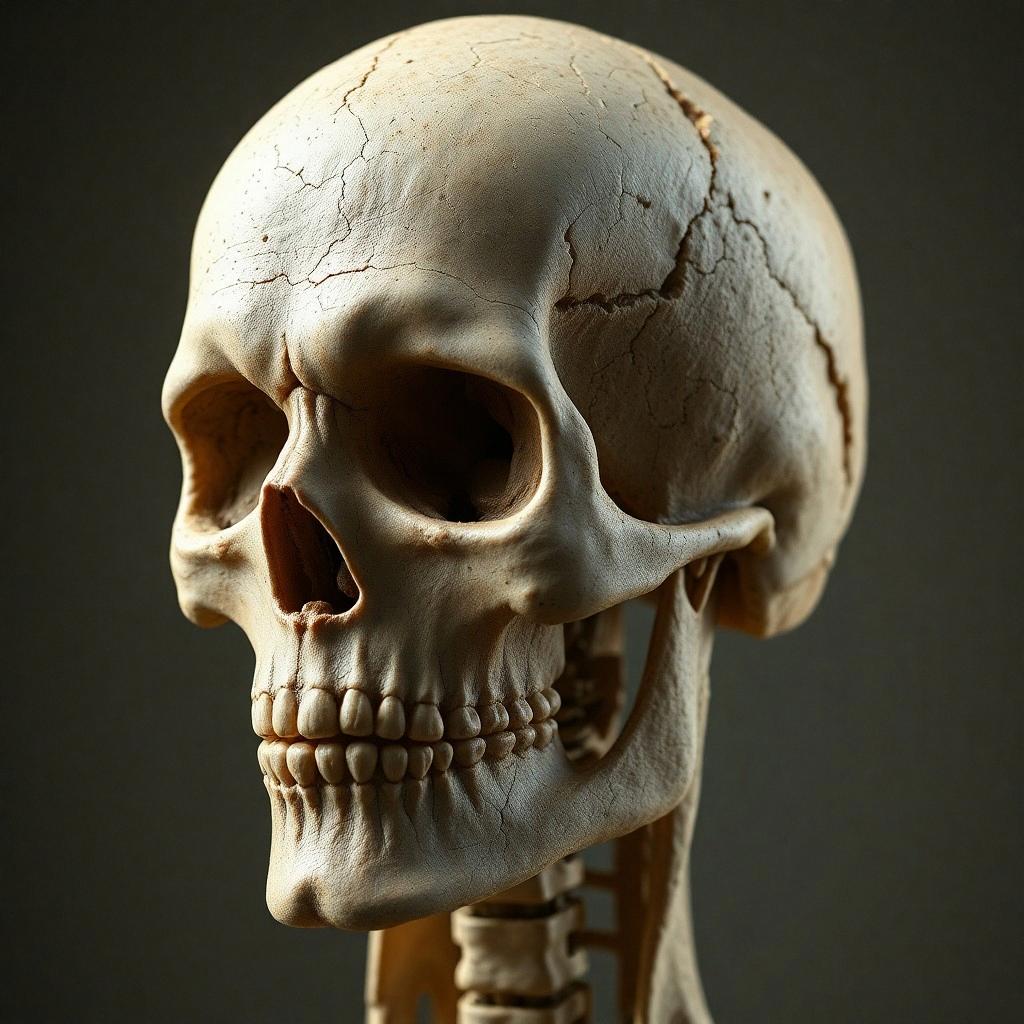
 Discussion
 My BGPT