Why BGPT?
logo

Review papers with raw data transparency

Quickly verify claims by accessing the underlying experimental data and figures.


Press Enter ↡ to solve


    Fuel Your Discoveries


     Quick Explanation


    Core message: the review argues that in pluripotent stem cells (PSCs) p53 primarily protects genomic integrity by shifting fate away from self-renewal (pluripotency suppression / differentiation) and by limiting oxidative stress, whereas p53-dependent apoptosis/cell-cycle arrest that dominate in somatic cells is not the main default mechanism.
    Confidence is β€œmoderate” because this is a narrative review (not new experiments), and p53 readouts are highly context-dependent (cell state, culture conditions, stress type).


     Long Explanation


    Paper Review (Narrative): β€œFunctions of p53 in pluripotent stem cells”
    DOI: 10.1007/s13238-019-00665-x (2019, Protein & Cell)
    What the review claims (high-level):
    • p53 is proposed to be essential for genomic stability in PSCs, but with mechanisms that differ from somatic cells (emphasis on differentiation/pluripotency suppression under genotoxic stress rather than a default somatic-like apoptosis/G1 arrest program).
    • During embryonic stem cell self-renewal, the review emphasizes state-dependent p53 activity (suppressed in the β€œno-stress” pluripotent state; becomes differentiation-promoting under stress).
    • For induced pluripotent stem cells (iPSCs), the review highlights a tradeoff: transient p53 suppression may raise reprogramming efficiency but could increase genetic abnormalities, implicating genomic safety as a key constraint for cell therapy translation.
    Visual map of the review’s mechanistic logic (qualitative):
    This diagram is a faithful structural abstraction of the review’s narrative claims (stress β†’ p53 activation; PSC-specific outputs emphasizing pluripotency suppression/differentiation; redox/metabolism; and a p53 suppression tradeoff in iPSC generation).
    Evidence weighting (skeptical view for a narrative review)
    • Strength: The review cites broad mechanistic categories (p53 transcriptional roles; pluripotency factor repression; metabolism/redox control; reprogramming barriers/safety).
    • Weakness: Because this is not a new empirical study, its β€œresults” are an integration of prior findings; therefore, any specific mechanistic arrow can be wrong or context-limited even if the overall narrative is plausible.
    • Highest-risk generalization: β€œp53’s primary role” may differ across PSC sub-states and assay conditions; extrapolations from one culture system to another can reverse conclusions (e.g., stress pathway dominance, apoptosis thresholds, and whether p53 outputs are transcriptionally driven).
    What would most convincingly falsify the review’s central thesis?
    • If p53 were not required to prevent genomic instability in PSC proliferation (under matched stress contexts), then the β€œgenomic stability prerequisite” claim would fail.
    • If iPSC reprogramming efficiency increases with p53 suppression without increasing genomic abnormalities (under comparable and rigorous genomic assays), then the proposed efficiency/safety tradeoff would be incomplete.
    • If PSC pluripotency suppression under p53 activation is shown to be dispensable for genomic stability outcomes (i.e., cells can remain stable despite maintaining pluripotency programs), the mechanistic primacy of β€œdifferentiation/pluripotency inhibition as the main p53 defense” would be undermined.
    Case anchors from the broader p53/PSC landscape (to calibrate plausibility)
    • p53’s transcriptional dominance is long-standing, but p53 can be constrained and tuned by developmental/cell-state regulation; developmental timing can change whether p53 drives lethality, differentiation, or subtle genomic protection.
    • p53 biology can also show non-canonical stress sensing and transcriptional program coupling in pluripotent contexts (illustrating that β€œp53 outputs” depend on the stimulus and signaling architecture).
    • Links between p53 activity and pluripotency/differentiation are also supported by mechanistic work where p53 suppresses core pluripotency circuitry (e.g., Nanog repression).
    Directed knowledge graph (qualitative) β€” β€œclaims β†’ mechanisms β†’ risks”
    The graph encodes the review’s proposed causal structure and highlights the main uncertainty: which p53 output dominates depends on PSC state and stress context.
    Reproducibility & data availability critique (specific to this paper)
    • No new dataset accession numbers are provided in the supplied text; this appears to be a literature review/synthesis rather than an experiment with depositions.
    • Systematic bias risk: narrative synthesis can over-weight concordant mechanistic stories and under-weight contradictory ones; culture-condition heterogeneity can also create apparent disagreements that look β€œmechanism-like.” A related synthesis explicitly argues p53 functions across development are context-dependent and thus disparate findings must be reconciled carefully.
    Bottom-line assessment
    Most defensible claim: p53 is central to maintaining genomic integrity in PSC systems, and its outputs are not a simple transplant of somatic-cell DNA damage responses; PSC differentiation/pluripotency repression and redox/metabolic tuning are plausible and repeatedly emphasized within the review.
    Main limitation: because it is a narrative synthesis, it cannot by itself resolve mechanistic dominance questions (which p53 targets/output dominate in which PSC sub-states under which stressors).


    Feedback:   

    Updated: April 09, 2026

    BGPT Paper Review


    Study Novelty

    40%

    The work is a narrative mechanistic synthesis of an extensively studied pathway (p53) in PSC contexts; novelty is limited to how it frames/organizes known concepts (pluripotency suppression, redox/metabolism, reprogramming tradeoffs) rather than introducing new models or datasets.


    Scientific Quality

    60%

    Scientific quality is moderate as a synthesis: it is internally coherent and aligned with widely accepted p53/PSC themes, but the provided excerpt does not include primary methods, quantitative figures, or data availability that would allow reproduction or independent verification of specific mechanistic dominance claims.


    Study Generality

    60%

    Moderately general: it targets a broad mechanistic question (p53 roles in PSCs broadly defined) but remains focused on a specific pathway and two major PSC application modes (ESC/iPSC), limiting cross-topic generality.


    Study Usefulness

    70%

    Useful as a high-level conceptual map for what to look up when studying PSC genomic stability and reprogramming barriers via p53-centric mechanisms; less useful for making precise quantitative predictions due to its narrative format.


    Study Reproducibility

    20%

    Low reproducibility in the strict sense because it appears to be a narrative synthesis without new methods, generated data, or deposited datasets in the provided text.


    Explanatory Depth

    60%

    Mechanistically explanatory at the conceptual level (stress β†’ p53 activation β†’ differentiation/pluripotency suppression; metabolism/redox; reprogramming tradeoffs) but limited by the review format’s inability to establish mechanistic causality or quantify dominance of competing p53 outputs in particular PSC sub-states.


    🎁 Authors: Collect 24 Free Science Tokens (β‰ˆ $2.4 USD)

    Claim My Author Tokens

    Use for 6 days of free BGPT access (4 tokens = 1 day) or trade/sell (β‰ˆ $2.4 USD)

     Top Data Sources ExportMCP


     Analysis Wizard


    No raw numerical dataset is provided in the supplied paper text; code would not be grounded in verifiable experimental data. Instead, this response stays qualitative and citation-driven.


     Hypothesis Graveyard


    A single universal β€œp53 always triggers apoptosis or arrest in PSCs” hypothesis would be unlikely given the review’s emphasis on PSC-specific differences and the broader synthesis literature highlighting context dependence.


    β€œp53’s role in PSC genomic stability is purely downstream of generic DNA repair capacity” is weakened by the review’s stress on pluripotency suppression and oxidative-stress/metabolic mechanisms as additional protective routes.

     Science Art


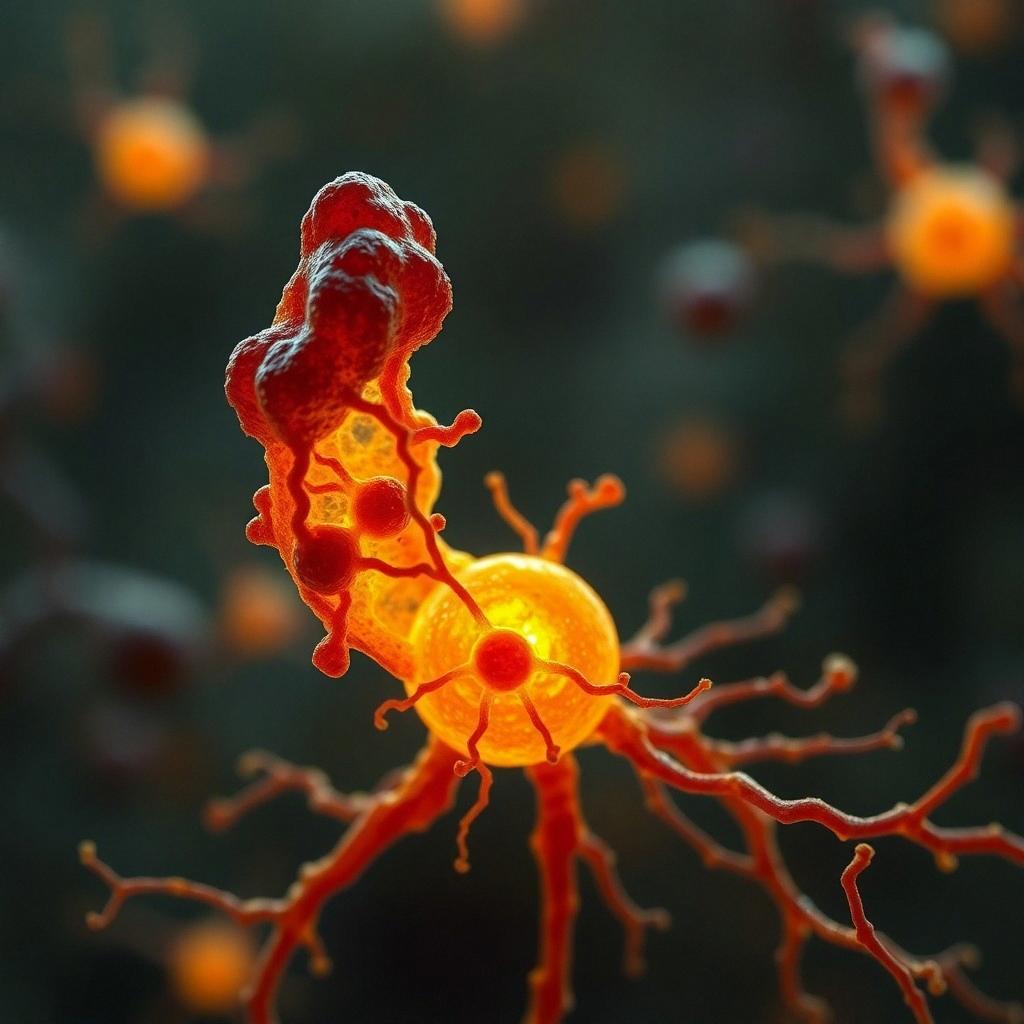
    Paper Review: Functions of p53 in pluripotent stem cells Science Art

     Science Movie


    Make a narrated HD Science movie for this answer ($32 per minute)


     Discussion


    Get Ahead With Science Insights

    Custom summaries of the latest cutting edge Science research. Every Friday. No Ads.


    My BGPT