Check each statement against experiments, exact results, and limitations, with provenance intact.Know what the science actually supports before you trust the answer.
Press Enter ↵ to review paper
Explore by Goal
"The saddest aspect of life right now is that science gathers knowledge faster than society gathers wisdom."
- Isaac Asimov
Quick Answer
Copied
Skeptical, evidence-forward review of
“Ferroptosis in cancer: from molecular mechanisms to therapeutic strategies”
A mechanistic-to-therapeutic synthesis centered on lipid peroxidation + iron/redox logic, explicitly emphasizing the “contextual paradox” (tumor suppression vs tumor promotion via TME/immune effects) and the need for biomarkers and time-window concepts.
Long Answer
Paper Review (evidence-first): Ferroptosis in cancer: from molecular mechanisms to therapeutic strategies
DOI: 10.1038/s41392-024-01769-5
Journal: Signal Transduction and Targeted Therapy
Received/Revised/Accepted: 23 Oct 2023 / 21 Jan 2024 / 3 Feb 2024
What this review claims (and what it actually supports)
Core definition & causal skeleton: ferroptosis is presented as iron-dependent lethal lipid peroxidation of membrane phospholipids; the mechanistic framework is organized into drivers (PUFA-PL generation, lipid peroxidation chemistry, labile iron) and defenses (GPX4-GSH, FSP1/CoQH2, DHODH/CoQH2, GCH1/BH4, MUFA-PL remodeling, and ESCRT-III membrane repair).
Contextual “paradox”: ferroptosis is framed as potentially tumor-suppressive in some settings yet potentially tumor-promoting via TME and immune-cell ferroptosis and immunosuppressive lipid/DAMP signaling.
Translational bottlenecks: it emphasizes issues like (i) lack of well-established standardized in vivo models for cancer ferroptosis, (ii) tumor-stage/time-window sensitivity, (iii) drug specificity/bioavailability and toxicity, (iv) fear that ferroptosis induction can harm anti-tumor immunity, and (v) biomarker heterogeneity/standardization needs.
Visual 1 — “Milestone clock” for ferroptosis instrumentation
From the paper’s historical narrative: key years where experimental concepts/tools (iron toxicity, cystine dependence, GPX4, erastin/RSL3, and the term “ferroptosis”) were introduced or reinforced.
Visual 2 — Driver vs Defense network modules (functional schema)
A compact mapping of the review’s mechanistic organization. The aim is to clarify the review’s internal logic (drivers outweigh defenses → lipid peroxide catastrophe) rather than to prove quantitative rates.
Visual 3 — “Marker checklist” (what the review says is used)
The review groups ferroptosis markers into classes: lipid peroxidation, mitochondrial morphology, gene expression changes, and TFR1 relocalization; it also stresses that multiple markers and inhibitor “rescue” logic are needed and that timepoints matter.
Mechanistic modularization: the driver/defense split is conceptually clean and consistent with how major ferroptosis subcircuits are discussed in the field (notably lipid peroxidation + iron/redox and antioxidant “brakes”).
Explicit context dependence: it does not collapse everything into a single “always anti-tumor” narrative; it includes TME/immune heterogeneity, including ferroptosis-in-immune-cells and immunosuppressive DAMP/lipid mediator outcomes.
Translational framing: it highlights the need for better models, biomarker standardization, and “time window” considerations, which is essential because many ferroptosis readouts are experimentally sensitive to conditions and measurement timing.
Key limitations & skepticism points (what could be misleading):
Review-level evidence hierarchy: as a narrative review, causal claims ultimately depend on heterogeneous preclinical studies; the manuscript itself doesn’t re-run experiments or perform a formal systematic search/quantitative synthesis (so “how much” support exists for each claim is not computed here). The article’s own conclusion notes limitations like model standardization and biomarker issues, but the magnitude of evidence asymmetry is not quantified.
Biomarker causality vs correlation risk: lipid peroxidation is necessary in its framework, but the paper itself argues that mitochondria morphology and certain gene expression readouts are not always specific and that multiple markers plus rescue logic are needed. That is a critical methodological warning: “marker-positive” does not automatically imply full ferroptosis execution equivalently across settings.
Off-target chemical rescue caveat: ferroptosis inhibition frequently uses radical-trapping antioxidants or iron chelators; these can have off-target redox or metal effects. The review stresses rescue experiments conceptually, but it does not (in the provided text) systematically grade off-target risks per compound. This is an area where mechanistic overreach is plausible unless each rescue is carefully validated against lipid-peroxidation readouts and genetic nodes. A broader field-level review highlights the need for careful biomarkers/model assumptions when interpreting ferroptosis inhibitor effects.
Confidence calibration: Mechanistic organization and translational bottlenecks are well-aligned with widely discussed ferroptosis biology. The most uncertain parts are the quantitative “net effect” claims across tumor stage/TME compartments, because they depend on experimental context and measurement choices.
Therapeutic strategy structure (induction vs inhibition)
Induction: the review groups ferroptosis inducers across modalities (immunotherapy, radiotherapy, and systemic drugs) and tool compounds. It also stresses delivery strategies (nanoparticles/hydrogels/liposomes) to improve targeting and reduce toxicity.
Inhibition: ferroptosis inhibitors are presented as context-dependent tools for (i) preventing necroinflammation-driven tumor initiation or (ii) reducing treatment-related tissue damage and cachexia, but the review warns that inhibiting ferroptosis could also suppress anti-tumor immune effects.
External triangulation:
A separate review focusing on ferroptotic therapy emphasizes a similar benefits-vs-side-effects/risk spectrum and the need for selectivity and robust biomarkers, supporting the review’s translational caution theme.
Mechanistic coherence: High. The review’s internal narrative aligns with the canonical ferroptosis logic of iron-dependent lipid peroxide accumulation opposed by multiple defense brakes, and it explicitly highlights organelle compartment contributions and terminal membrane rupture.
Translational realism: Moderate-to-high, because it foregrounds the main failure modes known in the field (models, time windows, biomarker specificity, and immune-cell collateral effects). The remaining uncertainty is quantitative: it does not compute an evidence-weighted payoff matrix for each combination strategy, so the “best path forward” is not rigorously ranked from first principles within this article alone.
Note: This response is grounded in the provided full-text review content and cited external reviews where DOI metadata was available in the provided material.
Feedback:
Updated: April 22, 2026
BGPT Paper Review
Study Novelty
70%
It is a comprehensive narrative synthesis rather than a new mechanistic discovery; novelty comes from integrating driver/defense “logic,” TME immunostimulatory vs immunosuppressive paradox, and explicit translational bottlenecks into a single structured review frame.
Scientific Quality
80%
Scientific quality is strengthened by coherent mechanistic modularization and explicit discussion of translational challenges and marker limitations; however, as a narrative review it cannot quantify evidence weights, and inhibitor-based rescue/marker specificity issues remain a known methodological vulnerability that the review partially addresses rather than exhaustively grades.
Study Generality
60%
It is fairly broad across cancer types, immune cell subsets, and induction/inhibition modalities, but it remains specialized to ferroptosis and organized around a specific mechanistic framework; generality is limited by context-dependent nature and review-structure constraints.
Study Usefulness
80%
High utility as a structured conceptual and translational map for designing experiments and interpreting ferroptosis readouts, with explicit marker classes and major challenges to translation.
Study Reproducibility
40%
Reproducibility is limited because this is a narrative synthesis without original experimental methods or deposited datasets; moreover, causal interpretation depends on heterogeneous study designs outside the article’s control.
Explanatory Depth
80%
Deep mechanistic explanation at the systems level (drivers vs defenses; organelle and metabolic intersections; TME immune crosstalk) with explicit admission of unknown execution details and context dependence.
No bioinformatics code is required; the review provides mechanistic and marker logic directly, and the visualizations are generated from narrative timelines and taxonomy rather than raw omics tables.
Get emailed when your analysis is done!
We'll email you the results when your analysis is finished.
Hypothesis Graveyard
“Ferroptosis always suppresses tumors.” Gravely implausible relative to the review’s explicit discussion of pro-tumor roles via immunosuppression, tissue-damage necroinflammation, and immune-cell ferroptosis.
“TFR1 relocalization alone is sufficient to identify ferroptosis in tumors.” The review states marker specificity issues (mitochondrial morphology not specific; gene expression context-dependent) and emphasizes need for multiple markers and rescue logic; thus single-marker classification is likely insufficient.

 Explore by Goal
 Quick Answer
 Long Answer
 Top Data Sources
 Ask a Follow-Up
 Key Insight
 Keep Exploring
 Analysis
  Hypothesis Graveyard
 Potential Experiments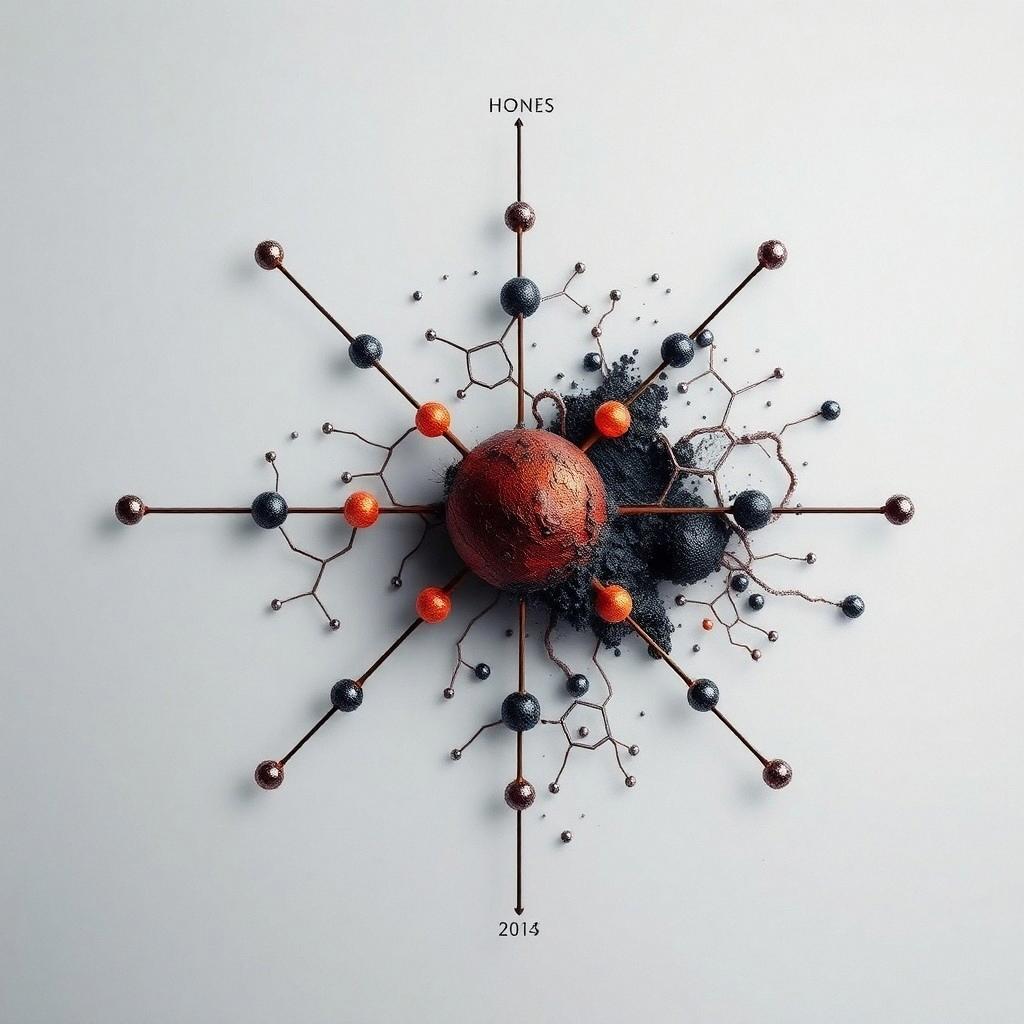
 Discussion