Why BGPT?
logo

Review papers with raw data transparency

Quickly verify claims by accessing the underlying experimental data and figures.


Press Enter ↵ to solve


    Fuel Your Discoveries


     Quick Explanation


    Core claim: A specific LINE-derived transposable-element fragment (EIE14; L1M4a1-like) is inserted into MYC-containing ecDNA, becomes transcriptionally active in the ecDNA context, shows enhancer signatures, and is required for cancer-cell fitness in COLO320DM.
    Skeptical take: The causal chain is fairly well-supported in vitro (structure→3D proximity→epigenetic/accessible state→reporter enhancer activity→CRISPRi fitness). The largest remaining uncertainties are (i) generality across other ecDNA architectures/cancers and (ii) whether EIE14 acts primarily through proximity-dependent enhancer mechanisms versus other ecDNA-context effects (e.g., copy-number, transcriptional programs, or unintended CRISPRi effects in repetitive DNA).


     Long Explanation


    Paper Review (Scientific, Critical, Evidence-Based)

    “Enhancer activation from transposable elements in extrachromosomal DNA”

    Published: 21 Oct 2025 • Journal: Nature Cell Biology • DOI: 10.1038/s41556-025-01788-6
    Problem statement (as tested): Does ecDNA amplification permit repetitive, typically silenced TE-derived sequences to become functional enhancers that regulate oncogene expression and affect cancer-cell fitness?

    Visual synthesis: the paper’s causal chain

    Evidence pillars used below: structure mapping (Hi-C + long-read + CRISPR-CATCH), 3D proximity (ORCA), enhancer-like chromatin (H3K27ac/BRD4/ATAC), transcriptional context specificity (RNA-FISH), functional enhancer activity (luciferase), and functional necessity (CRISPRi fitness).

    1) What the paper measured (quantitative anchors)

    These values (medians and within-300-nm fractions) are explicitly reported in the paper’s spatial-analysis section.

    2) Mechanistic interpretation: what is “enhancer activation” here?

    Supported by the paper:
    • Context-specific transcription: RNA-FISH reports EIE14 transcripts in COLO320DM (median n ≈ 8) but not in isogenic COLO320HSR (median n ≈ 0).
    • Chromatin enhancer-like state: The paper reports enhancer-associated marks for EIE14 in COLO320DM, including H3K27ac enrichment, BRD4 binding, and ATAC-seq accessibility; and it contrasts this with silencing marks (H3K9me3) across annotated lines.
    • Functional enhancer activity in reporters: Luciferase assays show EIE14 increases MYC promoter-driven reporter expression versus promoter-only controls, and splitting EIE14 into L1M4a1 and L1PA2 parts each retains enhancer activity with an additive effect.
    • Requirement for fitness: In CRISPRi screens targeting EIEs, perturbation of EIE14 yields one of the strongest negative effects on COLO320DM growth/fitness (noting the paper’s CRISPRi guide-filtering strategy).
    Skeptical counterpoints (where the evidence is not “done yet”):
    • Proximity is suggestive, not sufficient: ORCA distances indicate clustering and some fractions within putative regulatory distances, but enhancer–promoter communication can occur via multiple mechanisms that may not be fully captured by centroid distances alone.
    • CRISPRi specificity in repetitive contexts: The paper uses guide-specificity filtering, but CRISPRi in TE/repeat-rich regions can still introduce uncertainty about whether fitness effects map uniquely to EIE14 sequence function rather than off-target repression of related repeats or broader chromatin effects.
    • EcDNA heterogeneity complicates mechanistic quantification: The paper explicitly notes that quantifying precise MYC downregulation is constrained by ecDNA heterogeneity and timing in MYC-addicted cells.

    3) How the study fits the broader TE-regulation literature (contextual, not speculative)

    Anchoring idea: TE-derived sequences can supply cis-regulatory DNA that becomes functional in particular epigenetic or developmental contexts.
    • A major review emphasizes that TEs can be co-opted as regulatory elements (with mechanisms and limitations), stressing that biochemical signatures are not always equivalent to proven causal necessity.
    • In a concrete in vivo-ish setting, endogenous retroviral elements have been shown to function as species-specific enhancers in placenta by binding core trophoblast factors and driving expression programs.
    Where this paper adds: It targets the ecDNA physical context as the enabling condition for TE-derived enhancer-like activity—turning an “activation-permissive epigenetic landscape” idea into an experimentally laddered story (structure → epigenetics → reporter → functional necessity).

    4) Reproducibility & data transparency checks (what a reviewer would verify)

    • Sequencing data: The paper states that sequencing data are available via GEO (GSE277492) and BioProject (NCBI ID 1162466).
    • Imaging raw/process: It reports Zenodo for raw RNA-imaging data and GitHub for processed x,y,z image-analysis tables.
    • Code: It states ORCA image-analysis code and ecDNA reconstruction code availability on GitHub.
    Reviewer-grade caution: Imaging raw DNA datasets are said to be available “upon request as they are large,” so full end-to-end replication may require additional logistics.

    5) What would most strongly falsify the central “ecDNA-context enhancer” mechanism?

    The paper’s key claim is sequence-level function of EIE14 as an enhancer activated by ecDNA context, with fitness consequences. A decisive disproof would be:
    • No ecDNA-context dependence: EIE14 transcription/enhancer activity persists (or is restored) in ecDNA-poor conditions even when the EIE14 insertion is present but ecDNA context is absent.
    • Wrong causal target: Perturbing EIE14 affects growth without changing MYC regulation through enhancer-like pathways (e.g., effects are driven by off-target repression of other repeats or global chromatin changes).


    Feedback:   

    Updated: March 28, 2026

    BGPT Paper Review


    Study Novelty

    90%

    The paper connects TE-derived repetitive DNA to enhancer function specifically within an ecDNA 3D structural context, integrating mapping, 3D imaging, epigenetic profiling, context-restricted transcription, reporter assays, and CRISPRi fitness—moving beyond mostly correlative “TE regulatory” narratives.


    Scientific Quality

    80%

    High internal evidential coherence (structure→3D proximity→enhancer signatures→context-specific RNA→luciferase→CRISPRi fitness) and transparent data/code availability. Main quality caveats: mechanistic quantification of MYC effects is constrained by ecDNA heterogeneity/time windows; CRISPRi in repetitive DNA retains residual target ambiguity; generalizability beyond the COLO320DM/HSR architecture is not established.


    Study Generality

    60%

    The work provides a strong mechanism for one TE fragment (EIE14) on one ecDNA architecture in one colorectal model system. It suggests a broader principle (TEs can be co-opted on ecDNA), but cross-ecDNA architectures and cancer types are not functionally demonstrated at scale in this paper.


    Study Usefulness

    90%

    Useful as a methodological and mechanistic template: it demonstrates a rigorous pipeline to go from chromatin contact maps and long-read reconstruction to targeted ecDNA isolation, spatial imaging, chromatin state, reporter assays, and CRISPRi functional testing of TE-derived elements.


    Study Reproducibility

    80%

    Sequencing data are deposited (GEO/BioProject), RNA imaging raw data are on Zenodo, processed imaging coordinates on GitHub, and analysis code for ORCA and CoRAL is public. Remaining reproducibility friction: some raw DNA imaging is available upon request due to size.


    Explanatory Depth

    80%

    Mechanistically, the paper justifies ecDNA context as the enabling epigenetic/structural state for a degenerate TE fragment to become enhancer-active and fitness-relevant. It stops short of fully disambiguating which causal step dominates (proximity vs copy-number vs TE transcript/retrotransposition-like intermediates), but the enhancer-activity ladder is strong.


    🎁 Authors: Collect 497 Free Science Tokens (≈ $49.7 USD)

    Claim My Author Tokens

    Use for 124 days of free BGPT access (4 tokens = 1 day) or trade/sell (≈ $49.7 USD)

     Top Data Sources ExportMCP


     Analysis Wizard


    Not applicable: no new raw numeric dataset (e.g., per-EIE counts or full distance distributions) was provided here for computation beyond the few explicitly reported summary metrics.


     Hypothesis Graveyard


    “EIE14 is an enhancer purely because it is accessible like any other open chromatin region.” This is weakened because the paper reports transcription and activity are ecDNA-context specific rather than simply an intrinsic accessibility property across chromosomal-matched conditions.


    “CRISPRi effects on EIE14 fitness are unrelated to enhancer function and reflect off-target repression of other repeats.” The paper’s multiple-guide specificity filtering and strong EIE14 depletion argue against a wholly off-target explanation, though residual ambiguity in repetitive regions remains.

     Science Art


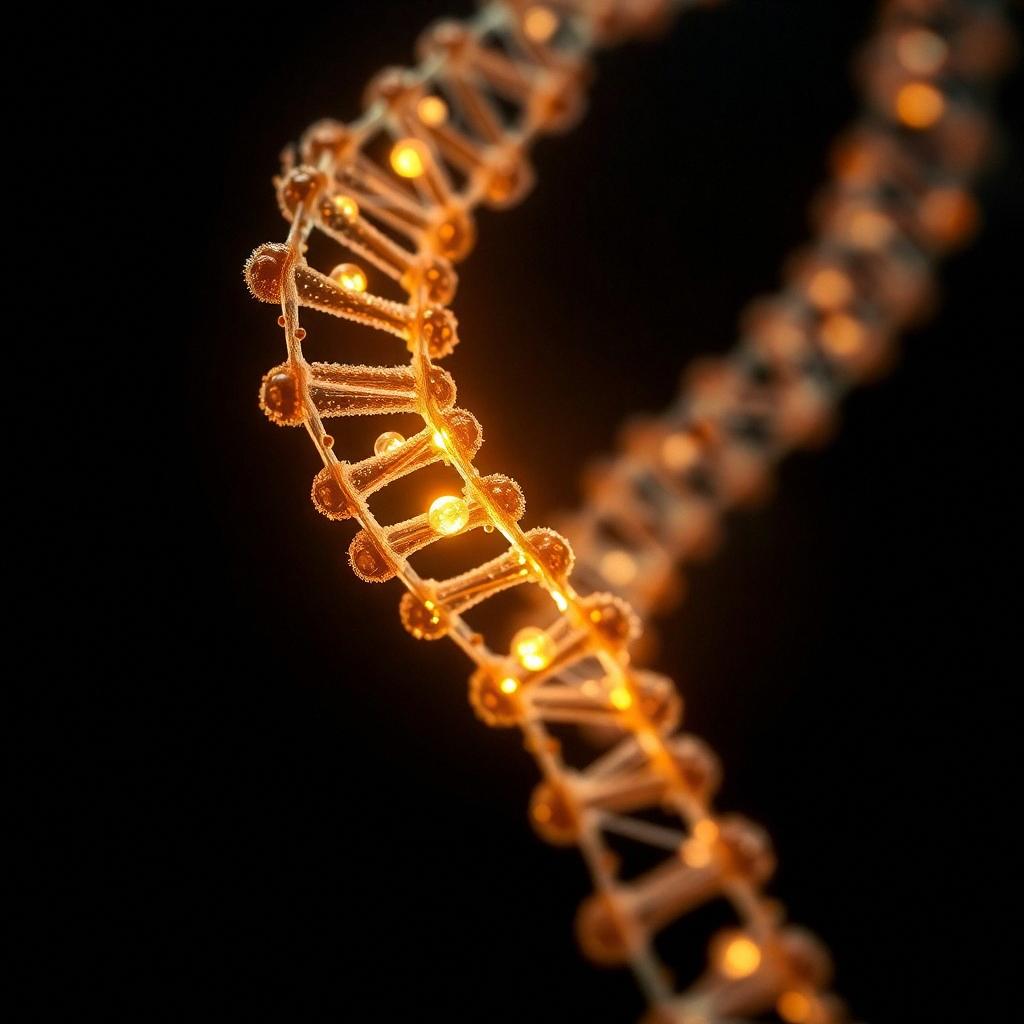
    Paper Review: Enhancer activation from transposable elements in extrachromosomal DNA Science Art

     Science Movie


    Make a narrated HD Science movie for this answer ($32 per minute)


     Discussion


    Get Ahead With Science Insights

    Custom summaries of the latest cutting edge Science research. Every Friday. No Ads.


    My BGPT