Why BGPT?
logo

Review papers with raw data transparency

Quickly verify claims by accessing the underlying experimental data and figures.


Press Enter ↵ to solve


    Fuel Your Discoveries


     Quick Explanation


    Key finding (from the paper)
    Among fish oil–WPI microcapsules compared across freeze-drying and spray drying with different nozzle designs, the 2-fluid pressure nozzle produced the highest microencapsulation efficiency (91.6%), while the ultrasonic nozzle produced the lowest (76.1%) and a narrower particle size distribution (smaller distribution spread), with the ultrasonic nozzle also showing evidence of intermittent plugging during drying.


     Long Explanation


    Paper Review (visual-first): Effect of Spray Nozzle Design on Fish Oil–Whey Protein Microcapsule Properties
    DOI: 10.1111/j.1750-3841.2010.01708.x
    Published in the Journal of Food Science (paper metadata in the provided full text).

    1) Outcomes overview (from reported table values)

    What was compared?
    Four preparation routes were compared: freeze drying, spray drying with a 2-fluid pressure nozzle, spray drying with a 3-fluid pressure nozzle, and spray drying with a 2-channel ultrasonic nozzle.
    Values are directly from the paper’s properties table (MEE column).
    Lower surface oil generally implies fewer oil-accessible regions on microcapsule surfaces (as operationalized by their solvent extraction definition).
    Particle size is reported as average diameter from a Malvern HPPS 5001 (Methods) and summarized in Table 3.
    The paper reports bulk density as unpacked/aerated (not compacted) and lists the values in Table 3.
    Moisture and water activity values come from Table 1.

    2) Interpreting the trade-offs (known vs inferred vs uncertain)

    (A) Encapsulation efficiency vs surface oil
    • Known from results: The 2-fluid pressure nozzle yields highest MEE (91.6%) and lowest surface oil (2.6%).
    • Known from results: The ultrasonic nozzle yields lowest MEE (76.1%) and highest surface oil (6.8%).
    • Paper’s inference: The authors attribute lower ultrasonic MEE to intermittent ultrasonic nozzle plugging that disrupts atomization, leading to more surface oil after re-start.
    • Uncertainty: Plugging is qualitatively described; the paper does not provide quantitative plugging frequency/duration, nor direct time-resolved measurements linking plugging events to surface oil formation.
    (B) Particle size uniformity claim
    • Known from results: The paper reports average diameters: 2-fluid pressure ~7.3 µm, ultrasonic ~11.3 µm, 3-fluid pressure ~12.0 µm, freeze dried ~56.2 µm.
    • Known from qualitative distribution plot description: The authors state the ultrasonic nozzle shows the narrowest particle size distribution (supporting the hypothesis that ultrasonic atomization yields more uniform particles).
    • Uncertainty: The provided tables do not report distribution width metrics (e.g., span, D10/D50/D90, or full distribution parameters). The “narrowest” conclusion is therefore harder to verify numerically from the extracted content alone.

    3) Visual morphology: what it supports and what remains unclear

    SEM images are presented for each condition at multiple magnifications for qualitative assessment. The authors report that freeze-dried capsules are irregular with larger surface cracks, while spray-dried samples are more uniform (with dents/creases/blisters described depending on nozzle type).
    Skeptical note: SEM observations are inherently qualitative without quantified crater/crack density, particle-to-particle variance measures, or blinded image scoring. The text as provided does not include such quantification.

    4) Methods rigor check (what seems controlled vs what may confound)

    Domain What the paper did Why it matters Remaining uncertainty / bias risk
    Wall/core formulation WPI was prepared as a 20% (w/w) solution in deionized water; fish oil:WPI ratio held at 1:2 by weight; WPI protein stated as 97.8% ± 2% protein. Holding composition constant isolates nozzle/process effects (at least partly). Other process variables (e.g., droplet residence time, nozzle pressure/flow details beyond what’s stated) may still differ. The ultrasonic plugging suggests within-run process nonstationarity.
    Emulsion prep Even for “no-emulsion-prep prior to spray drying” nozzle designs, the Methods still describe coarse and fine emulsion creation via homogenizer and sonic probe, then discusses nozzle channel mixing meeting at nozzle tip. If emulsion preparation is still performed for all conditions, the “eliminate emulsion prep” benefit may be less cleanly demonstrated. The extracted text suggests both: pre-emulsion creation and “no mix until nozzle tip” for multi-channel designs. Without the full procedural details per nozzle, it’s uncertain whether the multi-channel conditions truly avoid the same emulsion-prep exposure history.
    Statistics At least duplicate experiments; randomized order; mean reported; LSD at α=0.05; ANOVA in SAS 9.1. Helps reduce random error and allows significance comparisons across conditions. Duplicate sampling is often limited for estimating variance and for robust generalization. The tables show significance letters but not exact p-values or effect sizes beyond means/SE.

    5) Where the paper’s conclusions are strong vs where more data is needed

    Strongly supported by the reported dataset
    • Nozzle choice strongly changes MEE, surface oil, and particle size averages as shown in the reported tables (2-fluid pressure highest MEE; ultrasonic lowest MEE; freeze dried much larger particles).
    • Process-condition difference plausibly explains ultrasonic performance: the ultrasonic nozzle plugging is offered as a mechanism consistent with higher surface oil and lower MEE.
    Not fully pinned down by the provided evidence
    • “Eliminate emulsion preparation prior to spray drying” is a central motivation, but the methods text (as provided) still contains explicit emulsion preparation steps; the separation between “emulsion exposure history” and “channel-tip mixing” is therefore less verifiable from the excerpt.
    • No oxidative stability over time is measured in this paper review text (the study frames oxidation risk, but the extracted results focus on physical/chemical characterization like moisture, a_w, oil extraction fractions, size, bulk density, SEM). Without time-based oxidation outcomes, it’s uncertain whether the described physical chemistry improvements translate into better shelf-life performance.
    Author reviews (click for dedicated expert-style follow-ups)
    These buttons link to BGPT’s author-specific review pages for deeper critique context.


    Feedback:   

    Updated: April 07, 2026

    BGPT Paper Review


    Study Novelty

    70%

    Novelty is moderate because the general problem (fish oil microencapsulation; nozzle effects) is known, but the paper’s emphasis on comparing multi-channel nozzle designs that mix core and wall at atomization (and contrasting with freeze drying) provides a focused contribution.


    Scientific Quality

    70%

    Scientific quality is decent: methods are specific (materials, nozzle types, key measurements), results are internally consistent across multiple endpoints (MEE, surface oil, size, a_w), and statistics are described. However, the excerpted text leaves uncertainties about how cleanly emulsion preparation is eliminated for multi-channel conditions and provides limited process monitoring detail for ultrasonic plugging; SEM morphology is qualitative without quantified metrics.


    Study Generality

    60%

    Generality is moderate: findings are specific to menhaden fish oil + whey protein isolate, specific core:wall ratio, and specific instrument/nozzle settings; still, nozzle design clearly influences physicochemical microcapsule properties and the mechanisms (atomization uniformity vs plugging/intermittency) likely generalize to similar encapsulation systems.


    Study Usefulness

    70%

    Useful for food/materials engineers selecting nozzle approaches by mapping trade-offs (higher MEE vs smaller size distribution) and highlighting a practical failure mode for ultrasonic systems (plugging) that can reduce encapsulation performance.


    Study Reproducibility

    60%

    Reproducibility is moderate: the paper provides many concrete experimental parameters and measurement methods, but the excerpt lacks some operational details that would matter for exact replication (e.g., full flow/pressure settings for each nozzle, full per-condition emulsion handling clarity, and no quantitative plugging logs).


    Explanatory Depth

    50%

    Explanatory depth is moderate: the paper proposes plausible mechanisms (intermittent ultrasonic atomization → higher surface oil → lower MEE) and discusses qualitative morphology differences, but it lacks direct mechanistic measurements that would quantify droplet generation, residence-time history, or emulsion-to-particle transformation kinetics.


    🎁 Authors: Collect 123 Free Science Tokens (≈ $12.3 USD)

    Claim My Author Tokens

    Use for 30 days of free BGPT access (4 tokens = 1 day) or trade/sell (≈ $12.3 USD)

     Analysis Wizard


    It extracts the paper’s tabulated outcomes (MEE, surface oil, particle size, bulk density, moisture, a_w) into structured arrays, then computes rank-order trade-offs and produces publication-matching comparison plots.


     Hypothesis Graveyard


    The idea that ultrasonic performance is primarily limited by overheating (temperature exposure) is less supported here, because the paper does not measure oxidative damage during processing; instead it reports nozzle plugging as the suspected cause for reduced MEE.


    Assuming that narrower particle size distribution automatically implies higher encapsulation efficiency is contradicted: ultrasonic shows narrow distribution (per authors) but lowest MEE and highest surface oil.

     Science Art


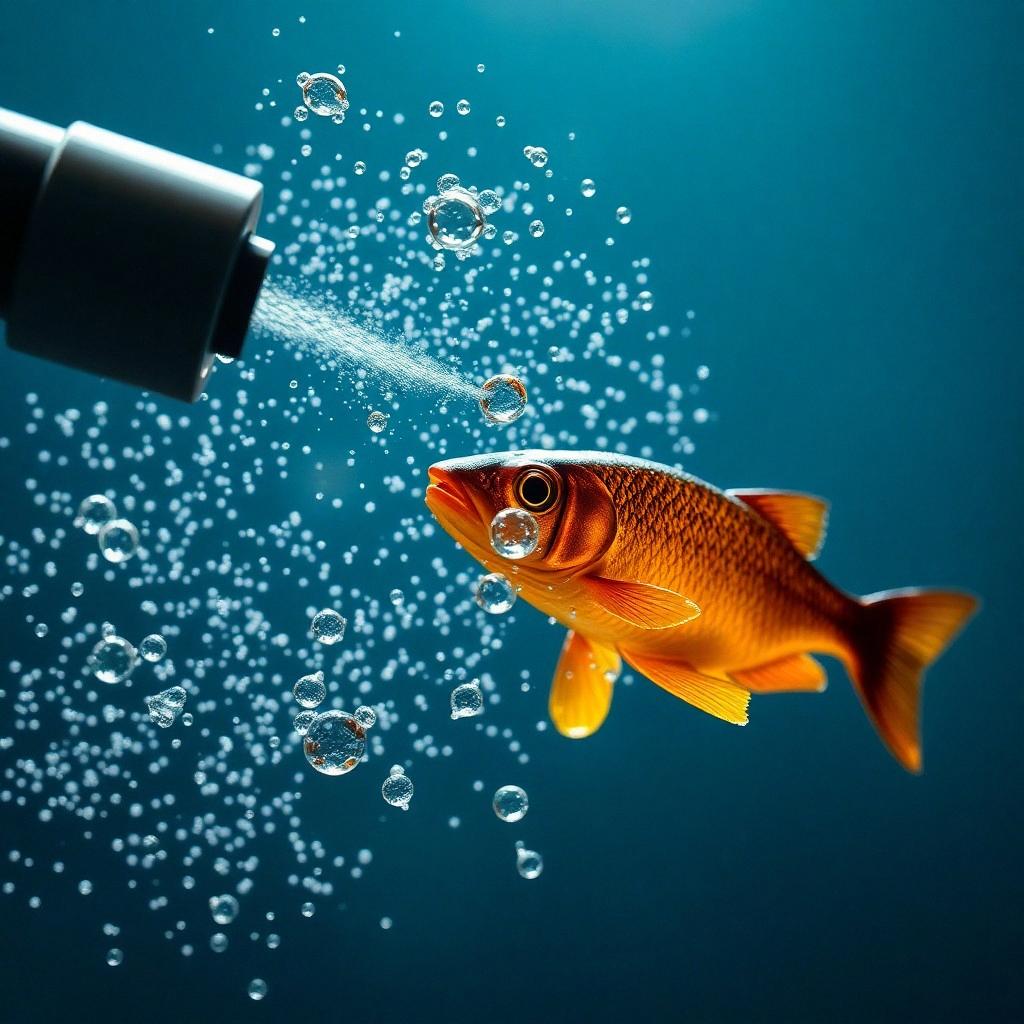
    Paper Review: Effect of Spray Nozzle Design on Fish Oil–Whey Protein Microcapsule Properties Science Art

     Science Movie


    Make a narrated HD Science movie for this answer ($32 per minute)


     Discussion


    Get Ahead With Science Insights

    Custom summaries of the latest cutting edge Science research. Every Friday. No Ads.


    My BGPT