Check a paper's claims against linked experiments, exact results, stated scope, and limitations.Know what falsifiable science actually supports before you trust the answer.
Press Enter ↵ to search evidence
Explore by Goal
"Science is not only compatible with spirituality; it is a profound source of spirituality."
- Carl Sagan
Quick Explanation
Copied
This is a well-organized narrative review by Takashi Ebihara (Cells, 2020) arguing that ILCs are not simply amplifiers of T- and B-cell responses but context-dependent regulators that can either enhance or suppress acquired immunity, with author recognition that human validation and ILC-specific deletion tools remain limiting factors.
Long Explanation
Scope and Claim
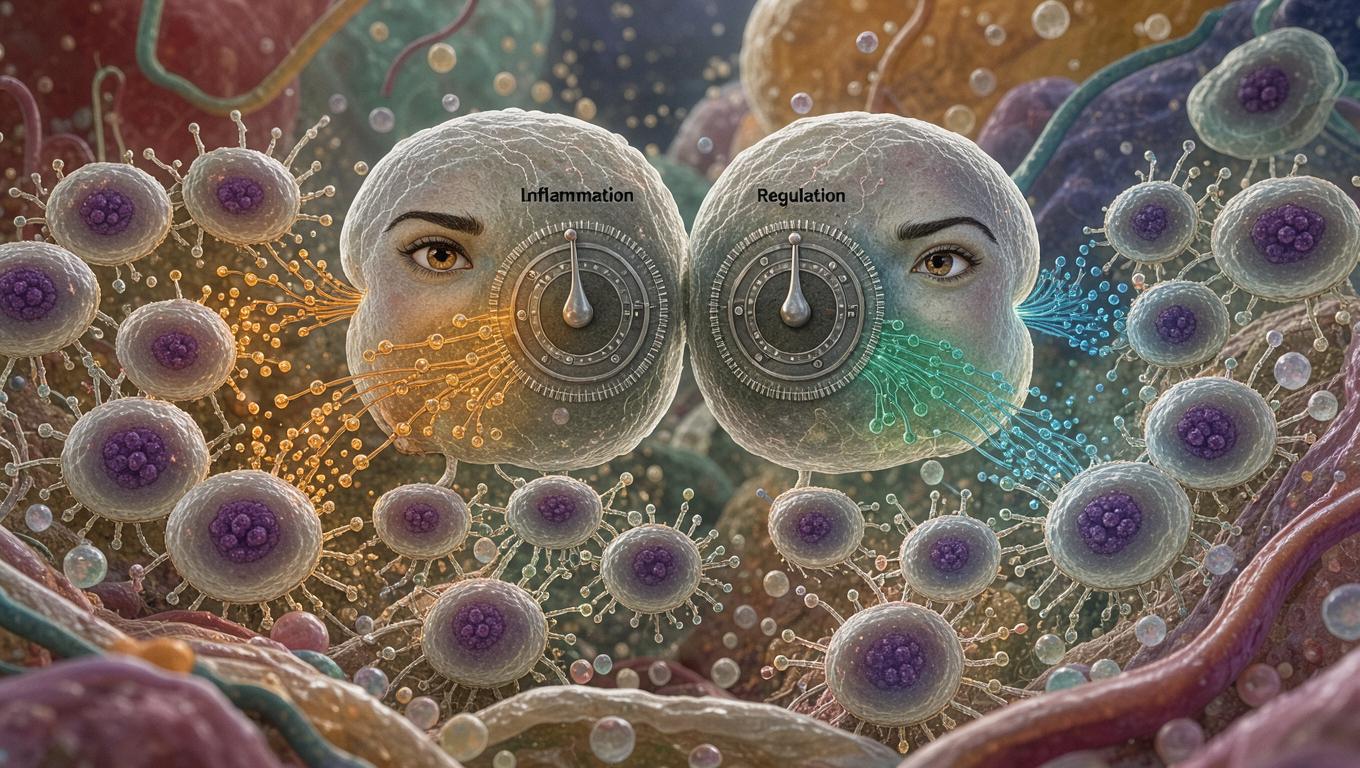
The review assembles evidence that each ILC subset mirrors a T-helper lineage (NK≈CTL, ILC1≈Th1, ILC2≈Th2, ILC3≈Th17/Th22) yet can either promote or suppress the corresponding acquired response depending on context, infection dose, and chronicity .
Key Lines of Evidence
NK/ILC1: NK-cell depletion rescues mice from chronic LCMV and boosts Th1/CTL and Tfh/antibody responses, yet at high viral dose NK cells protect via early IFN-γ — dose-dependent reversal cited from Waggoner et al. and related work .
ILC2: Acute allergy: ILC2s drive Th2 via CCL17-DCs, MHC-II antigen presentation, and OX40L; chronic severe inflammation induces TIGIT⁺IL-10⁺ "exhausted-like" ILC2s that dampen disease, with Runx/Cbfβ protecting ILC2s from this state .
ILC3: MHC-II⁺ ILC3s delete commensal-specific CD4⁺ T cells without costimulation (tolerance), yet via TL1A/DR3 and CD40L drive Th1 colitis; IL-2/OX40L supports Tregs. Largely murine evidence.
Schematic grouping of mechanisms explicitly described in the review; qualitative directions, not effect sizes.
Critical Assessment
Strengths: the dichotomy framing is genuinely useful — it reorganizes scattered findings (NK killing of CD4⁺/CD8⁺ T cells; ILC2 exhaustion; ILC3 MHC-II tolerance vs. colitis) into a coherent, testable axis, consistent with independent reviews of ILC2 regulation .
Limitations the author flags: mouse-heavy evidence; Zfp683/Hobit knockout confounds because T cells are affected; CD4⁺ T cells produce more IL-10 than ILC2s in the papain model; the human existence of "exhausted-like" ILC2s is unknown .
Blind spots BGPT adds: (1) no discussion of how microbiota-derived SCFAs — a major ILC3/ILC2 modulator — interact with the dichotomy framework ; (2) publication bias toward positive ILC–T cell interactions is acknowledged but not systematically addressed; (3) mTOR signaling (e.g., IL-33→mTOR in ILC2s) is a mechanism the review omits despite direct relevance .
Verdict
A high-quality, timely synthesis (May 2020) whose central claim — ILCs as context-dependent rheostats of acquired immunity — is well supported by strong murine data but only moderately established in humans. The conclusion would be revised by: human tissue data showing no exhausted-like ILC2s; ILC1-specific deletion models showing no effect on viral T-cell responses; or demonstrations that ILC3 MHC-II deletion phenotypes are DC-driven artifacts.
Feedback:
Updated: November 23, 2026
BGPT Paper Review
Study Novelty
70%
The dichotomy framing is a useful synthesis reorganization rather than a new discovery; key findings (NK rheostat, ILC2 exhaustion, ILC3 MHC-II tolerance) are drawn from prior primary papers, but the integrated suppressive-vs-stimulatory axis was not consolidated before 2020.
Scientific Quality
80%
Well-structured narrative review with 195 references and candid self-criticism (confounded knockouts, ILC2-specific deletion needs). Weaknesses: single author, no systematic search, some citation formatting errors, heavy mouse reliance.
Study Generality
80%
Applies broadly across infection, allergy, colitis, and tumor contexts and links innate/adaptive immunity — a general organizing principle, though concrete in human disease remains unproven.
Study Usefulness
80%
Valuable for immunologists designing ILC-deletion experiments, interpreting checkpoint-blockade data, and considering ILC-targeted therapies; limited direct clinical utility.
Study Reproducibility
60%
As a review it presents no primary data; reproducibility depends entirely on cited mouse experiments whose exact protocols, blinding, and replication status are not evaluated.
Explanatory Depth
80%
Mechanistic detail is high (Runx/Cbfβ in ILC2 exhaustion, PD-L1 on hepatic ILC1s, TL1A/DR3 in ILC3 colitis), though some causal chains rest on correlative or confounded models.
Schematic direction-of-effect graph (qualitative, not quantitative effect sizes) is included in the long response.
Generated scientific data; not direct experimental measurements.
Get emailed when your analysis is done!
We'll email you the results when your analysis is finished.
Hypothesis Graveyard
"ILCs are merely redundant early T cells" — falsified by context-specific effects (NK deletion improving chronic viral outcomes) that T cells do not replicate.
"Helper ILCs exist solely to amplify innate responses" — contradicted by ILC3-driven Th1 colitis and NK suppression of Tfh cells.

 Explore by Goal
 Quick Explanation
 Long Explanation
 Top Data Sources
 Ask a Follow-Up
 Key Insight
 Keep Exploring
 DataGen
 Hypothesis Graveyard
 Discussion
