Check each claim against its experiments, reported results, scope, and stated limitations.Know what the science actually supports before you trust the answer.
Press Enter ↵ to start review
Explore by Goal
"Biology is also more important than physics, as measured by its economic consequences, by its ethical implications, or by its effects on human welfare."
- Freeman Dyson
Quick Explanation
Copied
This polyphasic taxonomy paper validly describes 15 novel Janthinobacterium species from Tibetan Plateau glaciers using ANI (<95%), dDDH (22.2–64.0%), and an 81-core-gene phylogenomic tree, substantially expanding a genus previously limited to ~8 validly named species. The genomic and phenotypic evidence is solid, though reliance on single strains per species, unresolved ecological roles, and debated ANI/dDDH thresholds temper interpretation.
Long Explanation
What the paper reports
From >2,000 bacterial isolates cultured at 14°C from Midui, Hailuogou, Laigu, Renlongba, Zepu and Gawalong glaciers (Tibetan Plateau, collected 2009–2016), the authors delineated 15 novel Janthinobacterium species (e.g., J. algoris, J. darwini, J. woesei, J. violaceum, J. amylolyticum), roughly tripling the genus' validly named species count .
Evidence quality
The taxonomic case is strong: all 15 pairwise ANI values fell below 95%; dDDH values against related type strains ranged 22.2–64.0% (threshold <70%); four strains matched glacial MAGs/isolates from India and the Alps at ANI ≥96%, suggesting conserved glacial species. Genome quality was high (100% completeness, 0–1.4% contamination; sizes 4.90–6.44 Mb; GC 60.8–63.3%) . The authors candidly note that 16S rRNA NJ trees showed low bootstrap support—an acknowledged limitation correctly addressed by phylogenomics, consistent with the known poor resolution of 16S in rapidly radiating Burkholderiaceae .
All reported dDDH values sit far below the 70% species boundary, supporting species distinctness with a comfortable margin.
Limitations and blind spots
Each species rests on a single type strain, so intra-species genomic plasticity is uncharacterized; cultivation bias (R2A/PYG at 14°C) restricts inferred diversity; and ecological/functional roles (e.g., violacein production, which shows antimicrobial and anti-cancer activity in related taxa ) remain unexplored in the new species. ANI/dDDH thresholds are themselves debated in prokaryotic taxonomy. Falsification would require any strain showing ANI ≥95% or dDDH ≥70% with a named species. Confidence: high for species distinctness (strong genomic data), moderate for ecological claims.
Feedback:
Updated: September 14, 2026
BGPT Paper Review
Study Novelty
80%
Nearly tripling valid species in a genus and matching glacial MAGs from other continents is a substantive, though not revolutionary, contribution; multiple large novel-species descriptions appear annually in IJSEM.
Scientific Quality
80%
Rigorous polyphasic workflow (FastANI, TYGS dDDH, UBCG2/IQ-TREE phylogenomics, API phenotyping, 100% completeness QC); candidly reports low 16S bootstrap support. Minor red flag: accession numbers appear inconsistently paired across strains in the text, and GROBID-extracted sections show layout garbling.
Study Generality
60%
Genus-specific taxonomy with broad implications for glacial microbiome diversity and hidden prokaryotic species richness, but findings are niche and do not generalize beyond Janthinobacterium/extreme-environment taxonomy.
Study Usefulness
80%
Type strains deposited in CGMCC/NBRC with full genome accessions enable future bioprospecting (violacein, cold-adapted enzymes) and comparative genomics across glacial habitats.
Study Reproducibility
80%
Detailed methods, public genomes, and standard pipelines (SPAdes, CheckM2, FastANI, IQ-TREE) permit independent verification; minor accession-number inconsistencies reduce the score slightly.
Explanatory Depth
70%
Deep descriptive taxonomy but limited mechanistic explanation of glacial adaptation or ecological differentiation; divergence patterns are documented, not causally explained.

 Explore by Goal
 Quick Explanation
 Long Explanation
 Top Data Sources
 Ask a Follow-Up
 Key Insight
 Keep Exploring
 Hypothesis Graveyard
 Potential Experiments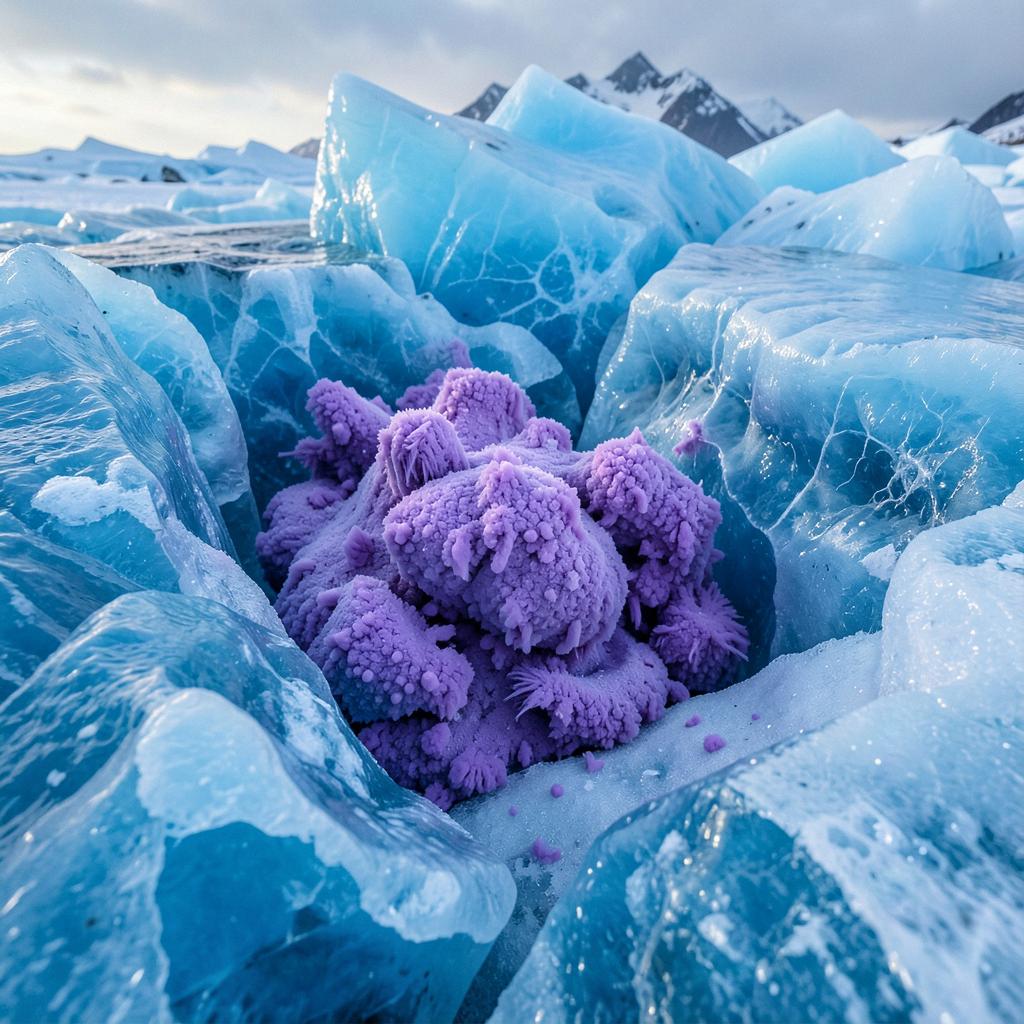
 Discussion