Check each claim against its experiments, reported results, scope, and stated limitations.Know what the science actually supports before you trust the answer.
Press Enter ↵ to start review
Explore by Goal
"We live in a society exquisitely dependent on science and technology, in which hardly anyone knows anything about science and technology."
- Carl Sagan
Quick Explanation
Copied
Paper reviewed
Confronting Melanoma Radioresistance: Mechanisms and Therapeutic Strategies (Cancers, published Aug 14, 2025; DOI: 10.3390/cancers17162648) is a narrative mechanistic review that organizes melanoma radioresistance around DNA damage repair, hypoxia/metabolism, cancer stem cell plasticity, pigmentation/melanin protection, and tumor microenvironment immunology—and emphasizes combination strategies (RT + ICIs, RT + DNA repair inhibition, RT + hypoxia/pro-metabolic and emerging radiation modalities).
Core strength: it provides a coherent mechanistic “resistance network” and a curated map of radiosensitizers and ongoing RT-combination trials (Tables 1–2).
Main skepticism: because it is narrative (not systematic), it is vulnerable to selection/recency bias and to heterogeneous cross-study endpoints; it also provides limited quantitative synthesis of clinical effect sizes and limited falsifiability framing for several mechanistic claims.
Long Explanation
Paper Review
Confronting Melanoma Radioresistance: Mechanisms and Therapeutic Strategies
Type: narrative mechanistic review; focuses mainly on cutaneous melanoma; includes selected mentions of uveal melanoma as conceptual contrast.
Conflict of interest: authors declare none.
Funding: MeDDrive Program 2023 (/2024), grant 60536 (as stated in manuscript metadata).
Note: because you provided only the full paper text/metadata (not external datasets), the quantitative visuals below are built from the paper’s own included tables (Tables 1–2) and the specific numeric values explicitly stated in the text.
VISUAL 1 — “Resistance network” (Figure 1 as a mechanistic map)
The paper’s central organizing figure enumerates major resistance nodes and suggests that they interact as a coupled system.
Figure source inside the paper
Created with BioRender (as stated in the manuscript figure metadata).
Mechanistic components explicitly listed in the paper’s Figure 1
DNA repair / DDR (e.g., PARP, ATM, ATR, p53)
Cancer stem cell (CSC) plasticity/heterogeneity (e.g., CD271, CD133, ABCB5, ALDH)
Hypoxia-driven resistance (HIF1α)
Metabolic and redox support (ROS, glutathione/redox)
Pigmentation/melanin (MC1R signaling)
Tumor microenvironment (hot vs cold; TAMs and immune context)
VISUAL 2 — Radiosensitizers by development stage (from Table 1)
This bar chart counts the entries shown in the paper’s Table 1 (“Selected melanoma radiosensitizers”), grouped by the “Stage of Research” column (Preclinical, Clinical Phase II, Clinical, Preclinical/Clinical Phase I, etc.).
Skeptical reading
The paper’s table emphasizes a mixture of preclinical and early clinical radiosensitizers, but it does not provide cross-agent efficacy comparison or standardized endpoints in Table 1; therefore, development stage ≠ clinical effectiveness.
VISUAL 3 — Radiosensitizers by molecular class (mechanistic taxonomy from Table 1)
Grouped by mechanism keywords appearing in the “Mechanism of Action” column of Table 1 (DNA-PKcs/DDR inhibitors; PARP1; ATR; CHK1; HDAC; hypoxia-activated; immune type I IFN inducers; MDM2/p53 axis; Dbait/coDbait DNA strand break bait; MC1R-targeted alpha-particle compounds; etc.).
Skeptical reading
Because Table 1 is curated and mechanism mapping can be subjective (keyword grouping), this visualization is best treated as an “organizational proxy,” not an evidence-strength measure of each pathway’s relative causal importance.
Counts the “Systemic Treatment” column categories for selected trials shown in the paper’s Table 2 (Published + Planned trials section).
Skeptical reading
Table 2 is not a systematic registry scrape; trial selection is curated (“Selected recent clinical trials…”). So this plot should be treated as a map of what the review highlights, not the full landscape of RT-combination research.
MECHANISTIC CORE — what the review claims (and where skepticism is warranted)
1) DNA damage repair (DDR) as a causal lever
The paper links radioresistance to DSB repair pathways and checkpoint control, and it supports radiosensitization logic using examples of DDR inhibitors (DNA-PKcs, PARP-1, ATR, CHK1) and p53 pathway modulation.
It frames DSBs as lethal RT-induced lesions leading to DDR cascades and repair foci involving ATM/H2AX (radiation-induced foci concepts).
It then argues that radiosensitizers that block DNA repair/checkpoints should increase RT efficacy by impairing DSB recovery.
2) Hypoxia and altered metabolism as RT “shielding conditions”
The review emphasizes classical oxygen effects: hypoxic cells generate less ROS-mediated DNA damage and activate pro-survival/repair signaling. It also links melanoma’s physiological hypoxia (epidermal gradients) to intrinsic adaptation.
Examples of countermeasures highlighted include oxygen mimetics/nitroimidazoles, HIF-1α targeting (acriflavine), and hypoxia-activated prodrugs (tirapazamine SR-4233; TH-302; evofosfamide).
3) CSC plasticity and marker uncertainty
The review positions CSCs as a radioresistance reservoir via slow cycling, enhanced DNA repair, and phenotypic plasticity. Importantly, it also explicitly flags a known problem in the CSC field: “putative markers” can be non-specific and vary across models.
It cites evidence that multiple putative CSC markers are frequently expressed in benign differentiated cells or across wide contexts, reducing their CSC specificity.
4) Melanin/pigmentation and the physical/biochemical “radioprotection” concept
The review discusses how eumelanin can reduce DNA damage via antioxidant/radioprotective effects, while pheomelanin can be mutagenic under UV conditions. It further emphasizes correlations between eumelanin content and radiosensitivity.
Mechanistically, the review highlights specific pigmentation enzymes and pathways (e.g., TRP-2/DOPAchrome tautomerase) as linked to radioresistance in melanoma cell models.
5) Tumor microenvironment (TME) immunology: “hot vs cold” and timing
The review argues that RT can both stimulate anti-tumor immunity (type I IFN, dendritic cell activation, T-cell priming) and also foster immunosuppressive states depending on TME context.
It frames resistance as primary vs secondary ICI resistance and highlights that RT can modulate immune infiltration and IFN programs—suggesting that sequencing/timing may be crucial for synergy.
CRITICAL APPRAISAL (science-quality lens)
Main strengths
Coherent systems-level organization: DDR + hypoxia/metabolism + CSC plasticity + melanin + TME immune context are explicitly integrated into a “resistance network” (Figure 1).
Useful curated synthesis artifacts: Table 1 groups radiosensitizers and their mechanistic targets and research stage; Table 2 organizes selected RT-combination trials including systemic therapy pairings.
Internal criticality in at least one domain: it explicitly reports marker non-specificity problems for melanoma CSC markers, which is important because it limits overconfident “single-marker” targeting narratives.
Main limitations / blind spots (from the paper’s form and content)
Narrative review bias risk: no explicit systematic search strategy, inclusion/exclusion criteria, or quantitative synthesis is presented in the provided text; thus selection bias and overrepresentation of mechanistic “wins” cannot be excluded.
Cross-study heterogeneity: mechanistic links are supported by diverse cell lines, mouse models, and clinical contexts, but the review does not harmonize endpoints (e.g., clonogenic survival vs lesion response vs OS/PFS), making causal comparisons difficult.
Limited explicit falsifiability: the review generally supports combination rationale but provides limited “decision points” specifying what experimental outcomes would refute a given mechanistic hub (beyond general statements). (This is an appraisal of the review’s framing style, not a claim about the underlying primary literature.)
Clinical effect-size uncertainty: the review references multiple clinical trial programs, but without a systematic effect-size synthesis in the provided text; therefore the magnitude of benefit across combinations remains harder to compare rigorously from within the review alone.
Direct mechanistic attribution in humans (e.g., DDR foci kinetics, hypoxia measurements, immune-cell phenotypes) linked to clinical response—rather than inferring mechanism only from preclinical plausibility.
I cannot verify these prospective biomarker-controlled data exist from the provided paper text; this is the key “known unknown” the review implies by calling for biomarkers and improved models.
Optional: Explore authors’ perspectives in BGPT
Click for bespoke author-centric reviews.
Author names taken from the manuscript metadata provided.
Feedback:
Updated: March 29, 2026
BGPT Paper Review
Study Novelty
60%
The review is a broad, integrative synthesis of known radioresistance axes (DDR, hypoxia/metabolism, CSC plasticity, pigmentation/melanin, TME immunity) and it catalogues combination strategies and trials. Its novelty is mainly in how it organizes and visually maps these known themes into a resistance-network narrative, rather than introducing a new mechanistic framework or new primary data.
Scientific Quality
80%
Scientific quality is strengthened by: (i) mechanistic coherence across multiple resistance domains, (ii) explicit discussion of CSC marker non-specificity (reducing one common overclaim), and (iii) useful curation in tables of radiosensitizers and selected trials. Skepticism remains because the provided text indicates a narrative review rather than a systematic review with reproducible search strategy and quantitative synthesis; it therefore cannot support strong comparative claims about which mechanisms or combinations are most effective.
Study Generality
70%
The paper’s generality is moderately high: while it focuses on cutaneous melanoma, the mechanistic axes (DDR/repair, hypoxia, metabolic redox buffering, CSC plasticity, immune hot/cold states, and pigmentation-driven radioprotection) are broadly relevant to other solid tumors exposed to RT. However, some emphasis is melanoma-specific (pigmentation/melanin biology and melanoma CSC marker debates), which reduces universal transferability.
Study Usefulness
90%
High utility for researchers/clinicians designing RT-combination hypotheses: Table 1 provides a practical map of radiosensitizers grouped by targets (DDR enzymes, checkpoints, hypoxia, HIF, MDM2/p53, Dbait/coDbait, hypoxia-activated prodrugs), and Table 2 organizes selected clinical trials including RT schemes and systemic partners. These directly help identify candidate mechanistic nodes and the current clinical trial landscape.
Study Reproducibility
50%
As a narrative review, reproducibility is limited: the provided text emphasizes synthesis and curated selection but does not describe a reproducible systematic search protocol or provide machine-readable inclusion criteria. Additionally, the review does not generate new datasets or deposit underlying data accession numbers.
Explanatory Depth
90%
The review offers deep mechanistic explanation across multiple interacting layers (DNA damage repair, hypoxia-driven ROS constraints and HIF programs, metabolic/redox buffering, CSC plasticity/marker caveats, pigmentation/melanin radioprotection, and TME immunologic hot/cold behavior). Its Figure 1 integrates these into a resistance network, supporting conceptual mechanistic thinking even without new experiments.
It will extract Table 1 and Table 2 row-wise mechanism/class and stage labels from the paper text, then recompute the class/stage plots and provide downloadable summary tables for your own reassessment.
Get emailed when your analysis is done!
We'll email you the results when your analysis is finished.
Hypothesis Graveyard
“Single CSC surface markers are sufficient biomarkers for radiosensitivity.” The review itself reports marker non-specificity and widespread expression of putative CSC markers, undermining this simplistic selection logic.
“DDR inhibitors will universally radiosensitize melanoma independent of microenvironment.” The review emphasizes multiple microenvironmental shields (hypoxia, metabolism/redox, pigmentation/TME immune state), implying universal DDR-only strategies are unlikely to work across heterogeneous contexts.

 Explore by Goal
 Quick Explanation
 Long Explanation
 Top Data Sources
 Ask a Follow-Up
 Key Insight
 Keep Exploring
 Analysis
  Hypothesis Graveyard
 Potential Experiments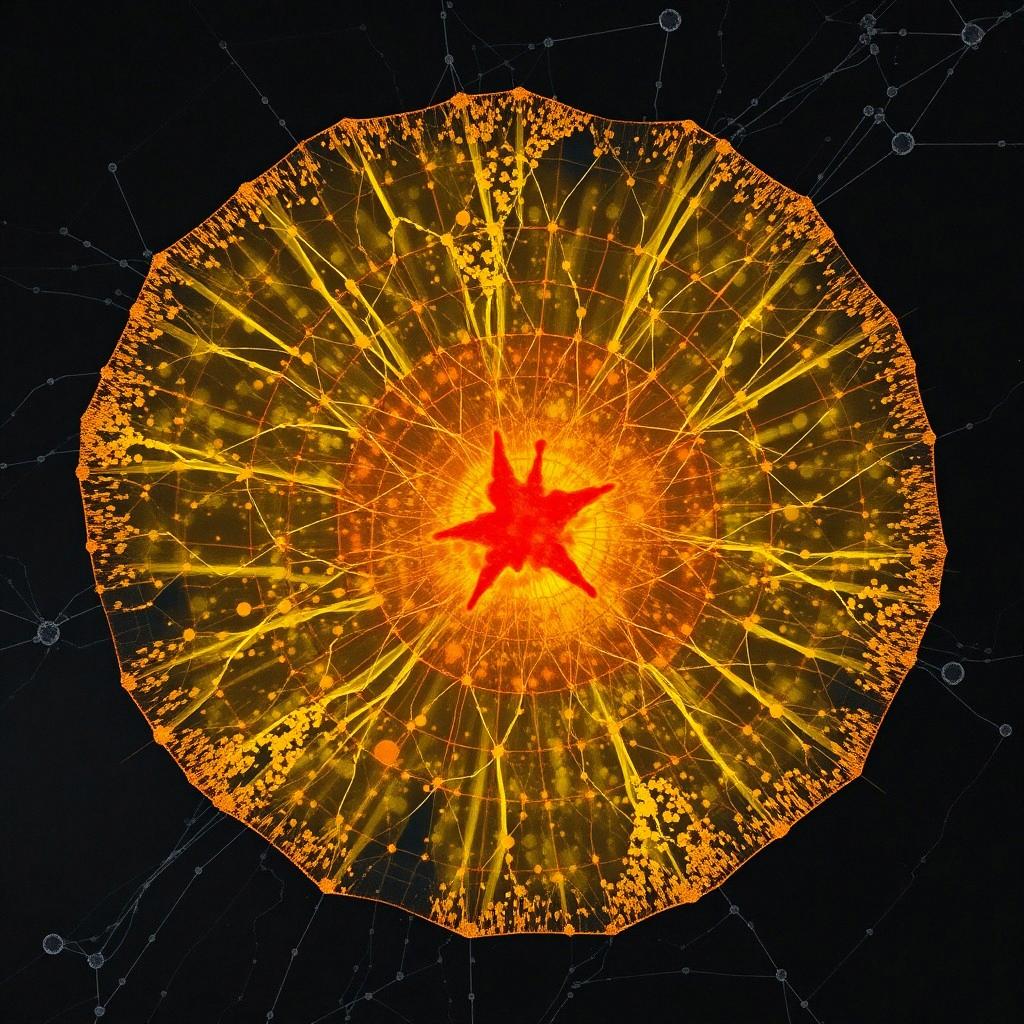
 Discussion