Check each claim against its experiments, reported results, scope, and stated limitations.Know what the science actually supports before you trust the answer.
Press Enter ↵ to start review
Explore by Goal
"The science of today is the technology of tomorrow."
- Edward Teller
Quick Explanation
Copied
This 2002 method-comparison study of 12 Andean mummy tissues found 5 M guanidium thiocyanate (GTC) lysis superior to proteinase K/detergent, recovering amplifiable DNA from all 12 and RNA from 8 of 12 samples, with an added chloroform step clearly improving phenol/chloroform extraction; no hepatitis viruses were detected, though viral degradation over centuries cannot be excluded
Long Explanation
What the study shows
Konomi, Lebwohl, and Zhang compared nine nucleic-acid extraction methods across 12 Andean mummy tissues (mostly genital-area skin; one ilium, one penis) from the American Museum of Natural History, dated to before 1460 AD. DNA quality was assayed by PCR of a 200 bp GAPDH fragment; RNA by one-step RT-PCR of a 297 bp β-actin segment. The core result: 5 M guanidium thiocyanate lysis releases nucleic acids from mummified tissue more efficiently than proteinase K/detergent, and phenol/chloroform followed by an extra chloroform step (PSC/C) raised DNA positivity to 9/12 and RNA to 3/10, versus 7/12 DNA and 1/7 RNA with Sigma phenol/chloroform alone. Back-extraction of the organic phase added little, and twice-extracted phenol/chloroform improved DNA (though several were weakly positive) but not RNA. Proteinase K-based approaches—including the Puregene kit, which yielded zero positive samples—underperformed, plausibly because heavily chemically modified mummy proteins resist enzymatic digestion. Commercial GTC kits (Sepagene, Sepagene RV-R) were also less efficient than home-made 5 M GTC. Combining methods, DNA was recovered from all 12 specimens and RNA from 8/12 .
Interpretation caveat: RNA denominators differ across methods because RT-PCR was only attempted on samples where DNA was confirmed first, and RNA recovered per method came from different specimens — a design asymmetry the authors acknowledge but which prevents strict head-to-head RNA comparisons.
Critical appraisal
Strengths: This appears to be the first direct, head-to-head comparison of extraction methods on genuine mummified human tissue, run in a CAP-inspected clinical molecular diagnostics lab with four-room PCR workflow and surface-cleaned deep biopsy sampling — unusually good contamination hygiene for 2002 . The finding that RNA survives in mummies corroborates prior HPLC/RNase evidence of uracil-rich polynucleotides in ancient tissue .
Weaknesses: n=12 with heterogeneous tissue sites (10/12 genital area) limits generality and introduces sampling bias toward soft tissues of unknown post-mortem history; no quantitative yields (ng/mg) or fragment-length distributions are reported — success is only binary PCR positivity, so “efficiency” conflates yield, fragmentation, and inhibitor content. GAPDH is a single-copy genomic target here without independent authentication of ancient origin (no sequence cloning, no independent replication, no damage-pattern analysis such as deamination signatures that later became standard in ancient DNA). The negative hepatitis-virus screens are uninterpretable without positive extraction controls: failure may reflect viral RNA/DVA fragility (as the authors concede) rather than absence, and the paper itself notes fragile enveloped viruses degrade while thick-walled bacteria persist . The method-comparison figure was partially garbled in the archived text (per-specimen results reported only as a formula block), which limits independent verification of Table 2 details. No falsifying test of the GTC mechanism (e.g., why proteinase K fails) was attempted beyond speculation about protein cross-linking.
Confidence: Moderate — the qualitative conclusion (GTC + chloroform post-extraction > proteinase K/detergent for mummified tissue) is internally consistent and mechanistically plausible, but rests on 12 specimens, endpoint PCR with 40–55 cycles (contamination-prone), and no quantification. Modern silica-column and magnetic-bead ancient-DNA protocols with UDG-treated libraries would be needed to confirm whether the GTC advantage holds against contemporary methods.
Feedback:
Updated: September 17, 2026
BGPT Paper Review
Study Novelty
60%
First direct head-to-head comparison of nucleic acid extraction methods on mummified tissue including RNA; incremental but methodologically useful for 2002.
Scientific Quality
70%
Careful contamination controls and clinical-lab rigor, but n=12, binary endpoint PCR readouts without authentication, no quantitative yields, and partially garbled results presentation weaken it.
Study Generality
60%
Conclusions apply to dried mummified soft tissues broadly, though 10/12 samples came from genital-area sites and findings may not generalize to bone, teeth, or differently preserved remains.
Study Usefulness
70%
Practical protocol guidance (GTC lysis + chloroform post-extraction; avoid proteinase K-dominant kits for mummies) directly actionable for archaeogenetics labs.
Study Reproducibility
70%
Detailed reagent sources, concentrations, thermocycler programs, and primer tables are given, enabling replication, though per-specimen method outcomes are partially illegible in the archive.
We'll email you the results when your analysis is finished.
Hypothesis Graveyard
Absence of hepatitis viruses in Andean mummies implies these infections were absent pre-1460 AD; abandoned because fragile enveloped/viral genomes degrade selectively relative to host DNA and bacterial cell-wall-protected pathogens, making non-detection uninformative about historical presence.

 Explore by Goal
 Quick Explanation
 Long Explanation
 Top Data Sources
 Ask a Follow-Up
 Key Insight
 Keep Exploring
 Hypothesis Graveyard
 Potential Experiments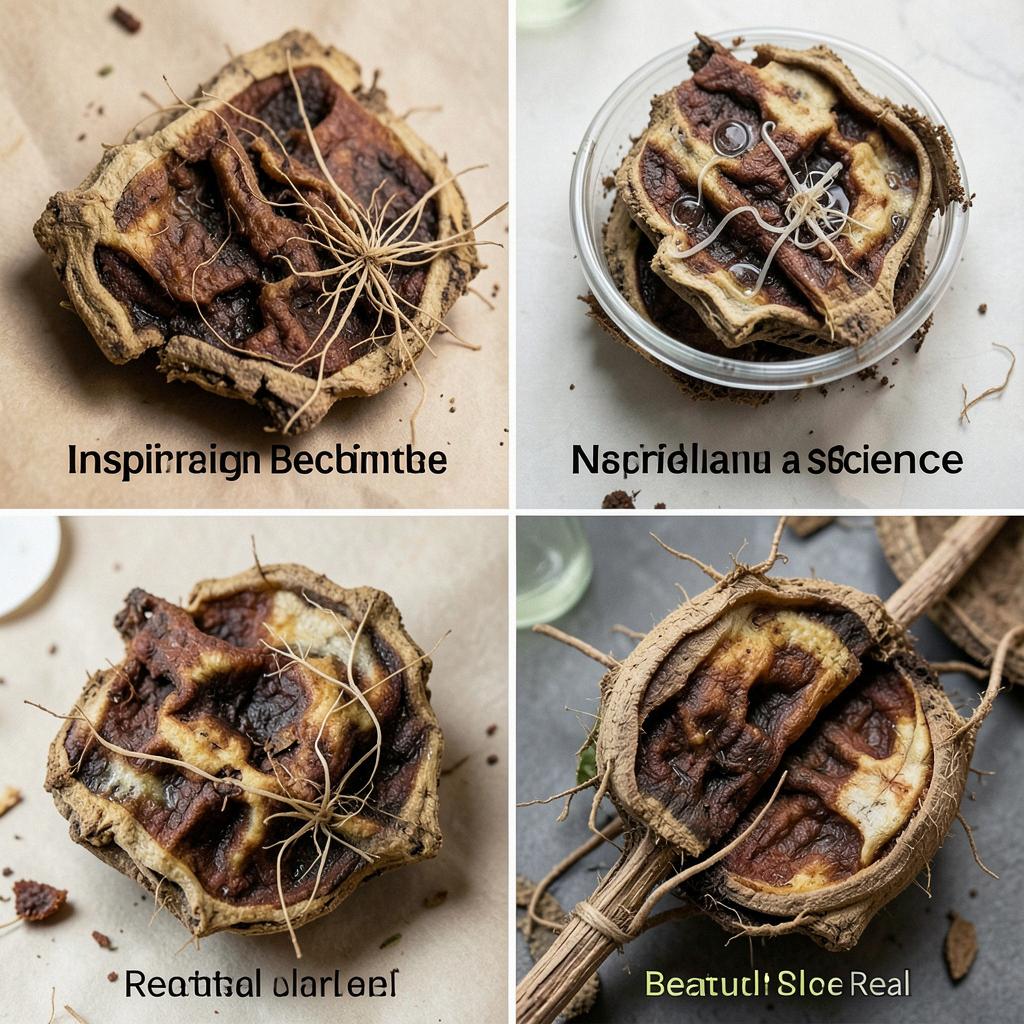
 Discussion