Why BGPT?
logo

Review papers with raw data transparency

Quickly verify claims by accessing the underlying experimental data and figures.


Press Enter ↵ to solve


    Fuel Your Discoveries


     Quick Explanation


    Bottom line: The preprint (DOI:10.1101/2025.01.21.634164) provides a careful comparative biochemical, structural and expression-level characterization of NF-κB from Aurelia aurita and Clytia hemisphaerica, showing conserved DNA binding but species-specific transcriptional activation and regulation by IκB-like partners; key limitations are the use of heterologous (vertebrate/yeast) assay systems and reliance on mRNA-to-protein inference for in vivo function (detailed evidence below).


     Long Explanation


    Visual summary and critical analysis — Jellyfish NF-κB (Aa, Ch)

    Visualize first — key quantitative readouts from the paper are plotted below (DNA binding, mammalian-cell reporter activation, yeast GAL4 activation, and subcellular localization counts). All numerical values are taken from the preprint (DOI:10.1101/2025.01.21.634164) and are cited below.

    Evidence synthesis — What the data actually show (with direct linking to the preprint)

    • Protein structure & domain architecture: Both Aa- and Ch-NF-κB proteins lack the C-terminal ankyrin inhibitory repeats typical of mammalian p100/p105 family and are ~435–477 aa containing mainly the RHD; full sequences and domain maps are provided in the paper and supplemental figures ().
    • DNA binding: Extracts from HEK293T expressing Aa- or Ch-NF-κB bound a mammalian consensus κB oligonucleotide strongly; the ELISA-based assay reported ~>1000-fold signal over empty vector and specific competition by WT but not mutant oligo (authors' values shown in Plot 1) ().
    • Transcriptional activation (heterologous assays): In HEK293 κB-luciferase reporter assays, Nv-NF-κB (sea anemone control) activated ~10×, but Aa- and Ch-NF-κB did not activate the reporter under the same conditions; in yeast GAL4-fusion assays Aa-NF-κB gave ~40× activation while Ch-NF-κB did not activate (Nv control ~100×) — indicates DNA binding alone is insufficient for activation in HEK cells and suggests co-factor/post-translational requirements or inhibitory context differences ().
    • Subcellular localization and regulation: When expressed in DF-1 (chicken fibroblasts), both Aa- and Ch-NF-κB were primarily nuclear (>70–87% cells); jellyfish IκB-like proteins bound their cognate NF-κBs (co-IP) and could relocalize NF-κB to cytoplasm, supported by AlphaFold-predicted docking of ANK repeats to the RHD consistent with mammalian IκB-NFκB interactions ().
    • Developmental expression (Clytia): Bulk RNA-seq and single-cell atlas indicate high NF-κB and BCL3 mRNA in early stages (gastrula/planula) when IκB mRNA is low, and higher IκB in adult medusa/gonads — authors argue this pattern is consistent with active NF-κB during early development and regulated activation in adults ().

    Critical appraisal — strengths

    1. Clear, multi-modal approach combining phylogenetics, biochemical DNA-binding, reporter assays (two heterologous systems), co-IP, localization, AlphaFold3 structural modeling, and developmental RNA-seq; this triangulation strengthens internal consistency ().
    2. Quantitative DNA-binding data with competition controls (WT vs mutant oligo) supporting sequence-specific binding rather than non-specific DNA association ().
    3. Provision of RNA-seq accessions / resource pointers (MARIMBA) and code availability links for single-cell analyses (Zenodo/GitHub links referenced), increasing transparency for the expression analyses ().

    Critical appraisal — limitations, blind spots, and places data could mislead

    • Heterologous systems: Nearly all activity/localization/function assays were performed in vertebrate (HEK 293/293T or DF-1) cells or yeast. This is a major source of interpretive uncertainty because co-factors, post-translational modification enzymes, chromatin context, or accessory proteins needed for transcriptional activation in jellyfish may be absent. Therefore the negative HEK reporter result for Aa/Ch does not prove these proteins are inactive as transcriptional activators in native jellyfish cells ().
    • mRNA→protein inference: The developmental expression interpretation assumes mRNA levels reflect protein abundance and activity; this is explicitly recognized by the authors as an assumption and could be false if translational control or protein stability differ across stages.
    • Sample sizes & single-cell sensitivity: The single-cell signals for a transcription factor are noted as low; low UMI counts can lead to false negatives in cell-type assignment and under-represent expression in rare cells — the paper mentions low transcript levels for NF-κB in the single-cell atlas, so conclusions about cell-type specificity should be cautious ().
    • AlphaFold3 structural conclusions: AlphaFold3 docking is useful but not a substitute for experimental structural biology; the RMSD comparisons reported (jellyfish vs mouse p50) are informative but should not alone be used to infer functional equivalency of interaction interfaces or dynamics in native complexes.
    • Evolutionary interpretation risks: The paper interprets structure/function differences as species-specific regulatory adaptation (development vs immune roles). While plausible, these inferences rest on mRNA patterns and heterologous functional assays; proving evolutionary function requires perturbation in the native organism (knockdown, CRISPR, rescue) and phenotypic readouts.
    • Conflict of interest & funding bias: Funding is academic (NSF, BU, Freedom Together Foundation); no COI declared, but undergraduate-lab involvement and course-based research (BB522) are explicitly stated and may affect depth of some experiments (not a bias per se, but relevant for expected experimental scale).

    How convincing are the main claims?

    - Claim: Jellyfish NF-κB proteins specifically bind κB DNA sites — convincing within the assay context (strong, sequence-competition controls give confidence).
    - Claim: These NF-κB proteins do not activate a κB-site reporter in HEK cells — valid for the heterologous HEK assay, but cannot be generalized to jellyfish biology (moderate, assay-limited).
    - Claim: IκB-like proteins interact and regulate subcellular localization — supported by co-IP, localization shifts, and AlphaFold docking (moderate-to-strong within heterologous systems).
    - Claim: NF-κB functions in early development in Clytia — plausible given mRNA patterns but currently inferential; requires in vivo perturbation for confirmation (weak-to-moderate).

    Concrete, high-value follow-ups (experiments that would change conclusions)

    1. CRISPR/Cas or morpholino knockdown of Ch-NF-κB in early Clytia embryos with scoring for developmental phenotypes (cnidocyte formation, gastrulation defects) and rescue with wild-type or DNA-binding mutant constructs — would directly test developmental role (falsifies/strengthens developmental claim).
    2. Chromatin immunoprecipitation (ChIP) using an antibody against endogenous Ch-NF-κB (or epitope-tagged knock-in) in Clytia early-stage tissue to detect native genomic binding and identify target genes — would confirm in vivo DNA-binding targets and separate binding from activation capacity.
    3. Proteomics to identify jellyfish-specific NF-κB co-factors or post-translational modifications (phosphorylation, ubiquitination) that enable transcriptional activation; test these in HEK reporter assays by co-expressing candidate co-factors to rescue activation.
    4. Quantitative western blot or mass spec to compare NF-κB and IκB protein levels across developmental stages to validate the mRNA→protein assumption.

    Paper scoring (critical, skeptical)

    • paper_novelty: 7
    • paper_novelty_explanation: Comparative functional data for two jellyfish species combining AlphaFold3, biochemical assays and stage-resolved expression is novel for scyphozoan/hydrozoan NF-κB and advances knowledge beyond single-species reports.
    • paper_quality: 7
    • paper_quality_explanation: Experiments are clear, controlled (competition assays, co-IPs, localization counts) and methods are described; major quality limits come from reliance on heterologous systems and limited in vivo perturbation to connect molecular facts to organismal function.
    • paper_generality: 5
    • paper_generality_explanation: Findings generalize to understanding NF-κB evolution but specific functional conclusions (development vs immunity) are species/context-dependent and thus only moderately general.
    • paper_usefulness: 6
    • paper_usefulness_explanation: Useful for researchers studying NF-κB evolution, cnidarian development and immunity; provides reagents, sequences and hypotheses for functional follow-up, but limited immediate translational or broad mechanistic utility without in vivo follow-up.
    • paper_reproducibility: 7
    • paper_reproducibility_explanation: Methods (plasmids, transfections, TransAM modification, RNA-seq sources) are described; code links for RNA analysis are provided. Reproducibility limited by availability of jellyfish colonies, codon-optimized constructs and potential variability in heterologous cell assays.
    • explanatory_depth: 6
    • explanatory_depth_explanation: Paper provides mechanistic clues (DNA binding, IκB interactions, structural docking) but stops short of in vivo mechanism or identification of native target genes and co-factors.

    Key insight (concise)

    Basal metazoan NF-κB proteins can retain conserved DNA-recognition geometry while evolving species-specific regulatory interfaces and co-factor dependencies that decouple DNA binding from transactivation in heterologous systems — implying that surveying only DNA-binding is insufficient to infer regulatory function across phyla ().

    Novel, testable hypotheses

    1. Ch-NF-κB is a developmentally active transcription factor whose target set in gastrula/planula includes cnidocyte-differentiation genes; loss-of-function will reduce cnidocyte numbers (testable by CRISPR/morpholino and cnidocyte markers).
    2. Aa-NF-κB contains an intrinsic activation surface that functions in yeast but is inactive in vertebrate chromatin due to missing jellyfish-specific coactivator(s); co-expression of candidate jellyfish coactivators in HEK cells will restore κB-reporter activation.

    Novel experiments (concise protocols)

    1. In vivo Ch-NF-κB perturbation: Microinject Clytia zygotes with Cas9 RNPs targeting NF-κB or translation-blocking morpholino; assay gastrula/planula morphology, cnidocyte markers (staining), and perform RNA-seq on knocked-down embryos to identify direct/indirect targets; include rescue with Cas9-resistant tagged NF-κB to confirm specificity.
    2. ChIP–seq in early-stage Clytia: Generate an epitope-tag knock-in (e.g., HA) at endogenous NF-κB; crosslink early gastrula tissue, immunoprecipitate HA, prepare libraries and sequence to identify genomic NF-κB binding sites and motif enrichment; integrate with RNA-seq to define regulated genes.

    Short guidance for authors / how to improve the study

    Add at least one native-organism perturbation (morpholino or CRISPR) or ChIP experiment; provide western/protein-level quantification across stages to validate mRNA inferences; attempt co-expression of candidate jellyfish co-factors in HEK or use jellyfish primary cells / explants to test activation directly.


    Notes on evidence strength: conclusions about molecular interactions, DNA binding and localization are supported by direct biochemical and cell-based assays reported in the preprint; organismal/developmental claims are plausible but inferential and require perturbation experiments in the native animals for stronger support ().


    Feedback:   

    Updated: March 11, 2026

    BGPT Paper Review


    Study Novelty

    70%

    Comparative, experimentally grounded characterization of NF-κB from two jellyfish models with AlphaFold3 structure predictions, biochemical DNA-binding with competition controls, co-IP/localization, and developmental RNA-seq is a novel, integrative dataset for cnidarian NF-κB evolution.


    Scientific Quality

    70%

    Experiments are methodologically sound with appropriate controls (DNA-binding competition, co-IP, localization counts). Main quality constraints: heavy reliance on heterologous systems (HEK/DF-1/yeast), lack of in vivo genetic perturbation in jellyfish, and single-cell detection sensitivity for a low-abundance TF.


    Study Generality

    50%

    Findings generalize to evolutionary comparisons and to hypotheses about NF-κB regulation across basal metazoans, but species-specific regulatory conclusions require direct testing in each organism; therefore generality is moderate.


    Study Usefulness

    60%

    Provides sequences, plasmids, assays, and RNA expression patterns useful for researchers in evolutionary immunology and cnidarian development; limited translational utility without functional in vivo validation.


    Study Reproducibility

    70%

    Methods are described sufficiently and RNA data/code pointers are provided; heterologous assay reproducibility is good, but reproducing developmental expression/function requires access to jellyfish models and may have ecological/colony-dependent variability.


    Explanatory Depth

    60%

    Paper connects sequence, structure (AlphaFold3), biochemical binding, and regulatory interactions but does not yet provide direct mechanistic links between NF-κB binding and transcriptional programs in the native organism (no ChIP/knockdown data).


    🎁 Authors: Collect 123 Free Science Tokens (≈ $12.3 USD)

    Claim My Author Tokens

    Use for 30 days of free BGPT access (4 tokens = 1 day) or trade/sell (≈ $12.3 USD)

     Top Data Sources ExportMCP


     Analysis Wizard


    Preparing scripts to map ChIP-seq and RNA-seq reads, call NF-κB peaks, and integrate peak-to-gene assignments with developmental differential expression (using provided MARIMBA transcriptomes).


     Hypothesis Graveyard


    Hypothesis: Lack of HEK activation means jellyfish NF-κB are transcriptionally dead — rejected because Aa activates yeast GAL4 reporter and both bind DNA specifically, so they retain activation potential depending on context.


    Hypothesis: Nuclear localization in DF-1 equals constitutive activity in jellyfish adults — unlikely because mRNA/protein balance and IκB expression vary across stages; heterologous localization does not equate to native activation status.

     Science Art


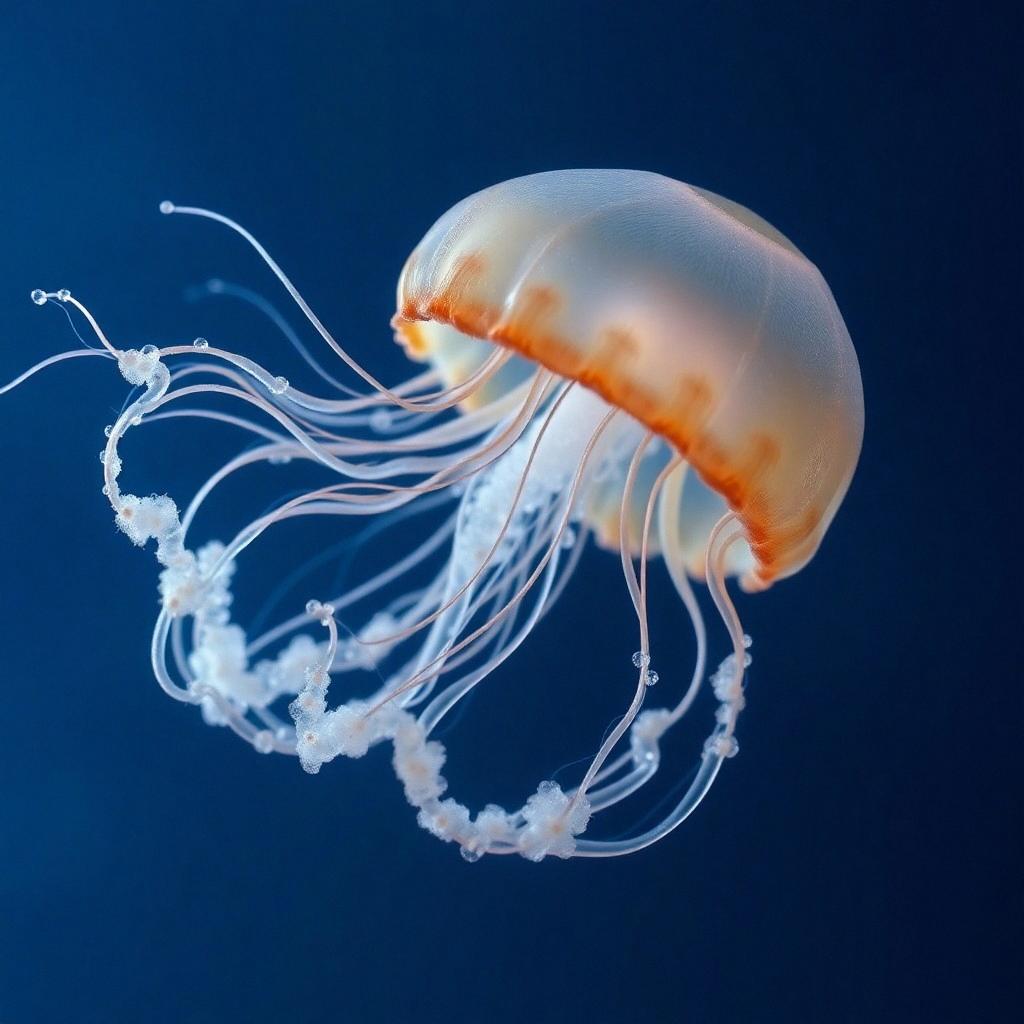
    Paper Review: Comparison of Activities of Transcription Factor NF-κB from Two Jellyfish Models Science Art

     Science Movie


    Make a narrated HD Science movie for this answer ($32 per minute)


     Discussion


    Get Ahead With Science Insights

    Custom summaries of the latest cutting edge Science research. Every Friday. No Ads.


    My BGPT