Check whether claims match experiments, exact reported results, and stated limitations.Know what the science actually supports before you trust the answer.
Press Enter ↵ to review paper
Explore by Goal
"The most beautiful experience we can have is the mysterious. It is the fundamental emotion that stands at the cradle of true art and true science."
- Albert Einstein
Quick Explanation
Copied
This 2018 Journal of Pharmaceutical Sciences review by Wei et al. competently synthesizes ~30 LS-antigen vaccine studies, correctly flagging the platform's two core liabilities—fusion-protein expression/refolding burdens and strong carrier immunogenicity risking epitope suppression—but it stays largely descriptive, cites no quantitative cross-study benchmarking, and understates that essentially all evidence is preclinical (mostly murine), limiting translational weight.
Long Explanation
What the review establishes, with cited evidence
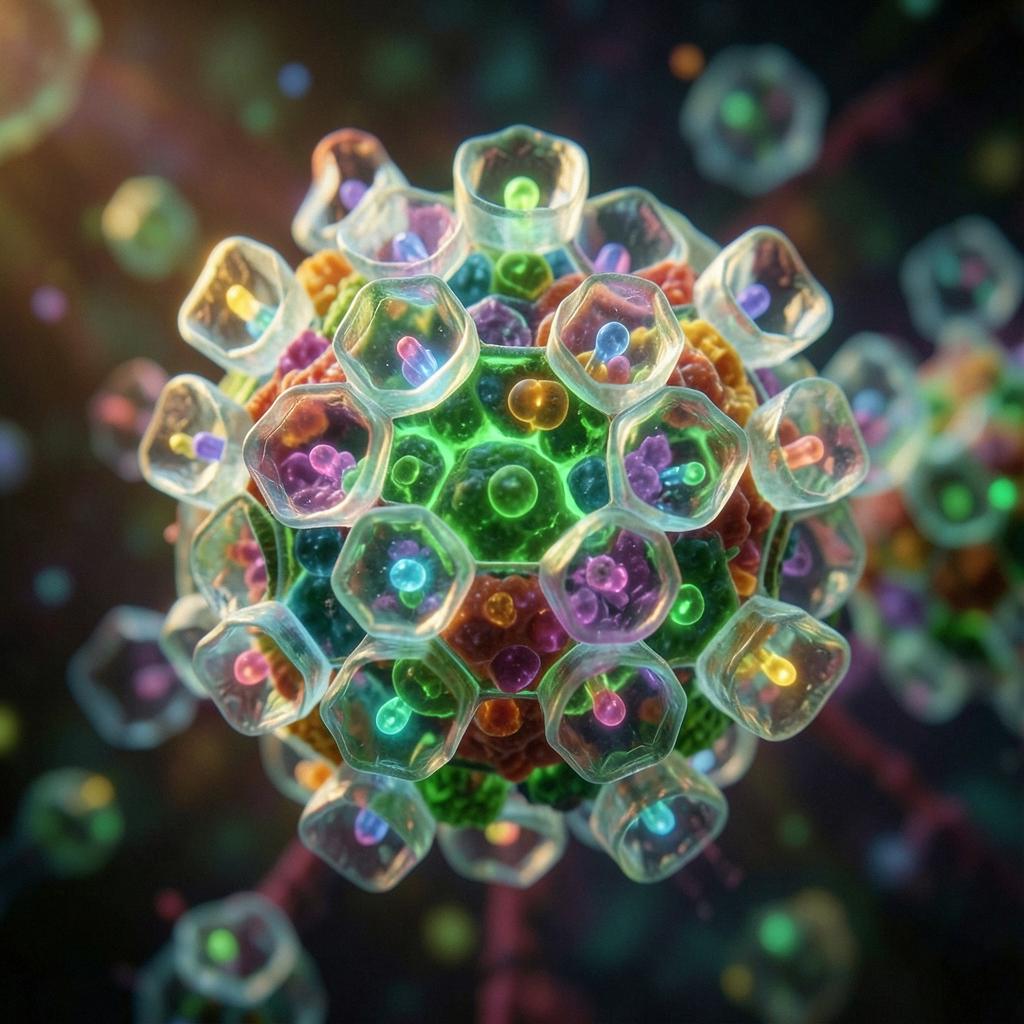
The review's central, evidence-backed claim is that lumazine synthase (LS) functions as a stable oligomeric scaffold: melting temperatures differ by assembly state, with icosahedral Aquifex aeolicus LS at ~120°C, icosahedral Bacillus subtilis LS at ~93°C, and pentameric S. cerevisiae LS at ~74°C . This stability plausibly supports cold-chain resilience, though the review asserts rather than tests the storage-stability benefit.
The strongest immunological dataset the review draws on is the maternal BLS-Stx2B chimera work: pups of immunized BALB/c dams showed 100% survival after a lethal intravenous Stx2 challenge (21 vs 11 pups; P<0.001) and 100% survival after oral EHEC challenge at weaning (P<0.0001) . Similar scaffold benefits appear for bovine rotavirus VP8d (97.5–100% protection vs 36–67% for VP8d alone) , and the rotating-cage version of AaLS remains clinically active in HIV/RBD vaccine trials today .
What the review gets right—and what it avoids
Credibly, the authors do not oversell: they name the two biggest platform risks—fusion-protein expression/inclusion-body/refolding burdens and the scaffold's own high immunogenicity driving carrier-induced epitope suppression, evidenced by their own PB10-ricin chimera that raised anti-ricin IgG yet failed to protect against a 10× lethal challenge . Blind spots remain: the review aggregates small-n murine studies without effect-size or heterogeneity analysis, weights the Goldbaum-lab Brucella LS literature heavily (a potential citation/familiarity bias), and never quantifies whether LS-based display outperforms ferritin or other nanocage scaffolds. The surprising LS-OVA result—LS alone protecting better than the LS-OVA chimera against B16 melanoma—is noted but left unexplained, a genuine mechanistic gap . Confidence: moderate—claims rest on many small, unblinded preclinical studies; conclusions would be falsified if head-to-head scaffold comparisons showed no avidity-driven immunogenicity gain.
Feedback:
Updated: October 26, 2026
BGPT Paper Review
Study Novelty
50%
A synthesis of a decade-old literature (Brucella LS vaccine work dates to 1999); the platform concept and most cited results were well established by 2018, though its systematic cataloging of ~30 studies added organizational value.
Scientific Quality
70%
Well-organized, self-critical about epitope suppression and expression pitfalls, funded transparently (AAPS fellowship); but purely narrative, no quantitative synthesis, no formal search strategy, heavy reliance on one research group's work, and an unnamed GSK-affiliated author in the authorship.
Study Generality
70%
Explains oligomerization determinants (K131 conservation, pentamer-pentamer contacts) and TLR4 adjuvanticity at a literature level, but leaves key mechanisms unexplained (e.g., why LS alone outperformed the LS-OVA chimera in melanoma protection) and offers no predictive framework for which antigens benefit most from LS display.
Study Usefulness
70%
Practical value for vaccine engineers: cataloging of fusion terminals, adjuvants, routes, and outcomes across Table 2 plus explicit troubleshooting of expression/refolding issues; limited by absence of quantitative head-to-head benchmarks.
Study Reproducibility
50%
As a review it generates no data; reproducibility depends entirely on the ~30 cited primary studies, most of which are small murine experiments with variable methods and incomplete reporting.
Cross-referencing the review's vaccine table with modern LS nanocage clinical trials to quantify how preclinical protection claims translated into human testing.
Get emailed when your analysis is done!
We'll email you the results when your analysis is finished.
Hypothesis Graveyard
LS stability alone explains vaccine efficacy: falsified as a sufficient explanation because the pentameric (least stable) and decameric (intermediate) Brucella LS produced stronger protection data than the most stable icosahedral scaffolds; multivalency and TLR4 agonism dominate.
LS is immunologically silent like a neutral carrier: directly contradicted by Berguer et al. showing dendritic-cell activation via TLR4 and by the PB10-ricin failure where scaffold responses outcompeted epitope responses.

 Explore by Goal
 Quick Explanation
 Long Explanation
 Top Data Sources
 Ask a Follow-Up
 Key Insight
 Keep Exploring
 Analysis
 Hypothesis Graveyard
 Potential Experiments
 Discussion
