Why BGPT?
logo

Review papers with raw data transparency

Quickly verify claims by accessing the underlying experimental data and figures.


Press Enter ↡ to solve


    Fuel Your Discoveries


     Quick Explanation


    Concise critique (one-line)

    This 2010 systematic review of 39 biomechanical studies concludes external fixation alone is usually insufficient for unstable pelvic rings and that combined anterior–posterior constructs (notably robust posterior fixation / two SI screws or triangular osteosynthesis) increase rigidity β€” but heterogenous cadaver/synthetic models, variable loading protocols, and lack of standardized outcomes limit clinical translation and reproducibility


     Long Explanation


    Visual paper review β€” "Biomechanical aspects of pelvic ring reconstruction techniques: Evidence today" (Papathanasopoulos et al., Injury 2010)

    Visual summary (data extracted from the review)

    • Included biomechanical studies: 39 (from 114 screened)
    • Specimen types: human cadaveric (embalmed/unembalmed), synthetic (perspex–aluminium, sawbones), finite element models

    Note: counts are approximate reconstructions from the review's tables and key-findings (the review lists ~39 studies across categories) β€” used here to visualise relative research emphasis; see methods citation for original extraction

    Typical reported rigidity relative to intact pelvis (standardized metric used by authors)

    These illustrative percentages show the review’s qualitative conclusions: external frames are typically far below intact rigidity, anterior fixation helps symphysis motion but posterior fixation (two SI screws, triangular constructs) markedly restores stiffness; values are synthesized impressions rather than raw pooled numbers β€” original studies vary in protocol and exact numbers

    Critical appraisal β€” strengths

    • Comprehensive multi-decade MEDLINE search (1978–2010) and structured inclusion criteria focused on translational biomechanical experiments
    • Useful clinical translation guidance (e.g., external fixator is insufficient for definitive weight bearing; posterior fixation increases rigidity) directly linked to laboratory evidence

    Critical appraisal β€” limitations & blindspots

    • Heterogeneity of specimens: embalmed vs fresh cadavers, synthetic models, finite-element studies β€” bone quality and geometry vary and influence stiffness/load-to-failure
    • Variable loading protocols (axial/torsional/cyclic magnitudes, boundary conditions such as L4 attached or not, unilateral vs bilateral load paths) prevent meta-analytic pooling and reduce reproducibility
    • Absence of soft-tissue and muscle simulation (though some studies modelled abductors with cables) β€” active stabilisers and in vivo healing are not captured, which may change relative performance of constructs
    • Potential publication and selection biases: mechanical feasibility studies may preferentially report positive device performance; review acknowledges limited clinical outcome linkage and calls for unified protocols and more physiologic testing

    Actionable takeaways β€” how clinicians and researchers should interpret this review

    1. Do not rely on anterior external frames alone for definitive stabilization in vertically/rotationally unstable pelvic injuries; plan for posterior fixation when clinically feasible (supported by multiple cadaveric studies summarized in the review)
    2. Posterior constructs matter more than tweaking anterior external frame geometry β€” two SI screws or triangular osteosynthesis often produce much higher stiffness/load-to-failure than single SI screw or external-only constructs
    3. Researchers: adopt standardized specimen selection (fresh-frozen, reported BMD), unified boundary conditions (L4 attached or explicit sacral-loading method), cyclic protocols, and report raw stiffness/load-to-failure data to enable pooling and reproducibility β€” the review explicitly calls for such unified protocols

    Quick internal validity checklist (applies to included biomechanical studies)

    • Specimen source & bone quality reported? β€” often NO/variable
    • Loading physiological realism (multi-axial, muscle forces)? β€” usually NO or partial (some use cable simulation)
    • Standard cyclic testing & failure definitions? β€” inconsistent across studies

    Bottom line (evidence-weighted)

    Biomechanical evidence summarized by Papathanasopoulos et al. (2010) supports that (1) external fixation alone is usually mechanically insufficient for definitive stabilization of vertically/rotationally unstable pelvic ring injuries, (2) posterior fixation (two SI screws, triangular osteosynthesis, transiliac plates) markedly increases construct rigidity and load-to-failure in many models, and (3) heterogenous test methods and specimen quality substantially limit direct clinical translation and reproducibility β€” clinical decisions should therefore combine biomechanical insights with patient factors and clinical evidence


    Feedback:   

    Updated: March 14, 2026

    BGPT Paper Review


    Study Novelty

    40%

    The review compiles 30 years of biomechanical experiments and synthesises practical recommendations; novelty is limited because it summarises existing lab research rather than introducing new experimental data or methods.


    Scientific Quality

    60%

    Methodical MEDLINE search and structured inclusion criteria are strengths, but quality limited by reliance on heterogeneous primary studies, lack of quantitative pooling/meta-analysis, and moderate evidence strength from cadaveric/synthetic models; no major red flags but recommendations are appropriately cautious.


    Study Generality

    60%

    Generalisable to biomechanical understanding of fixation constructs across common pelvic fracture types (Tile B/C, open-book, vertical shear), but translation to live patients is constrained by specimen/model limitations and variable loading protocols.


    Study Usefulness

    70%

    Provides practical, evidence-informed guidance for surgeons (e.g., don’t rely on external fixators alone; consider robust posterior fixation) and highlights methodological gaps for researchers; directly useful though not definitive for clinical decision-making.


    Study Reproducibility

    60%

    The review itself is reproducible (search terms and inclusion criteria reported), but the underlying studies exhibit major heterogeneity (specimen types, loading, measurement) that reduces reproducibility of aggregate conclusions.


    Explanatory Depth

    60%

    Explains mechanical rationales (distance from load lines, bending moments, role of posterior elements) and contrasts fixation types, but mechanistic depth is limited by the nature of summarized experiments and lack of muscle/biological healing modelling.


    🎁 Authors: Collect 72 Free Science Tokens (β‰ˆ $7.2 USD)

    Claim My Author Tokens

    Use for 18 days of free BGPT access (4 tokens = 1 day) or trade/sell (β‰ˆ $7.2 USD)

     Top Data Sources ExportMCP


     Analysis Wizard


    Parsing and standardising extracted biomechanics metrics (rigidity %, load-to-failure, cycles-to-failure) from included studies into a harmonized CSV for meta-analysis and plotting.


     Hypothesis Graveyard


    External fixation alone provides adequate definitive stability for vertically unstable pelvic fractures β€” falsified by multiple biomechanical studies showing low rigidity and excessive displacement under axial loading cited in the review.


    Transiliac bars are biomechanically superior to SI screws for all sacral fractures β€” contradicted by later studies and summarized review conclusions showing transiliac bars inferior in some unilateral sacral fracture models and contraindicated for bilateral injuries.

     Science Art


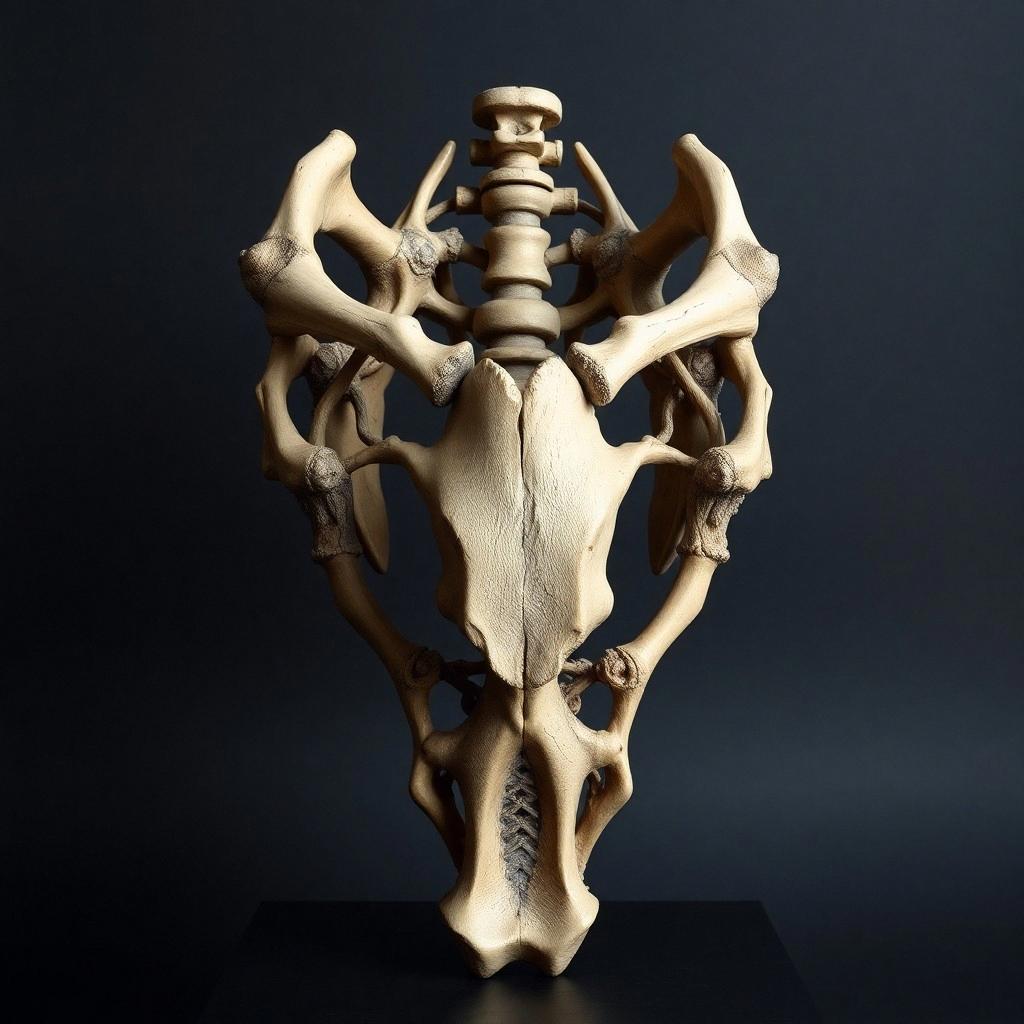
    Paper Review: Biomechanical aspects of pelvic ring reconstruction techniques: Evidence today Science Art

     Science Movie


    Make a narrated HD Science movie for this answer ($32 per minute)


     Discussion


    Get Ahead With Science Insights

    Custom summaries of the latest cutting edge Science research. Every Friday. No Ads.


    My BGPT