Check each claim against its experiments, reported results, scope, and stated limitations.Know what the science actually supports before you trust the answer.
Press Enter ↵ to start review
Explore by Goal
"The diversity of the phenomena of nature is so great, and the treasures hidden in the heavens so rich, precisely in order that the human mind shall never be lacking in fresh nourishment."
- Johannes Kepler
Quick Answer
Copied
Al-Chaer and Traub's 2002 review in Pain consolidates the then-new view that visceral pain is biologically distinct from somatic pain: dual vagal/pelvic/splanchnic innervation, viscerosomatic convergence, a dorsal-column nociceptive pathway, and neonatal-colon-irritation models of chronic hypersensitivity
Long Answer
Core Argument and Evidence
This 2002 Pain review (NIH-funded, NS40434) synthesizes 32+ references to argue visceral pain differs mechanistically from somatic pain. Key claims: (1) visceral afferents are almost exclusively A-delta and C fibers lacking specialized end organs, innervating via dual vagal and spinal (pelvic/splanchnic) pathways; (2) viscerosomatic and viscerovisceral convergence in the dorsal horn explains poor localization and referred pain; (3) only ~10% of spinal afferent inflow is visceral despite organs' large surface area .
The most consequential claim is the dorsal column (DC) pathway: DC lesions in monkeys dramatically reduced thalamic VPL responses to colorectal distension while spinothalamic tract lesions did not, and DC lesions suppressed spinal sensitization in the neonatal-colon-irritation model . Later work confirmed translational relevance: C1–C2 punctate midline myelotomy in mice reduced acetic-acid writhing from 56.7±10.7 (control) to 30.0±14.3 (>40% antinociception, p<0.001, n=12/group, blinded observers) .
The second pillar is the neonatal colon irritation model producing adult visceral hyperalgesia with central sensitization (heightened neuronal responses, c-Fos expression in lumbosacral/thoracolumbar segments) and primary afferent sensitization — a developmental-stress paradigm that subsequent work extended: prenatal maternal stress upregulates ASIC1 via promoter demethylation and NF-κB binding in gastric-projecting DRG neurons, reversing hypersensitivity with amiloride , and maternal separation induces hypersensitivity in wildtype and GABA-B(1b) knockout mice .
Critical Assessment
Reported observations are electrophysiological and behavioral from rodents and primates; the authors' interpretation that these models "mimic" IBS is an extrapolation — the hyperalgesia-to-IBS inference rests on face validity, not predictive validity, which the review does not address. The kappa-opioid receptor claim of a "novel peripheral site" is honestly caveated by the authors (receptor not cloned; antisense data not conclusive). Notably, the review anticipated mechanistic heterogeneity: NK-1 receptors signal neurogenic but not non-neurogenic inflammation — a prediction borne out by later translational failures of NK1 antagonists. Blind spots: no discussion of sex differences, no human psychophysical validation of the DC pathway claims, and heavy reliance on the authors' own neonatal-irritation model (self-citation concentration risk).
Feedback:
Updated: October 10, 2026
BGPT Paper Review
Study Novelty
70%
For 2002, consolidating the dorsal-column visceral pathway and a neonatal-programming hypersensitivity model was genuinely new; much was synthesis of the authors' own recent work rather than wholly novel concepts.
Scientific Quality
70%
Well-organized, NIH-funded, appropriately caveated (e.g., kappa receptor uncertainty). Weaknesses: reliance on author self-citations, abstract-only references, and no quantitative synthesis or discussion of negative results.
Study Generality
60%
Mechanisms (sensitization, convergence, NMDA signaling) generalize across visceral systems, but focus is GI-centric with limited coverage of cardiac, urinary, or reproductive visceral pain.
Study Usefulness
70%
Directed attention to testable targets (Nav1.8, NMDA, NK receptors, DC pathway) that shaped subsequent preclinical and surgical research; limited immediate clinical utility given animal-model basis.
Study Reproducibility
50%
As a narrative review with no primary data or quantitative synthesis, reproducibility depends entirely on the cited primary studies; some cited work was abstract-only and unverifiable at publication.
Explanatory Depth
70%
Provides layered mechanistic explanation from fiber type and neurochemistry through spinal convergence to supraspinal pathways and sensitization, though several claims rest on inference rather than direct tests.
Generated scientific data; not direct experimental measurements.
Get emailed when your analysis is done!
We'll email you the results when your analysis is finished.
Hypothesis Graveyard
Visceral pain is conveyed exclusively by the spinothalamic tract: falsified by DC-lesion experiments showing dramatic VPL response loss with STT lesions spared.
Peripheral inflammation alone explains chronic visceral pain: contradicted by neonatal-colon-irritation models where hypersensitivity persists after inflammation resolves.

 Explore by Goal
 Quick Answer
 Long Answer
 Top Data Sources
 Ask a Follow-Up
 Key Insight
 Keep Exploring
 DataGen
 Hypothesis Graveyard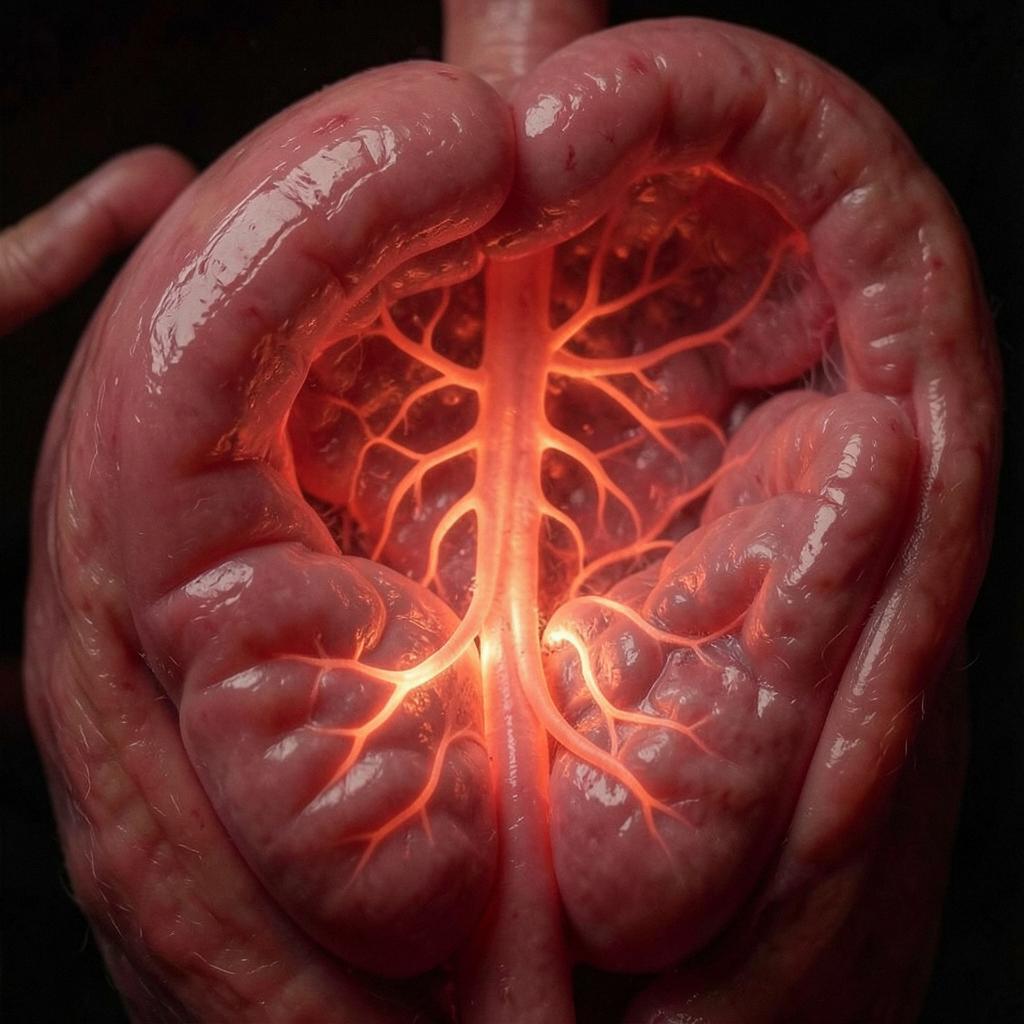
 Discussion