Why BGPT?
logo

Review Papers Claim by Claim

Check each claim against its experiments, reported results, scope, and stated limitations.Know what the science actually supports before you trust the answer.

Press Enter ↵ to start review


     Quick Explanation


    Paper-at-a-glance
    This 2015 Nature Reviews Cancer Progress review argues that CRISPR–Cas9 rapidly enables functional cancer genetics by shifting from cDNA/RNAi to endogenous locus editing, and it highlights applications ranging from multiplex gene disruption to rapid GEMM/nGEMM generation and somatic editing for modeling cooperating events and drug response.


     Long Explanation


    Paper Review (Visual): Applications of the CRISPR–Cas9 system in cancer biology

    DOI: 10.1038/nrc3950  •  Publication date: 4 June 2015

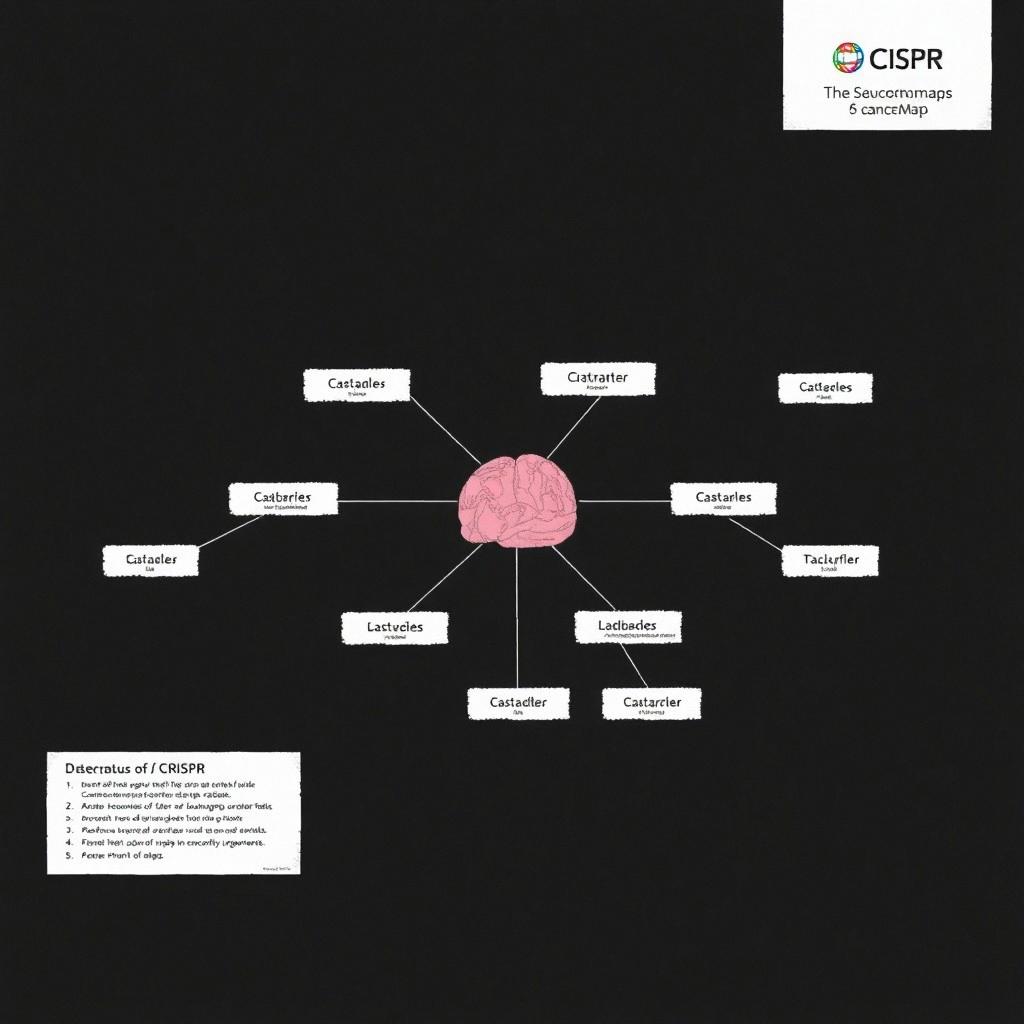
    1) Knowledge-map (what the review covers)

    Legend: the node relationships summarize the review’s conceptual structure: CRISPR mechanics → editing modalities → cancer genetics modeling, multiplexing, in vivo/somatic engineering, and screens, culminating in translational vision.

    2) Visual dashboard (from provided metadata)

    Note: the bar for “incoming citations” reflects only the input dataset’s single DOI in incoming_citations, not a complete bibliometric count.

    3) What the review claims (and how to critique it)

    3.1 CRISPR–Cas9 mechanics → editing outcomes
    The review explains that Cas9 guided by sgRNA cleaves a target adjacent to a PAM; resulting DSBs are repaired by NHEJ (often yielding indels/frameshifts for functional disruption) or HDR (requiring donor DNA for precise changes).
    3.2 Why CRISPR is positioned as better than cDNA/RNAi for endogenous loci
    The review argues CRISPR can address: (i) supraphysiological expression artifacts from cDNA overexpression; (ii) incomplete/unstable and off-target issues from RNAi; and (iii) the need for permanent and consistent inactivation for reliable phenotype-genotype links.
    3.3 Multiplexing and “hit-and-run” serial editing
    The review emphasizes permanent editing through transient or stable component delivery (plasmids/RNPs vs viral vectors), and highlights a “hit-and-run” transient strategy intended to permit serial editing without ongoing CRISPR expression.

    4) Critique: what is strong, what is uncertain

    4.1 Strengths (evidence-grounded within the review’s scope)
    • Mechanistic clarity: it links CRISPR targeting to DSB repair outcomes (NHEJ vs HDR) and maps these to LOF vs precise modification.
    • Modeling pipeline emphasis: it consistently returns to how multiplex editing and somatic engineering accelerate the construction of genotype-defined cancer models and enable drug response/resistance studies.
    • Functional genomics integration: it highlights high-throughput CRISPR screens (Cas9 nuclease and dCas9 effector fusions) as scalable approaches to identify genes involved in phenotypes and therapeutic response/resistance.
    4.2 Weaknesses / blind spots (what the review does *not* quantify)
    • In-review limitations are not quantified: the input-provided summary indicates the paper does not explicitly mention limitations in the text you provided; additionally, the review is a narrative Progress piece, so it cannot replace systematic, dataset-level comparisons of edit specificity, efficiency, and long-term stability.
    • Specificity/off-target is mostly implied, not measured here: while the review discusses on-target cleavage logic and repair outcomes, your provided excerpt does not include explicit quantitative off-target rate benchmarking or experimental genotyping validation details across many models (those would be needed for rigorous assessment of uncertainty).
    • Translational leap is framed as “envisioned”: the bench-to-bedside vision is forward-looking; without subsequent quantitative translation benchmarks in the review text you supplied, evidence for clinical robustness remains prospective.

    5) “If I had to falsify it…” (skeptical falsification targets)

    5.1 Concrete falsification questions
    A CRISPR-centric cancer modeling program like this review supports would be weakened if: (i) CRISPR could not reliably produce endogenous functional genotype changes; (ii) these changes failed to produce expected, interpretable shifts in cancer phenotypes; or (iii) the implied acceleration in creating genotype-defined in vivo models did not persist when editing specificity/efficiency and biological confounders are accounted for.


    Feedback:    

    Updated: April 01, 2026

     BGPT Paper Review


    Study Novelty

    90%

    Highly novel in 2015 because it focused on newly established CRISPR–Cas9 genome editing capabilities and mapped them to cancer genetics workflows (endogenous editing, rapid GEMM/nGEMM generation, somatic engineering, and pooled screens) in a single forward-looking Progress review.


    Scientific Quality

    80%

    Strong conceptual integration and mechanistic framing (NHEJ vs HDR; sgRNA/PAM targeting) with an applied cancer-modeling roadmap, but—being a narrative Progress review—it does not provide the kind of standardized, dataset-level quantification that would be needed for maximum scientific rigor about efficiency, specificity, or longitudinal effects across models.


    Study Generality

    70%

    Generalizable across cancer genomics use-cases (functional gene testing, GEMM/nGEMM acceleration, somatic editing, pooled screens), but it is anchored to the then-recent CRISPR–Cas9 paradigm (not explicitly broader beyond that in the provided excerpt).


    Study Usefulness

    80%

    Useful as a structured map of how to operationalize CRISPR–Cas9 for cancer gene function discovery, in vivo model creation, and high-throughput functional screening—though it is less useful for readers seeking quantified performance metrics or standardized protocols.


    Study Reproducibility

    50%

    Moderate-to-low reproducibility for computational replication because it is not a primary methods paper and, in the provided excerpt, does not include step-by-step experimental parameters or full datasets.


    Explanatory Depth

    70%

    Explanatory depth is high at the level of conceptual mechanistic mapping (targeting → DSB repair routing → LOF/GOF editing modes) and application logic, but lower for deep quantitative mechanistic modeling of editing outcomes in diverse biological contexts.


    🎁 Authors: Collect 282 Free Science Tokens (≈ $28.2 USD)

    Claim My Author Tokens

    Use for 70 days of free BGPT access (4 tokens = 1 day) or trade/sell (≈ $28.2 USD)

     Top Data Sources ExportMCP


     Analysis Wizard


    Parse the review text to extract each application category and create a mechanistic flowchart index (CRISPR → DSB repair mode → cancer-modeling application) as a structured JSON for downstream querying.


     Hypothesis Graveyard


    A simplistic model that “multiplex editing always fully replaces complex tumor biology” would be overly strong; even within the review framing, malignancy can require additional secondary genetic/epigenetic events beyond a limited set of engineered mutations.


    A strongman claim that editing specificity problems are irrelevant would be the wrong prior; the review (and the broader CRISPR literature it references) motivates CRISPR by pointing to earlier off-target/artefact issues, implying specificity remains a central interpretability concern rather than a non-issue.

     Science Art


    Paper Review: Applications of the CRISPR–Cas9 system in cancer biology Science Art

     Science Movie


    Make a narrated HD Science movie for this answer ($32 per minute)


     Discussion


    Stay current without chasing every paper.

    Know what changed, what holds up, and what remains uncertain. Every Friday. No ads.


    My BGPT