Why BGPT?
logo

Review papers with raw data transparency

Quickly verify claims by accessing the underlying experimental data and figures.


Press Enter ↵ to solve


    Fuel Your Discoveries


     Quick Explanation


    Paper reviewed: “Addressing Spaceflight Biology through the Lens of a Histologist–Embryologist” (Life, Feb 20, 2023).
    This is a narrative synthesis arguing that microgravity and space radiation can perturb embryonic organogenesis and development (with emphasis on vestibular development, CNS remodeling, mesenchyme-derived tissues, gut microbiome, and reproductive biology), while also emphasizing translational gaps for human embryonic outcomes.
    Most important critique: the paper’s central claims rely on heterogeneous spaceflight vs microgravity/“hypergravity” analogs across many species and endpoints, yet it does not appear to use a systematic, preregistered review method; this makes the overall strength of causal inferences and cross-species generalization hard to calibrate.


     Long Explanation


    Paper review (histology–embryology lens on spaceflight biology)

    Citation: 10.3390/life13020588 Published Feb 20, 2023
    Scope (what the paper covers)
    Embryonic organogenesis + tissue histology, with focus on vestibular development, CNS remodeling, mesenchyme-derived tissues (bone/cartilage/muscle), gut microbiome, and reproductive consequences under microgravity and radiation; concludes with research gaps and translational needs.

    Visual map of key conceptual links (from the paper’s framing)

    The graph corresponds to the manuscript’s organizing emphasis on microgravity/radiation → developmental/histological targets including vestibular system and CNS, plus gut microbiome and reproductive repercussions.

    What evidence type is being synthesized?

    The manuscript is a narrative literature review summarizing spaceflight and simulated gravity/radiation studies across species and developmental stages, and it includes representative summary tables.
    This plot is not a quantitative extraction of study counts; it is a qualitative reflection of how widely the manuscript ranges across modalities and model systems.

    Model organisms and systems (from the paper’s own scope)

    The review explicitly discusses human astronauts and multiple animal models (e.g., mice, rats, zebrafish, medaka, Xenopus/Pleurodeles, birds), plus invertebrate models used in space biology.

    Key sections: what the paper argues (with skeptical calibration)

    1) Vestibular adaptation during early development
    The review positions the vestibular system as an early gravity-relevant sensory system and emphasizes that altered gravity can impact otolith formation and downstream neural projections during development.
    Background context: vestibular sensory roles in equilibrium/spatial orientation are established in neurophysiology and review literature.
    2) CNS vulnerability and developmental remodeling
    The paper argues that gravity perturbations can alter synaptogenesis/axonal arborization and structural protein expression during development, and that histological markers can shift after spaceflight.
    Important caution: many listed findings come from animal or in vitro models, so causal inference for human fetal development remains uncertain.
    3) Mesenchyme-derived tissue formation (bone/cartilage/muscle) under space-like conditions
    The review links microgravity to changes in osteogenic differentiation and bone-related phenotypes, and it situates these effects within mechanosensitivity frameworks.
    Mechanosensitivity of bone cells is a well-established conceptual foundation for why microgravity might matter for differentiation and matrix outcomes.
    4) Gut microbiome as a “trifecta” with space travel
    The paper argues that embryogenesis and reproduction might be influenced by microbiome-related changes during spaceflight, and it highlights that microbiome heterogeneity and function may shift.
    The “sterile womb” framing has been debated; some reviews and empirical work suggest microbial exposure prior to birth, though contamination and methodological differences remain central uncertainties.
    5) Fertility and reproduction repercussions
    The review summarizes endocrine/gonadal axes and reproductive outcomes in spaceflight contexts, and it highlights that direct human embryonic data are lacking.
    A review-level source supports that reproductive hazards are a recognized research domain in space medicine.

    Skeptical critique (what makes the conclusions hard to grade)

    • Narrative synthesis vs systematic evidence mapping: the paper does not present a clearly documented, preregistered systematic search strategy in the provided text, which limits the ability to quantify evidence completeness or detect selection biases across endpoints.
    • Analogs ≠ identical conditions: microgravity simulations (e.g., clinostats/rotating systems) and hypergravity paradigms can produce biologically distinct stresses from true orbit, complicating direct causal attribution.
    • Cross-species translation: mechanistic signals can be conserved, but developmental trajectories and organ architecture differ substantially among species; the paper acknowledges translational limits for human embryonic outcomes.
    • Endpoint heterogeneity: the same organ system (e.g., vestibular/CNS) is measured with different histological/molecular/behavioral readouts across studies; that limits synthesis into a single effect size or directionality confidence.
    What would change the review’s overall picture?
    A falsifying shift would require robust evidence that key histological developmental endpoints (e.g., vestibular organogenesis readouts, CNS connectivity/synaptogenesis signatures, mesenchyme differentiation markers, and reproductive developmental milestones) are not altered under true spaceflight exposure compared with matched controls.

    Table snapshot (what the paper summarizes)

    The manuscript includes tables summarizing representative developmental stages and organ systems affected under altered gravity and/or radiation.
    Developmental stage / focus Organ/system emphasis Example type of evidence summarized Representative claim direction (as framed)
    Organogenesis / early development Vestibular system Microgravity/hypergravity exposure affecting otolith-related development and neural projections Gravity-related developmental processes show measurable remodeling
    Neural development CNS (vestibular nuclei/cerebellar circuits) Histology and synaptic/projection outcomes in animal models Synaptogenesis/axonal arborization can be hampered and cellular remodeling occurs
    Mesenchyme-derived structures Bone/cartilage/muscle Bone density observations in astronauts + in vitro differentiation assays Osteogenic differentiation/phenotype is sensitive to altered gravity
    Microbiome axis Gut microbiota/microbiome Astronaut ISS studies and model-organism microbiome work; prenatal microbiome debate Spaceflight-associated shifts motivate microbiome–development hypotheses
    Reproduction Endocrine/gonadal axis; fertility Radiation/microgravity reproductive physiology across sexes and models Reproductive health outcomes are plausibly sensitive; human embryonic evidence remains limited
    The table condenses the review’s organizational emphasis and example evidence types. It does not claim to exhaustively enumerate every cited study.


    Feedback:   

    Updated: April 22, 2026

    BGPT Paper Review


    Study Novelty

    70%

    Moderate novelty: it re-frames established space-biology topics (microgravity, radiation, vestibular development, gut microbiome, reproduction) through a histologist–embryologist organizing lens, but it does not appear to introduce new primary experimental findings or a brand-new conceptual framework beyond synthesis and gap identification.


    Scientific Quality

    70%

    Scientific quality is limited by its narrative-review nature and reliance on heterogeneous models (species and exposure modalities). Strengths include broad coverage across organ systems and an emphasis on histological/developmental timing. However, without a clearly specified systematic search method and with many cross-species/analog comparisons, causal inference and effect-direction confidence are difficult to calibrate.


    Study Generality

    80%

    The generality is relatively high because it integrates multiple organ systems and proposes translational pathways (histology/developmental framing, omics/organ-on-chip directions) relevant to spaceflight biology broadly.


    Study Usefulness

    70%

    Useful as an interdisciplinary orientation and for identifying where human embryonic evidence is sparse. However, it is less useful for quantitative decision-making because it does not provide effect sizes or a harmonized evidence grading.


    Study Reproducibility

    60%

    Reproducibility is moderate: the review’s claims are grounded in cited literature, but the narrative synthesis and lack of explicit systematic protocol in the provided text reduces reproducibility of the literature-selection process and evidence weighting.


    Explanatory Depth

    70%

    Explanatory depth is moderate: it connects microgravity/radiation exposures to developmental remodeling in multiple tissues, but mechanistic integration across systems (e.g., vestibular→CNS→organogenesis→microbiome→reproduction) is not fully formalized into testable causal diagrams within the provided text.


    🎁 Authors: Collect 230 Free Science Tokens (≈ $23.0 USD)

    Claim My Author Tokens

    Use for 57 days of free BGPT access (4 tokens = 1 day) or trade/sell (≈ $23.0 USD)

     Top Data Sources ExportMCP


     Analysis Wizard


    Extract and normalize organism + organ-system mentions from the review text tables; then cluster citations by system (vestibular/CNS/bone/gut/reproduction) to produce a reproducible evidence map of where the strongest support concentrates.


     Hypothesis Graveyard


    The idea that all spaceflight effects on embryogenesis are driven by microgravity alone (independent of radiation and other spaceflight factors) is weak because the review context emphasizes multiple stressors and the mixture of exposure paradigms.


    A strong claim that prenatal “sterility” is irrelevant to space-mission outcomes is overconfident given ongoing methodological debate about prenatal microbial exposure and the review’s own framing of microbiome uncertainty.

     Science Art


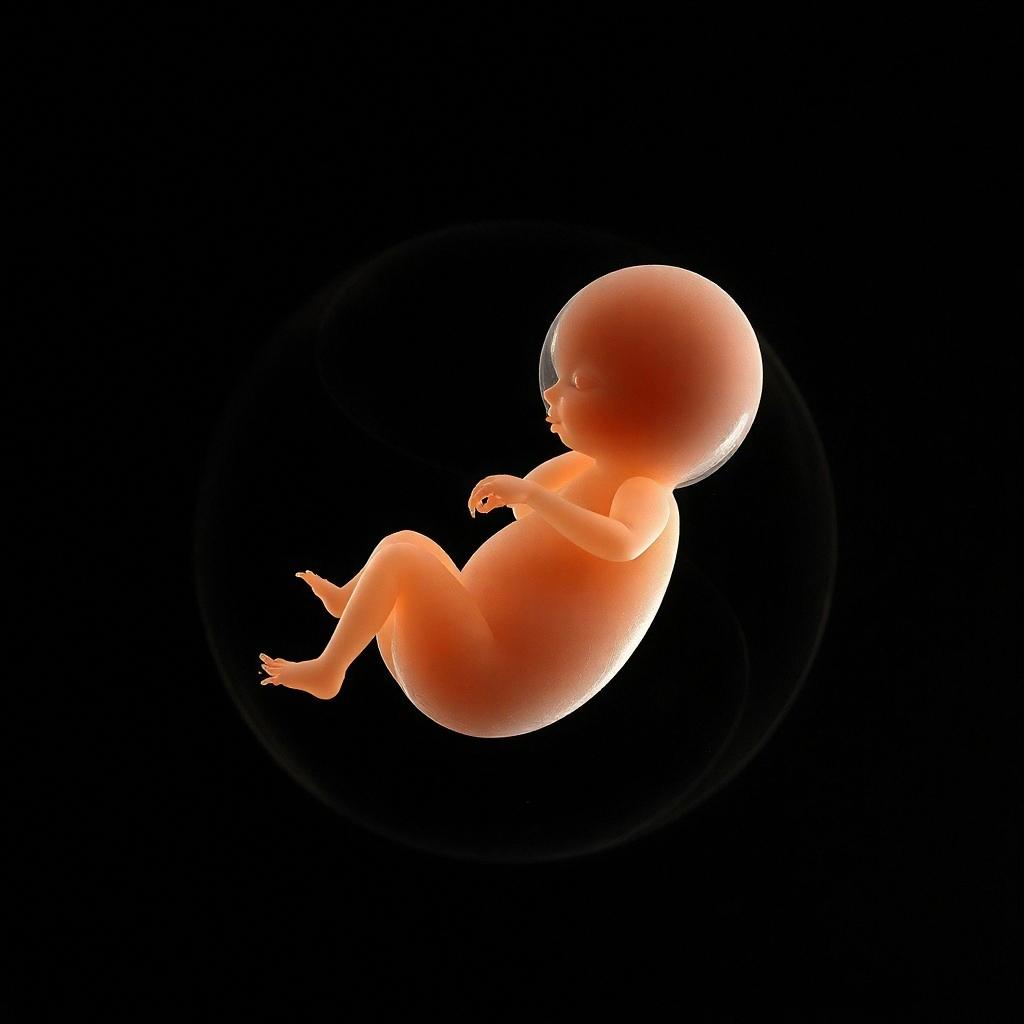
    Paper Review: Addressing Spaceflight Biology through the Lens of a Histologist–Embryologist Science Art

     Science Movie


    Make a narrated HD Science movie for this answer ($32 per minute)


     Discussion


    Get Ahead With Science Insights

    Custom summaries of the latest cutting edge Science research. Every Friday. No Ads.


    My BGPT