Check each statement against experiments, exact results, and limitations, with provenance intact.Know what the science actually supports before you trust the answer.
Press Enter ↵ to review paper
Explore by Goal
"The scientist only imposes two things, namely truth and sincerity, imposes them upon himself and upon other scientists."
- Erwin Schrödinger
Low confidence. Please provide more context.
Quick Explanation
Copied
Core claim being reviewed
The paper argues that astrocytes regulate activity–dependent brain energy metabolism via a largely glutamate→astrocytic aerobic glycolysis→lactate availability mechanism (the astrocyte–neuron lactate shuttle concept), with lactate as a preferential oxidative substrate for neurons under specific conditions, and it frames glycogen as an extension/reserve rather than a competing hypothesis.
Long Explanation
Paper Review (Visual-first): Activity-dependent regulation of energy metabolism by astrocytes
DOI: 10.1002/glia.20528 • Published: 20 July 2007
What the paper is trying to do (strictly from the text you provided)
The review surveys evidence and arguments relevant to the astrocyte–neuron lactate shuttle hypothesis (ANLSH), emphasizing: (i) glutamate-induced glycolysis in astrocytes across in vitro/ex vivo/in vivo contexts, (ii) lactate as a preferential oxidative substrate for neurons during activation, and (iii) the idea of net lactate transfer between astrocytes and neurons in vivo. It also discusses glycogen as an extension (graded reserve) rather than a competing mechanism.
Visual map of the proposed mechanism (schematic)
Note: The review describes a mechanistic framework rather than providing a single quantitative dataset; this figure is therefore a structured schematic derived only from the paper’s described sequence of events.
The review also distinguishes an “early” and “late” activation phase (relative timing of oxidative changes, glycolytic activation, and lactate/lactate dips), but it does not provide a unified numeric time series in the excerpt you supplied.
Argument structure: what evidence classes are used?
Evidence/approach category (as invoked)
What it is used to support in the review
Key skepticism point
In vitro glutamate/transport & glycolysis assays in astrocytes
Glutamate-induced aerobic glycolysis and glucose transport activation is presented as an intrinsic astrocyte capability, not merely a culture artifact.
Culture conditions and parameterization can shift flux magnitudes and apparent pathway dominance; the review explicitly discusses the glucose-concentration confound as part of the debate.
Ex vivo/in vivo metabolic readouts (e.g., extracellular lactate dynamics; MR/MRS conceptual framing)
Extracellular lactate dips and overshoots during activation are argued to be consistent with early neuronal oxidation followed by later astrocytic glycolysis/lactate replenishment.
Different measurement modalities (sensors vs MRS) have distinct temporal/spatial biases; the review directly addresses a criticism that invasive sensors might bias lactate patterns.
Used to reconcile timing, compartmentalization, and lactate kinetics with activity-dependent shuttle logic; presented as showing ANLS can occur in the first tens of seconds depending on stimulus “white vs red” responses.
Model outputs are sensitive to assumed transporter kinetic parameters and compartment definitions; without direct co-measurement of parameters, model conclusions remain contingent.
Critical appraisal (skeptical, mechanism-focused)
1) The review’s internal “debate logic”
The review emphasizes that earlier controversies were sometimes framed as “neurons exclusively use glucose vs exclusively use lactate,” and it argues that the shuttle hypothesis is more specific: lactate can be an aerobic substrate under particular activation circumstances, not a global replacement for glucose.
2) Strengths
The review directly addresses a concrete in vitro confound (culture glucose concentration) and discusses glycogen and pre-incubation as potential explanations for discrepancy, aiming to isolate whether glutamate-induced glycolysis is an artifact.
It combines multiple evidence modes (cell metabolic responses, extracellular lactate dynamics, and modeling) to argue for time-dependent coordination rather than a single static flux statement.
3) Limitations / blind spots implied by the review’s own framing
The review’s modeling arguments depend on assumed compartmental kinetics and parameter constraints; the review acknowledges that modeling cannot by itself definitively resolve which hypothesis is “correct,” and it critiques other models mainly through assumptions (e.g., constant lactate/pyruvate ratios).
“Net transfer” inference remains indirect in many paradigms because the measurable variable is often extracellular or derived metabolite enrichment; the review argues the net transfer increases with activity but the inference is still contingent on the interpretability of those signals.
One more visual: “What would falsify the review’s central framework?”
This is phrased as falsifiable predictions derived from the review’s own mechanistic commitments.
Because the provided content is a single review excerpt, and it does not supply a falsification checklist as a separate section with explicit “pass/fail thresholds,” this visual should be treated only as a reasoning scaffold, not as a claim about experimental effect sizes. The falsification targets are consistent with the review’s described pillars: glutamate-induced astrocytic glycolysis, lactate as preferential neuronal oxidative substrate during activation, net transfer logic in vivo, and glycogen as extension.
Quick operational takeaway (for a researcher)
The review’s strongest conceptual leverage is the timing + compartmentalization story: glutamatergic activation triggers a fast shift in neuronal vs astrocytic metabolic signals (early oxidative/NADH changes, later astrocytic glycolysis and lactate replenishment), and glycogen mobilization is proposed as a graded support mechanism under intense activation demands.
Author reviews (bespoke BGPT links)
Feedback:
Updated: April 12, 2026
BGPT Paper Review
Study Novelty
40%
As an update-style review of ANLSH, it primarily synthesizes and argues for a pre-existing mechanistic framework (ANLSH) rather than introducing a new experimental dataset or a new core theoretical mechanism within the provided text.
Scientific Quality
70%
Scientific quality is moderate-to-high for a review: it acknowledges controversies, discusses specific confounds (e.g., culture glucose), and integrates timing/compartment logic plus modeling critiques. However, the provided content does not include full methods/data because the target is a review, not a primary study, and the strength of conclusions depends on heterogeneous supporting literature that is not fully accessible with DOIs in the excerpt.
Study Generality
60%
Mechanistically, the review targets neuron–astrocyte metabolic coupling and imaging energetics; this is broad within neuroenergetics, but it remains centered on a particular shuttle framework (ANLSH) and specific transmitter-coupled activation paradigms.
Study Usefulness
80%
High utility as a curated mechanistic map and debate navigator for researchers studying astrocyte-driven metabolic regulation, lactate dynamics, and glycogen’s role in activation-dependent energetics.
Study Reproducibility
40%
Low reproducibility score because the artifact is a review; it does not provide full experimental protocols, raw data, or accession-level details in the excerpt you provided.
Explanatory Depth
70%
Mechanistic depth is substantial: the review provides a coherent, time-resolved, compartmental narrative (early vs late) and links transporter activity, NADH/TCA dynamics, and lactate kinetics—though much of the depth depends on referenced work not fully inspectable in the provided excerpt.
None: this request is a mechanistic review critique; there is no structured multi-sample omics dataset provided here to reanalyze with code.
Get emailed when your analysis is done!
We'll email you the results when your analysis is finished.
Hypothesis Graveyard
A strictly culture-condition artifact explanation for glutamate-induced astrocytic glycolysis is less favored because the review argues for intrinsic astrocyte capacity and discusses glycogen/pre-incubation confounds.
A universal “neurons never use lactate preferentially” hypothesis is challenged by the review’s repeated emphasis on preferential lactate oxidation under activation conditions and by its in vivo lactate dynamics interpretation.
Science Art
Science Movie
Make a narrated HD Science movie for this answer ($32 per minute)

 Explore by Goal
 Quick Explanation
 Long Explanation
 Top Data Sources
 Ask a Follow-Up
 Key Insight
 Analysis
  Hypothesis Graveyard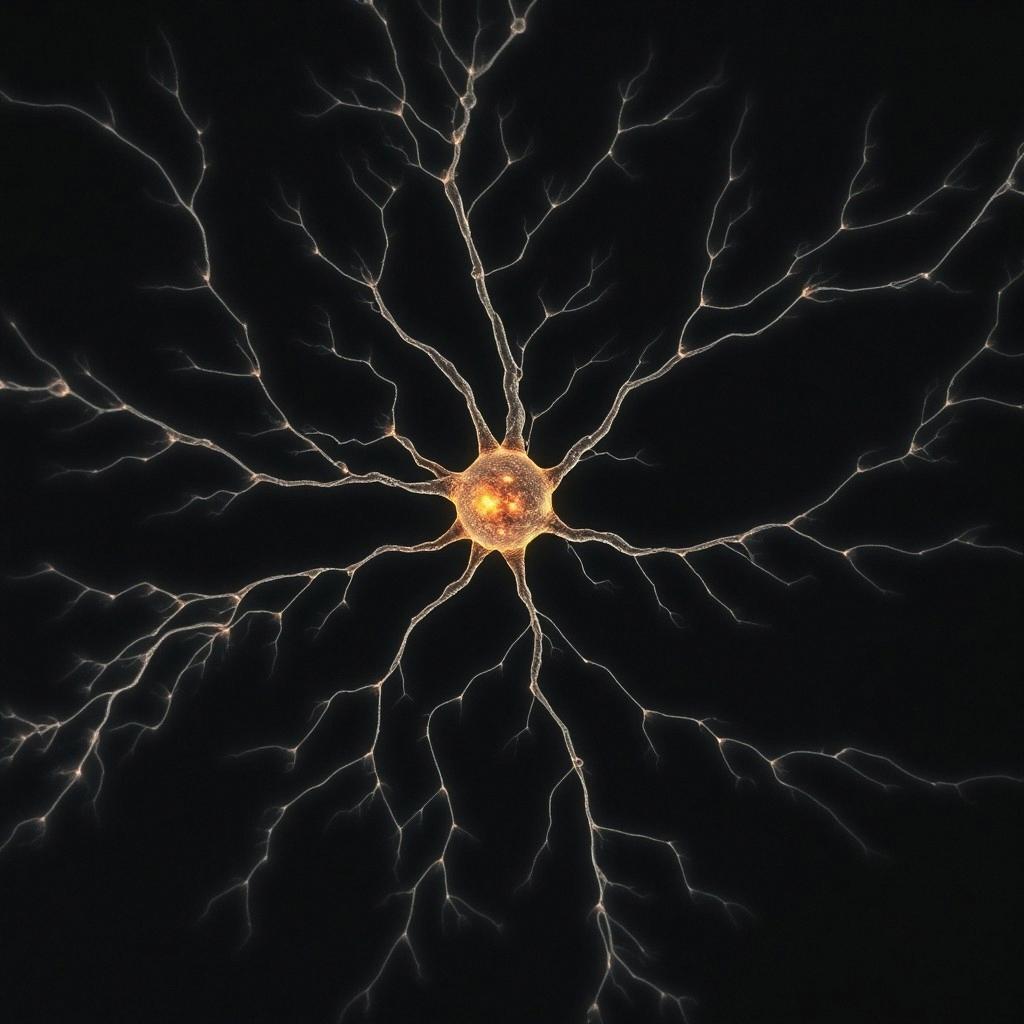
 Discussion