Check each claim against its experiments, reported results, scope, and stated limitations.Know what the science actually supports before you trust the answer.
Press Enter ↵ to start review
Explore by Goal
"An expert is a person who has made all the mistakes that can be made in a very narrow field."
- Niels Bohr
Quick Explanation
Copied
This lab study reports that polymer injections (Epojet, Edmok) restored bending strength of cracked brick columns to 161–315% of pre-repair values in both empty and sand-filled cracks, while the cement-based Stabilcem worked only in empty cracks (125.6%; 67% with sand) [1]. Results are promising but rest on single-specimen tests with no replicates, variance, or in situ validation [1].
Long Explanation
What the Experiments Show
The authors cracked solid-brick columns (250×120×365 mm) in a bending press, rejoined them with controlled gaps, injected repair materials at 0.6–0.7 atm, and re-tested. Empty cracks (2–3 mm for polymers; 6–8 mm for cement) recovered as follows: Epojet 315%, Edmok 182.5%, Stabilcem 125.6% of pre-injection breakdown force. With wider cracks pre-filled with 1.1–1.8 mm quartz sand, Epojet reached 161%, Edmok 174.9%, but Stabilcem dropped to 67%, failing along the old crack [1]. Pull-off tests gave bond strengths of 1.98 MPa (Epojet), 0.58 MPa (Edmok), and 0.23 MPa (Stabilcem), with polymers failing cohesively through the brick itself—suggesting the interface exceeded brick tensile strength [1].
Key interpretation: the authors treat a new crack forming adjacent to the repaired one as evidence of genuine structural restoration, versus failure along the old crack as mere void-filling. This is a reasonable failure-mode criterion, and they honestly acknowledge that strength gains are inflated by the short specimen length (small bending moment arm) [1].
Critical Assessment
No replication or statistics: each material appears as a single tabulated value (e.g., 39→123 kN for Epojet); no n, variance, or significance testing is reported [1].
Crack-width asymmetry: polymers and cement were tested at different gap widths, so cross-material comparison is partly confounded [1].
Scope: isolated solid-brick columns, not full walls or in situ historic masonry; no durability, aging, freeze-thaw, or compatibility testing (e.g., polymer stiffness vs. soft historic brick, vapor permeability, reversibility required by heritage norms) [1].
Self-citation density: most references are the authors' own Ukrainian work, limiting external validation, though the war-damage context motivates the work in line with their prior inspections [1][2].
Confidence: moderate—claims are internally consistent and methods are described in reproducible detail, but single-specimen data cannot establish reliability, and heritage compatibility (irreversibility of epoxy) remains unaddressed. The falsification path is clear: injected specimens failing along the original crack at or below pre-repair force would negate the structural-restoration claim [1].
Deeper Queries
Author Reviews
Feedback:
Updated: September 18, 2026
BGPT Paper Review
Study Novelty
50%
Comparative efficacy data for Stabilcem, Epojet, and Edmok in masonry crack injection adds incremental value; the sand-fill cost-saving angle is mildly novel, but epoxy injection of masonry is well-established practice.
Scientific Quality
40%
Clear methods and honest failure-mode reasoning, but no replicates, no statistical treatment, no controls, unmatched crack widths between materials, and only single tabulated values per condition weaken inferential strength.
Study Generality
30%
Findings are tied to one brick type, one specimen geometry, and three commercial products; no compatibility with historic lime masonry or other brick variants is established.
Study Usefulness
60%
Practically useful decision guidance for practitioners selecting injection materials by crack width and fill condition, directly relevant to Ukrainian war-damage restoration.
Study Reproducibility
40%
Methods, pressures, specimen dimensions, and materials are described well enough to replicate, but absent replicate counts, raw data, and vendor specifications limit verification.
Explanatory Depth
50%
Mechanistic interpretation via failure mode (cohesive vs adhesive; new vs re-opened crack) is sound, but no quantitative mechanics, FEM, or bond-slip analysis is provided.
We'll email you the results when your analysis is finished.
Hypothesis Graveyard
'Authentic lime-based mortars are always preferable for heritage crack repair'—falsified for structurally active cracks: plastic lime shrinkage and inability to inject <2 mm cracks make them void-fillers only, as the paper argues.

 Explore by Goal
 Quick Explanation
 Long Explanation
 Top Data Sources
 Ask a Follow-Up
 Key Insight
 Keep Exploring
 Hypothesis Graveyard
 Potential Experiments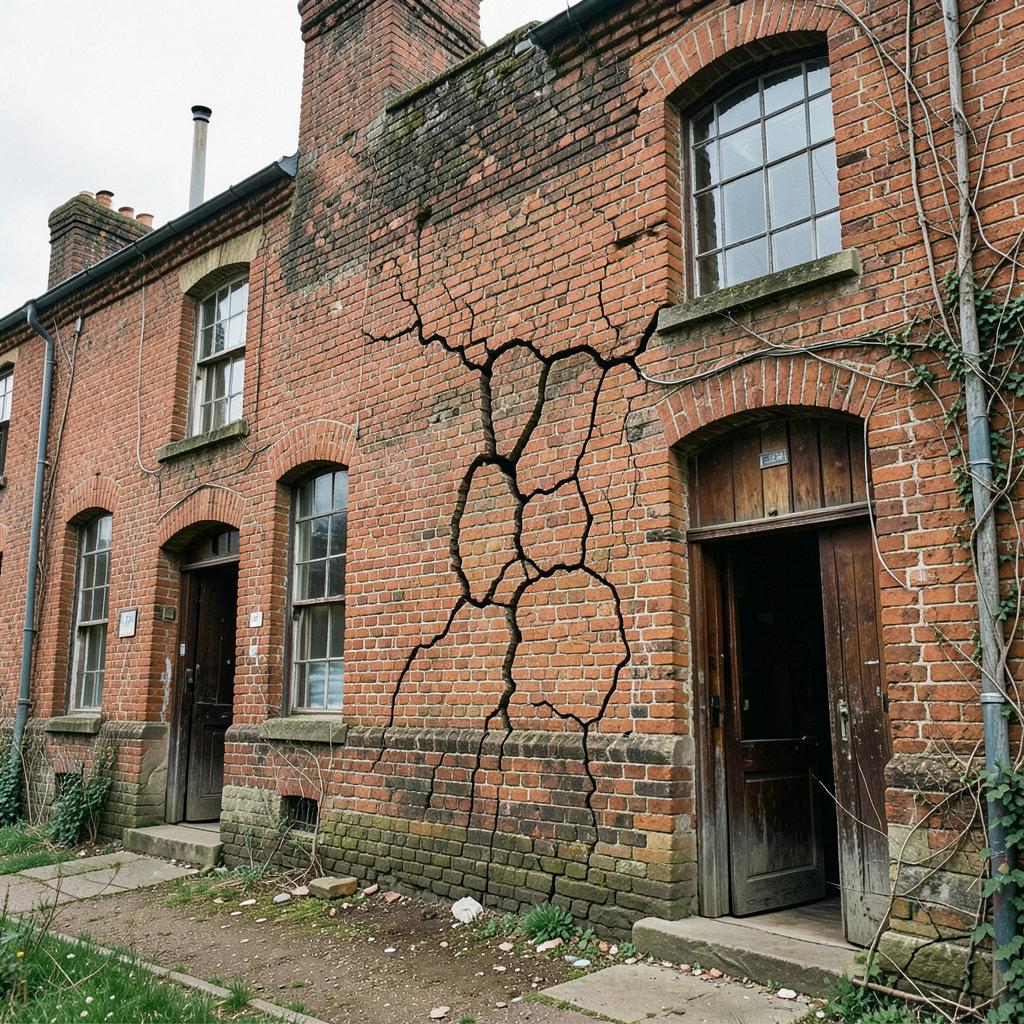
 Discussion