Why BGPT?
logo

The Evidence Layer for Scientific AI

Ask questions across claims linked to experiments, exact results, limitations, and sources.Know what the science actually supports before you trust the answer.

Press Enter ↡ to search evidence


     Quick Explanation


    DNA replication is the semiconservative copying of a DNA molecule: each parental strand serves as a template for a complementary new strand, producing two DNA molecules that each contain one old and one new strand. The process requires origin recognition, strand separation, primer formation, 5β€²β†’3β€² DNA synthesis, proofreading, primer removal, and joining of fragments


     Long Explanation


    Core sequence of events

    1. Initiation: Replication begins at defined DNA origins. Initiator proteins recognize the origin, and helicase unwinds the double helix. Single-strand-binding proteins stabilize the separated strands, while topoisomerases relieve torsional strain ahead of the fork
    2. Priming: Primase makes a short RNA primer because DNA polymerases cannot begin synthesis on an entirely bare template.
    3. Elongation: DNA polymerase extends the primer by adding complementary nucleotides only in the 5β€²β†’3β€² direction. The continuously copied template forms the leading strand; the oppositely oriented template is copied discontinuously as Okazaki fragments on the lagging strand.
    4. Maturation: RNA primers are removed and replaced with DNA, and DNA ligase seals remaining phosphodiester-strand breaks.
    5. Accuracy and completion: Polymerase proofreading and additional repair systems reduce copying errors. In eukaryotes, chromosome ends require telomere-maintenance mechanisms because conventional polymerases cannot fully copy the extreme ends of linear chromosomes

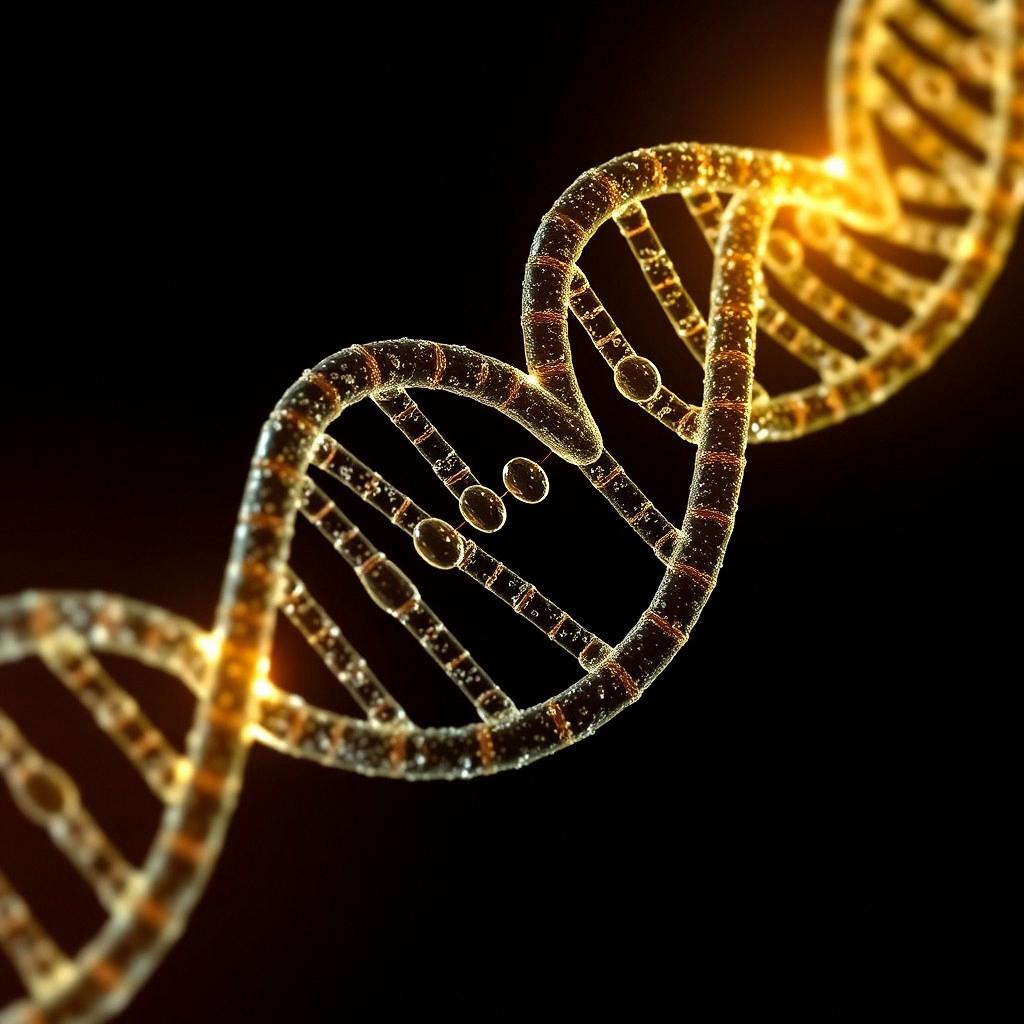
    Visual logic: one parental double helix β†’ two separated template strands β†’ two replication forks β†’ two daughter double helices, each containing one parental strand and one newly synthesized strand. Replication is therefore semiconservative, usually bidirectional from origins, and chemically constrained to 5β€²β†’3β€² synthesis. The supplied research records concern EEG, metabarcoding, genomics, software, and phage-protein annotation; they do not provide direct experimental evidence about the molecular replication mechanism, so the explanation above relies on established primary evidence and a biochemical review.


    Feedback:    

    Updated: August 06, 2026

     Top Data Sources ExportMCP


     Science Art


    Describe the process of replication Science Art

     Science Movie


    Make a narrated HD Science movie for this answer ($32 per minute)


     Discussion


    Stay current without chasing every paper.

    Know what changed, what holds up, and what remains uncertain. Every Friday. No ads.


    My BGPT