Why BGPT?
logo

Science's Data Search Engine

Results grounded in experimental dataβ€”not abstracts.


Press Enter ↡ to solve


    Fuel Your Discoveries


     Long Response


    HSP60 Pathway Map: ROS β€’ UPR β€’ Apoptosis β€’ Inflammation (evidence-linked)

    Scope note (skeptical + evidence-constrained): Your provided corpus contains (i) a bacterial GroEL-like HSP60 study showing ERK1/2-driven proliferation in HaCaT cells, (ii) a TLR signaling review proposing HSP60 as a potential TLR4 endogenous ligand, (iii) UPR/mitochondrial UPR (UPRmt) reviews that list HSP60 as part of UPRmt networks (esp. cancer contexts), and (iv) apoptosis-related HSP reviews describing dual roles for HSP60/HSP10. However: the supplied data do not include a single, direct, end-to-end experimental chain β€œHSP60 β†’ ROS β†’ UPR β†’ apoptosis β†’ inflammation” measured in one system. The map below therefore labels arrows as strongly supported vs context/indirect vs mechanistic but not directly demonstrated here.
    Evidence anchors for the bar chart
    • ERK1/2 phosphorylation is activated rapidly and sustained after bacterial hsp60 exposure in HaCaT cells (vs recombinant human hsp60, which lacks this effect).
    • p38 phosphorylation is also activated but transiently; ERK1/2 and p38 are discussed as balancing signals in the proliferation outcome.
    • Proliferation increases by ~30% in HaCaT cells with bacterial hsp60; MEK inhibition (PD 98059) blocks the proliferation response.
    Critical limitation: This is an in vitro single-line model (HaCaT). Receptor identity and in vivo relevance are explicitly uncertain in the provided dataset.
    How to read the concept support indices
    • Strong when the provided paper directly reports the relevant molecular/readout association (e.g., bacterial hsp60 β†’ ERK1/2, proliferation).
    • Moderate when the connection is discussed mechanistically or contextually but not directly demonstrated across the full ROSβ†’UPRβ†’apoptosisβ†’inflammation chain in the provided corpus.
    • Moderate/weak for UPRmt network membership and apoptosis dual-role because the provided data are reviews that summarize multiple systems and emphasize context dependence/heterogeneity.
    • Dual-role apoptosis modulation is described in a HSP apoptosis review; mechanistic direction depends on context/stimulus.
    Skeptical integration note
    The ROS/p38 findings come from a mitophagy study (Parkin/PINK1-dependent mitophagy). In the provided dataset, hsp60 is used as a mitochondrial marker, not as the perturbation that generates ROS. Therefore, the ROSβ†’p38 arrow can only be treated as a plausibility module for how ROS may couple to p38 signaling in related stress contexts, not as direct evidence for β€œHSP60 induces ROS.”

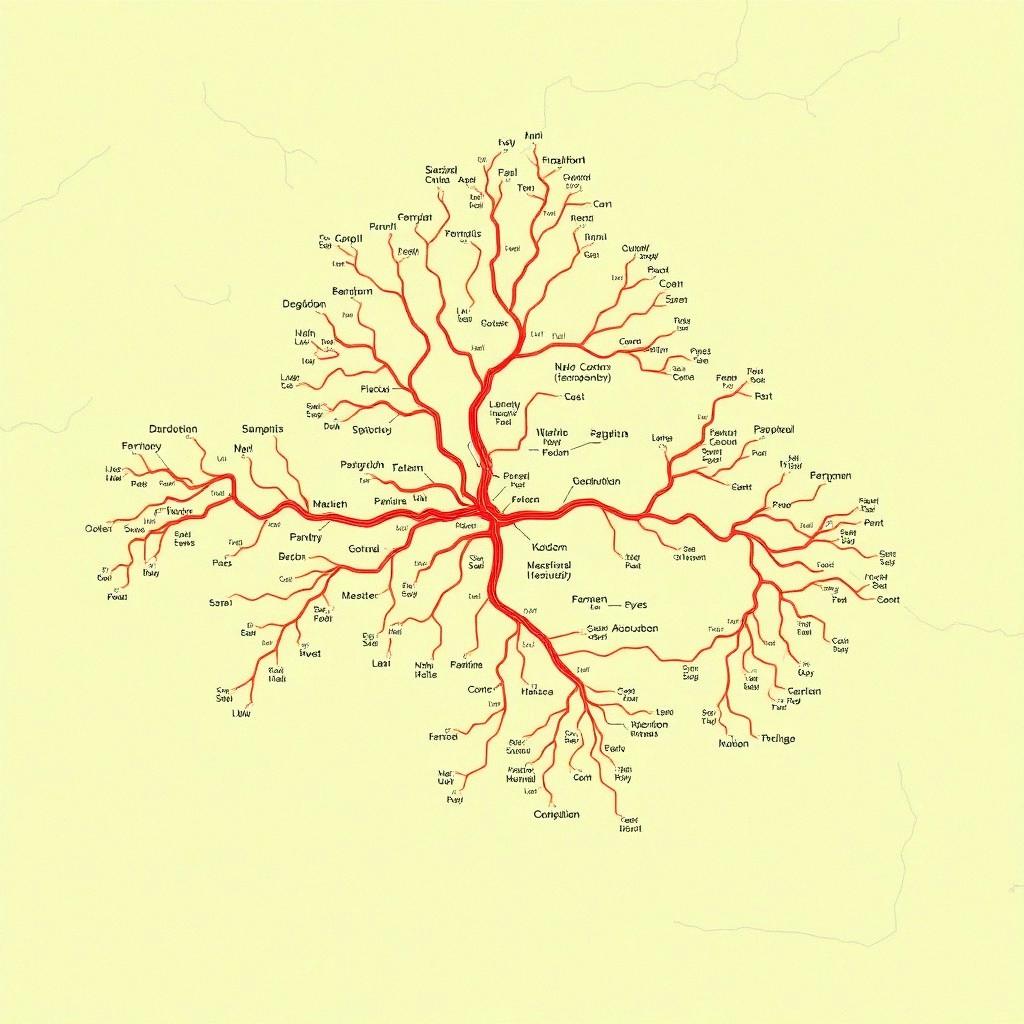
    HSP60 Pathway Map (module-style; arrows labeled by evidence level)

    Legend: Strong = directly reported in the provided experiment; Moderate = proposed/related in reviews; Indirect = different initiating agent/system (used as a plausibility module only).
    Map-specific evidence statements (only from provided corpus):
    • bacterial hsp60 β†’ ERK1/2 and hsp60-dependent proliferation in HaCaT cells.
    • bacterial hsp60 β†’ p38 (transient) with observed balancing effects on proliferation.
    • HSP60 as potential TLR4 endogenous ligand is proposed within a TLR signaling review emphasizing MyD88-dependent signaling and complexity.
    • UPRmt review: UPRmt involves stress-driven mitochondrial proteostasis signaling networks (ATFS-1/ATF5), with HSP60 included among components considered for targeting; crosstalk with ER stress and ROS signaling is discussed, and context/cell-type-specific dual effects are emphasized.
    • Apoptosis duality for HSPs: HSP60/HSP10 can be described as promoting proenzyme maturation (e.g., caspase-3) under some conditions, while other HSPs are generally antiapoptotic; overall outcome depends on balance and stimulus/context.
    • ROS ↔ p38 module: superoxide is reported to drive progression of Parkin/PINK1-dependent mitophagy via p38 signaling; this is indirectly relevant as a stress-coupling plausibility module, not as evidence that HSP60 is the ROS initiator. (Note: The citation is used to support ROSβ†’p38, but not the HSP60β†’ROS step.)

    What could break this map (uncertainty & blind spots)

    • HSP60 source matters: the ERK/p38/proliferation evidence is from bacterial hsp60 (GroEL-like), and recombinant human hsp60 lacks the observed effect in that study, implying that β€œHSP60” is not uniform across preparations.
    • Endogenous ligand proposals: HSP60 as a TLR4 ligand is discussed as a proposal within a signaling review; without direct experimental demonstration in the provided corpus, the arrow HSP60β†’TLR4β†’inflammation remains contextual.
    • Dual roles in apoptosis: HSPs can be anti- or pro-apoptotic depending on cell type, stimulus, and balance of chaperone interactions.
    • ROS module mismatch: the ROSβ†’p38 evidence comes from a mitophagy model where ROS is manipulated by inducers/scavengers; HSP60 is used as a marker, so the ROS arrow does not establish HSP60 as the upstream cause.
    • Review selection & heterogeneity: some nodes rely on narrative reviews (TLR signaling; UPRmt; HSP apoptosis), which may be vulnerable to selection bias and cross-model heterogeneity.


    Feedback:   

    Updated: May 02, 2026

     Top Data Sources ExportMCP


     Analysis Wizard


    Builds an evidence-weighted directed graph from the provided papers, extracting node types (TLR4/ERK/p38/UPRmt/apoptosis/ROS) and generating adjacency data for plotting the pathway map.


     Science Art


    Create Graphs: HSP60 Pathway Map (ROS UPR Apoptosis Inflammation) Science Art

     Science Movie


    Make a narrated HD Science movie for this answer ($32 per minute)


     Discussion


    Get Ahead With Science Insights

    Custom summaries of the latest cutting edge Science research. Every Friday. No Ads.


    My BGPT