Verify your claims against versioned evidence records with exact reported results and sources.Know what the science actually supports before you trust the answer.
Press Enter ↵ to review claims
Explore by Goal
"In biology, nothing is clear, everything is too complicated, everything is a mess, and just when you think you understand something, you peel off a layer and find deeper complications beneath. Nature is anything but simple."
- Richard Preston
Quick Explanation
Copied
Troy D. Randall is a high-impact mucosal immunologist (h-index 78, ~20,887 citations, 384 works) whose career-defining contributions established iBALT biology — showing iBALT is protective in influenza via homeostatic chemokines and that iBALT development depends on IL-17 rather than LTi cells .
Long Explanation
Who is Troy D. Randall — and how strong is the evidence?
Troy D. Randall (ORCID 0000-0003-0643-0311) is a senior mucosal immunologist with 384 indexed works, ~20,887 citations, and an h-index of 78 per OpenAlex. His citation trajectory peaked around 2004–2010 (1,300–1,800 citations/year) and remains productive into 2026 (13 new works).
BGPT inference: the 2009 spike (105 works) likely reflects OpenAlex de-duplication noise; curated top-works data are more reliable than raw annual counts.
Landmark contributions (career themes)
iBALT is protective, not pathogenic. His Nature Medicine work first showed iBALT supports respiratory immunity , later confirmed mechanistically in PNAS using LN/spleen-deficient mice: CXCL13 knockout mice largely preserved iBALT and antibody class-switching, while plt/plt and double-knockout mice had impaired NP-specific CD8 T cells, disorganized iBALT, higher viral titers, and progressive weight loss .
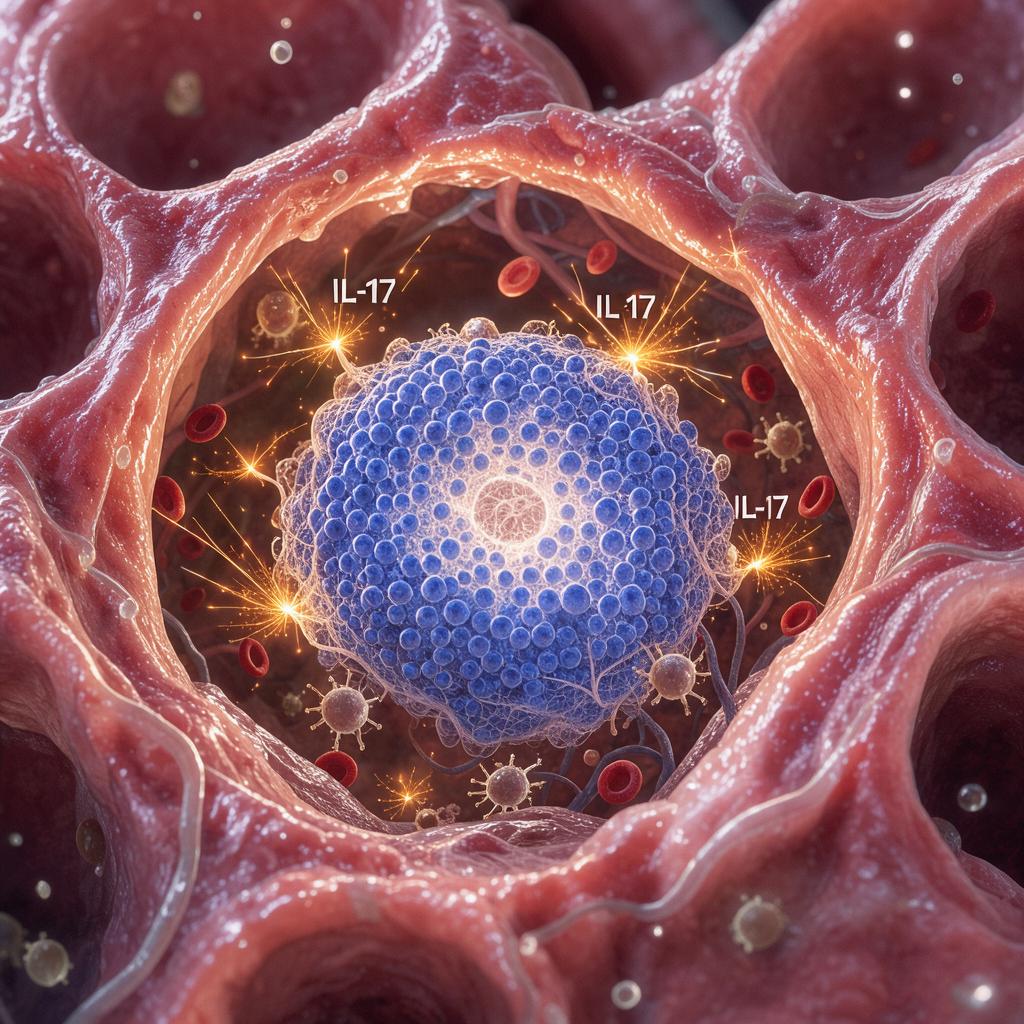
iBALT genesis redefined. His Nature Immunology paper showed iBALT forms in neonatal lungs via IL-17 from CD4+ T cells — independent of LTi cells (Rorc−/−, Id2−/−) — inducing CXCL13/CCL19, with lymphotoxin maintaining mature architecture .
Translation to human disease. iBALT was documented in rheumatoid arthritis pulmonary complications , and his 2018 Nature Immunology work showed lung-resident memory B cells require local antigen encounter .
Breadth beyond iBALT. Early stem-cell work identified CD38-high cells as murine LT-HSCs (9/10 mice reconstituted with 30 CD38-high fetal liver cells vs 2/10 CD38-low) ; ongoing 2026 work on IRF1–IRF4/IRF8 rewiring in lupus B cells shows continued mechanistic depth .
Limitations and blindspots (from the papers themselves)
Small per-group sample sizes (3–5 mice typical) across the influenza/iBALT studies .
The LN/spleen-deficient design may exaggerate iBALT importance — a skeptical reader should ask whether findings generalize to lymphoid-competent hosts; the authors themselves flag this.
Neonatal LPS models, specific microbiota, and LTβR blockade off-targets could confound iBALT ontogeny conclusions .
The 2026 lupus work lacks direct ChIP evidence for IRF1 binding at Irf4 regulatory elements and relies on one TLR7-driven model .
Overall assessment
Randall's work is mechanistically deep, reproducible across independent knockout models, and has translated from mice to human lung pathology and vaccine-relevant B cell memory biology. Confidence in this assessment is high for iBALT-related claims (multiple independent lines, high citation counts); moderate for the newest lupus preprint, which is not yet peer-reviewed and lacks direct binding validation.
Feedback:
Updated: October 27, 2026
BGPT Author Review
Scientific Quality
90%
Randall is a field-defining mucosal immunologist: h-index 78, ~20,887 citations, 384 works, with multiple Nature Immunology/Nature Medicine/Immunity first-author-group papers. The iBALT work is mechanistically rigorous (multiple independent knockouts, BM chimeras, adoptive transfers) and highly cited (442–821 per paper). Minor deductions: small mouse group sizes (3–5), reliance on LN/spleen-deficient models that may overstate iBALT importance, and some conclusions inferred from qualitative histology rather than quantified data.
Communication Quality
70%
Papers are methodologically clear (flow cytometry panels, qPCR normalization, well-defined mouse lines) but some figures lack explicit numeric values in the text, forcing readers to consult original figure legends. The multi-model designs (LTβR-Ig, splenectomy, chimeras) are complex and require careful reading. Writing is technically sound but dense for non-specialists.
Author Novelty
90%
The 2011 IL-17/iBALT paper (novelty 10/10 in extraction) overturned the LTi-centric model of tertiary lymphoid organ formation — a genuinely paradigm-shifting result. The 2007 chemokine paper showed CXCL13 dispensability, counterintuitive at the time. The 2018 lung-resident memory B cell finding and the 2026 IRF1 lupus work extend novelty, though the latter is more incremental within ABC biology.
Scientific Rigor
80%
Strong use of multiple orthogonal models (knockouts, chimeras, adoptive transfers, LTβR blockade) with appropriate controls. Deductions: typical group sizes of 3–5 mice limit statistical power; some histology is qualitative; the LN-deficient approach may confound interpretations; the 2026 preprint lacks direct ChIP validation for IRF1-Irf4 binding and uses a single lupus model. Cross-species extrapolation (mouse→human) is flagged but not fully resolved.
Building a bibliometric comparison of Randall's OpenAlex citation trajectory against field benchmarks, identifying his citation half-life and productive peak period for mucosal immunology impact assessment.
Get emailed when your analysis is done!
We'll email you the results when your analysis is finished.
Hypothesis Graveyard
iBALT is pathogenic (contributes to tissue damage). Displaced by Randall's 2004–2007 work showing iBALT is protective in influenza and correlates with better viral clearance, not worse pathology.
iBALT formation requires LTi cells. Displaced by the 2011 Nature Immunology paper showing normal iBALT in Rorc−/− and Id2−/− mice, with IL-17 from CD4+ T cells sufficient to initiate CXCL13/CCL19.

 Explore by Goal
 Quick Explanation
 Long Explanation
 Top Data Sources
 Ask a Follow-Up
 Key Insight
 Keep Exploring
 Analysis
 Hypothesis Graveyard
 Potential Experiments
 Discussion
