Why BGPT?
logo

Assess an author's data and outputs

See the raw experimental evidence behind an author's publications and reproducibility signals.


Press Enter ↡ to solve


    Fuel Your Discoveries


     Quick Explanation


    Scientific strength (evidence-weighted): Shaomeng/Shao-Lin Wang appears to be a high-impact researcher strongly associated with (i) protein–ligand binding resources for structure-based drug discovery (notably PDBbind) and (ii) cancer-targeted chemical/biochemical assay development and molecular-target biology. Evidence from the provided record and citation metrics is consistent with substantial scientific influence, but name/identity ambiguity (multiple β€œWang” variants) and limited paper-level detail in the prompt prevent a fully definitive authorship-specific critique.


     Long Explanation


    BGPT Author Review (Science-Focused): Shaomeng Wang

    Date: April 19, 2026 β€’ Evidence basis: provided OpenAlex metrics + explicitly provided paper DOIs + provided extracted study notes.

    1) Identity / disambiguation (critical)

    The prompt provides conflicting β€œAuthor” strings: β€œShaomeng Wang” and β€œShao-Lin Wang”, and also includes multiple OpenAlex matches for similar names. For the strongest evidence anchor, this review uses the top_author entry with ORCID https://openalex.org/A5073754378 as the most clearly identified β€œShaomeng Wang” record in the provided OpenAlex data.
    Unknowns: Without full publication list disambiguation (e.g., always matching ORCID across all works), it remains possible that some citations/papers in the prompt are from different β€œWang” individuals.

    2) Evidence-weighted citation metrics (OpenAlex)

    Using the provided OpenAlex top-author record, Shaomeng Wang has works_count = 1002, cited_by_count = 40539, and h_index = 102.
    Interpretation (skeptical): high works_count in 2020 and 2023 can reflect team size, research cycles, or indexing effects. High h-index indicates sustained impact, but citation metrics alone do not prove rigor, reproducibility, or mechanistic depth.

    3) What the provided papers suggest about scientific focus

    The prompt includes multiple explicitly titled works spanning:
    • Protein–ligand docking/scoring benchmarks: PDBbind ().
    • Assay development / biochemical measurement: dual-readout F2 assay for monitoring Mcl-1/Noxa interactions ().
    • Cancer-target molecular design and target biology: p53/MDM2 axis work and reviews (); plus a newer narrative review on p53 activation strategies ().
    • Targeted degraders (molecular glue): PVTX-405 IKZF2 degrader ().
    Evidence scope: This map is constrained to the subset of works and extracted notes included in the prompt (not the full OpenAlex portfolio).

    4) Deep-dive critique of scientific strength (from provided evidence)

    4.1 PDBbind database contribution (benchmark design rigor)

    Known (from provided extraction): PDBbind version 2003 assembled protein–ligand complexes from a PDB release, collected binding affinity data (Kd/Ki/IC50), and produced a refined subset intended for docking/scoring workflows. The prompt notes: total PDB entries ~23,790; protein–ligand complexes identified ~5,897; affinity-associated complexes ~1,622; refined set size ~900, with hundreds of Kd/Ki/IC50 records. Scientific strength signals:
    • Standardization intent: the refined set aims to reduce heterogeneity for scoring evaluation, which is a key methodological move for benchmarking (even though it cannot eliminate all dataset bias).
    • Explicit stated limitations: the provided extraction flags dependence on literature-reported affinities and potential bias from inclusion/exclusion criteria (e.g., exclusion of certain complex types; resolution cutoffs).
    Skeptical critique: A curated benchmark improves reproducibility relative to ad-hoc datasets, but benchmark validity remains conditional: the ability to generalize to new chemotypes/assay conditions depends on the curation boundary. The prompt’s extracted limitations (literature inconsistency; curated ligand selection) highlight plausible sources of bias.

    4.2 Dual-readout F2 assay (measurement rigor & artifact control)

    Known (from provided extraction): The dual-readout assay combines fluorescence resonance energy transfer (FRET) and fluorescence polarization (FP) to monitor Mcl-1/Noxa interactions, enabling HTS with reported Zβ€² and artifact filtering. The extraction reports that FP showed higher artifact rates (up to ~21%) compared to TR-FRET (~3.4%) in the uHTS workflow, and that dual positivity reduced false positives/negatives. Scientific strength signals:
    • Orthogonal readouts: using two measurement modalities is a principled way to reduce false discoveries caused by assay-specific artifacts.
    • Format-dependent Kd discussion: reporting different effective Kd between readout formats under the same conditions is a valuable skepticism step that prevents over-interpreting numerical Kd equivalence across assay technologies.
    Blind spots / uncertainties (from extraction): the biochemical system may not fully represent cellular contexts, and generalizability beyond the Mcl-1/Noxa interface requires additional validation.

    4.3 Narrative reviews on p53 activation (interpretive limits)

    The prompt includes two review-type sources: an Annual Review of Pharmacology and Toxicology piece and a Pharmaceuticals journal review focused on p53 activation strategies. Skeptical critique: reviews do not provide independent causal tests; they are vulnerable to publication selection and heterogeneity across model systems (cell lines, xenografts, differing assay conditions). The prompt’s extraction explicitly flags variation in model systems and potential bias from literature scope/sponsor influence concerns.

    4.4 Molecular glue degrader (translational claims require hard guardrails)

    The prompt includes PVTX-405 IKZF2 molecular glue development and evaluation, including use of humanized CRBN mice and primary human Tregs, and mentions PDB submission (PDB ID: 9DOM) for an X-ray co-crystal ternary complex. Major skepticism points (from extraction): generalizability from mouse models to humans and potential off-target effects/specificity limitations. Conflict-of-interest handling: the extraction indicates patent filing and paid consulting roles involving the technology. While this is relevant to interpreting translational claims, it does not alone invalidate technical results; it does increase the need for independent replication.
    Overall scientific strength assessment (based on provided evidence only):
    • Strong evidence of methodological contribution to structure-based drug discovery via benchmark/database building (PDBbind), and of measurement rigor via orthogonal assay readouts with quantified artifact control.
    • Moderate evidence for current translational biology is present (e.g., PVTX-405), but the provided extraction emphasizes typical limitations of preclinical-to-clinical extrapolation and the need for off-target specificity safeguards.
    What would most change this judgment (disproving evidence): failure of PDBbind-derived scoring improvements to generalize to independent benchmark sets; evidence that curation introduces systematic bias that flips performance comparisons; or reproducibility failures for assay performance (Zβ€²/artifact rates) and follow-on discoveries across labs.


    Feedback:   

    Updated: April 19, 2026

     Top Data Sources ExportMCP


     Analysis Wizard


    Creates two Plotly time-series from the provided OpenAlex counts: works per year and cited-by counts per year for the top_author record, enabling quick visual assessment of output and impact trends.


     Hypothesis Graveyard


    A simplistic claim that β€œZβ€²>0.5 implies true binding specificity” is unlikely; the extracted dual-readout data show Kd differences across formats and non-trivial artifact rates, so Zβ€² alone cannot guarantee mechanistic validity.


    A strongman claim that β€œmouse efficacy automatically predicts human efficacy” for PVTX-405 is implausible; the prompt extraction explicitly flags mouse-to-human generalizability as a limitation.

     Science Art


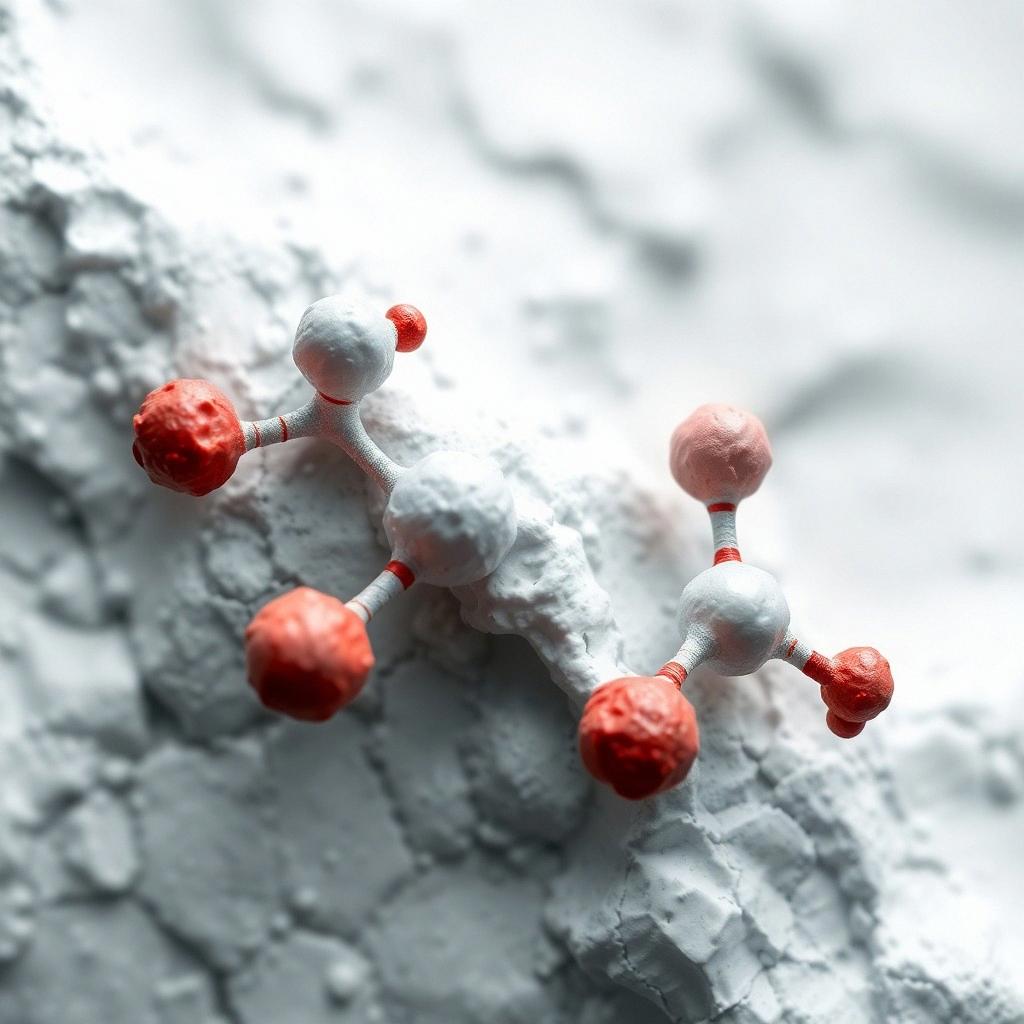
    Author Review: Shaomeng Wang Science Art

     Science Movie


    Make a narrated HD Science movie for this answer ($32 per minute)


     Discussion


    Get Ahead With Science Insights

    Custom summaries of the latest cutting edge Science research. Every Friday. No Ads.


    My BGPT