Examine the evidence base and provenance of specific claims made by authors or groups.Know what the science actually supports before you trust the answer.
Press Enter ↵ to review
Explore by Goal
"In the fields of observation chance favors only the prepared mind."
- Louis Pasteur
Quick Explanation
Copied
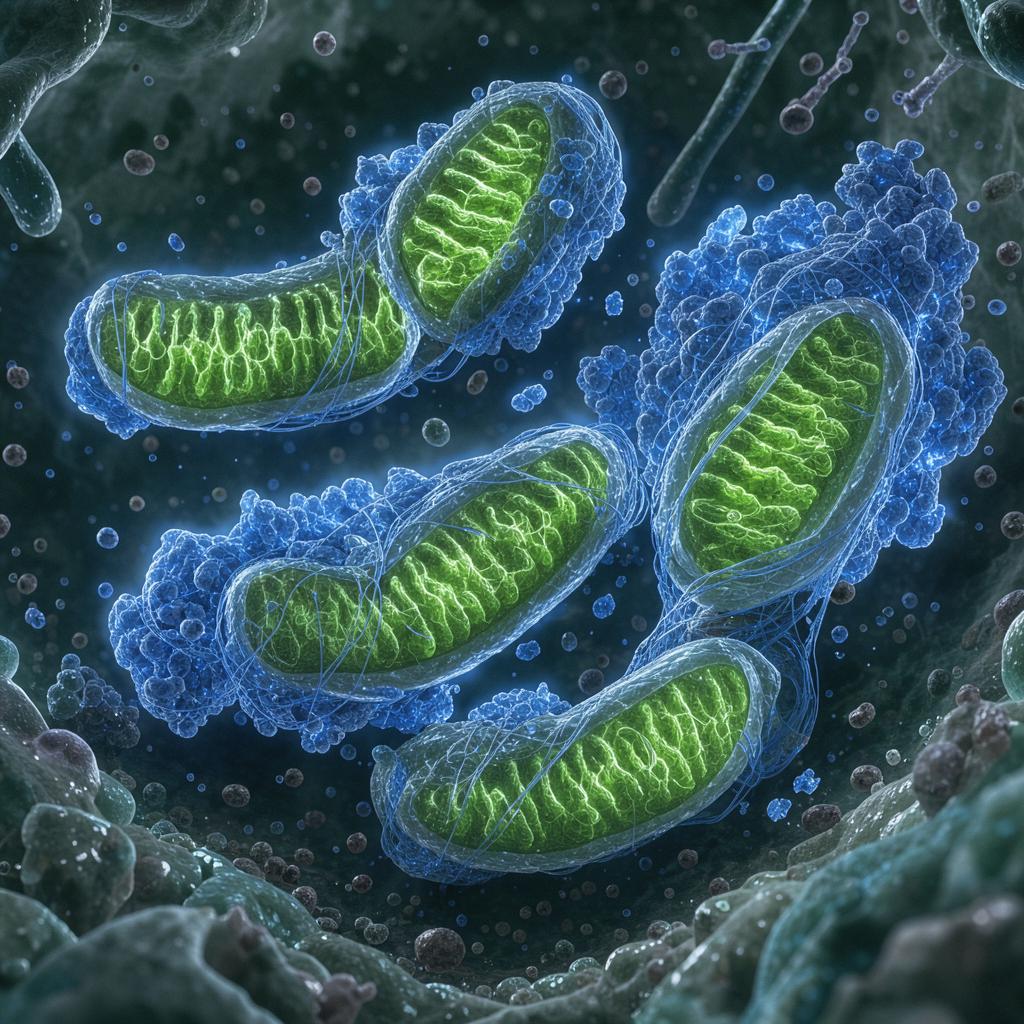
Olivier Lurette is an early-career mitochondrial cell biologist (Université de Moncton) with 7 publications, ~193–203 citations, and an h-index of 4–5, whose flagship 2023 Cell Death & Disease first-author study showed that aggregated α-synuclein — not overexpression alone — drives mitochondrial metabolic failure, Drp1-dependent fragmentation, and cardiolipin-externalization-dependent mitophagy in vitro and in mouse substantia nigra. His science is methodologically sophisticated but metrics are still emerging, consistent with a rising mid-career trajectory.
Long Explanation
Olivier Lurette is an early-career researcher at Université de Moncton working squarely on mitochondrial biology, with two coherent research threads: (1) mitochondrial Src kinase signaling, and (2) α-synuclein–mitochondria interactions in Parkinson's disease. His bibliometric profile (7 papers, ~193–203 citations, h-index 4–5) reflects a compact but citation-efficient body of work .
The steep rise in citations (58 in 2025) is driven almost entirely by his first-author flagship study in Cell Death & Disease (94 citations), which used the optogenetic LIPA system to demonstrate that aggregated α-synuclein — but not soluble overexpressed α-syn — reduces mitochondrial content, lowers ATP and oxygen consumption rate, promotes Drp1-mediated fragmentation, and triggers ubiquitin-independent mitophagy requiring cardiolipin externalization via PLSCR3, with BNIP3L/FUNDC1 dispensable. Findings spanned HEK/HeLa/N2A cells, human iPSC-derived dopaminergic neurons, and mouse substantia nigra in vivo, typically with ~3 biological replicates and modest sample sizes .
His earlier mitochondrial-Src work — first in breast cancer aggressiveness (Cell Death & Disease, 41 citations) and later a mechanistic follow-up on Src regulation of mitochondrial morphology — shows technical breadth spanning kinase signaling, respirometry (Seahorse/Oroboros O2k), optogenetics, and confocal live imaging. Contributing authorships on a mtDNA damage review and a peroxisome/Zellweger study indicate collaborative range beyond core projects.
Critical Assessment
Strengths: methodologically ambitious multi-model design (optogenetics, iPSC neurons, in vivo SNc optostimulation at 20 Hz/1.76 mW/mm² for 8 weeks), mechanistic resolution (PLSCR3/cardiolipin pathway), and a conceptually valuable dissociation of aggregation toxicity from overexpression — a frequent confound in α-syn literature. The paper is open-access, well-funded (NSERC, CIHR, CRC program), and declares no competing interests.
Weaknesses/blindspots: LIPA is an artificial aggregation system that may not recapitulate endogenous Lewy body dynamics; some key experiments used Parkin/PINK1-incomplete transformed lines; modest replicate numbers; in vivo mouse SNc extrapolation to human PD warrants caution — limitations the authors themselves acknowledge.
Metrics caution: h-index 4–5 at ~6 years post-first-paper is typical of early career pace; 94 citations for the flagship paper within ~2.5 years is a genuinely strong signal, though self-citation fractions and field-normalized benchmarks are unavailable from supplied data.
Verdict: a technically skilled, focused mitochondrial biologist with one high-impact mechanistic contribution and an accelerating citation curve; independent impact (post-PhD PI-level leadership) is not yet established from available data. Confidence: moderate — based on 7 papers and extracted metadata only; institution history, reviewer activity, and full CV gaps limit precision.
Feedback:
Updated: October 31, 2026
BGPT Author Review
Scientific Quality
60%
Early-career scientist with one strong first-author mechanistic paper (94 citations in ~2.5 years, multi-model validation including iPSC neurons and in vivo mouse SNc) demonstrating real experimental sophistication. However, the corpus is only 7 papers, h-index 4–5, and independent PI-level output is not yet demonstrated; key work uses artificial optogenetic aggregation and transformed cell lines. Score reflects high promise with limited long-term track record, judged purely on epistemic merit rather than institutional prestige.
Communication Quality
70%
Titles are precise and mechanistically informative; open-access publication (gold/diamond) and a 2024 short-format summary paper in Autophagy Reports show deliberate effort to communicate findings accessibly. No public-facing writing or preprint engagement is evident in the supplied record, and no ORCID is listed on OpenAlex, slightly hindering discoverability.
Author Novelty
70%
The central conceptual advance — separating aggregated from soluble α-syn toxicity via light-inducible aggregation, and implicating PLSCR3-dependent cardiolipin externalization rather than canonical PINK1/Parkin or receptor-mediated pathways — is a genuine mechanistic departure from dominant mitophagy paradigms. The mitochondrial Src work is more incremental but established a then-underexplored organelle-signaling niche.
Scientific Rigor
70%
Multi-system validation (cell lines, iPSC-derived dopaminergic neurons, mouse SNc), proper controls (LIPA-Empty, ΔNAC construct), quantified in vivo stimulation parameters, and transparent limitation acknowledgment indicate above-average rigor. Deductions for modest n (~3 replicates in several assays), reliance on overexpression-based systems, incomplete Parkin/PINK1 backgrounds in some lines, and data availability only 'upon reasonable request' rather than deposited datasets.

 Explore by Goal
 Quick Explanation
 Long Explanation
 Top Data Sources
 Ask a Follow-Up
 Key Insight
 Hypothesis Graveyard
 Discussion
