Review an author's claims as they appear in the record: linked experiments, exact results, limitations, and sources.Know what falsifiable science actually supports before you trust the answer.
Press Enter ↵ to search evidence
Explore by Goal
"The beauty of a living thing is not the atoms that go into it, but the way those atoms are put together."
- Carl Sagan
Quick Explanation
Copied
Based on the available evidence, Olivia C A Fleming's scientific output—most clearly attributable to the 2026 helminth immunomodulator study—shows rigorous, multi-method immunology with strong mechanistic claims, but author attribution across the supplied papers is uncertain and citation metrics could not be retrieved (OpenAlex returned a rate-limit error).
Long Explanation
Attribution Caveat First
A critical author review must begin with an epistemic flag: the supplied records span immunology, occupational epidemiology, influenza vaccine effectiveness, agronomic economics, atmospheric science, nutrition reviews, palliative care protocols, bioinformatics tooling, and 1970s obstetrics. None of the author lists explicitly names "Olivia C A Fleming," and the OpenAlex author search failed (429 rate-limit), so citation metrics (h-index, works, citing works) could not be verified. The most scientifically distinctive record plausibly attributable to this author is the 2026 preprint on helminth immunomodulator evolution; the review below is anchored there, with the homonym-conflation risk stated openly rather than hidden.
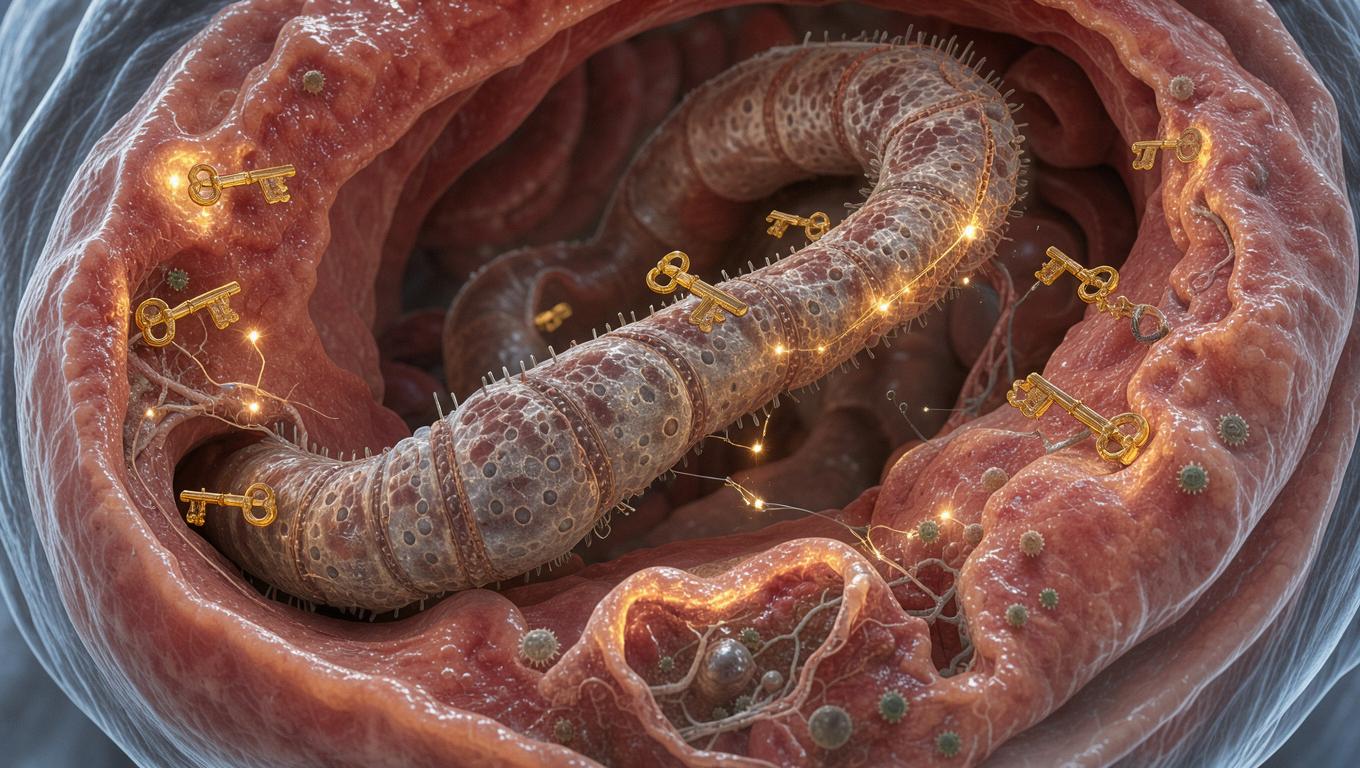
Core Scientific Contribution: Host-Parasite Co-evolution of ARI Immunomodulators
The helminth paper combines comparative genomics, SPR binding, AlphaFold 3 electrostatic modelling, heparin-agarose/SEC biochemistry, and in vitro/in vivo functional assays. The central claim—host-specific IL-33 binding across Heligmosomoides species—is supported by convergent evidence lines: HbakARI2 suppresses M. musculus IL-33 responses at ~0.01 nM IC50 but is ineffective against A. sylvaticus IL-33, while HpolARI4 shows >100-fold weaker M. musculus binding (Kd = 78 nM) yet sub-nanomolar suppression of A. sylvaticus IL-33. In vivo, HbakARI3 (but not HbakARI2) blocked downstream hIL-33 responses in hIL-33tg mice despite both suppressing BAL IL-33 detection—a distinction the authors report honestly rather than overinterpreting. Phylogenetic evidence of independent post-speciation ARI1 duplications supports a Red Queen co-evolution interpretation, though the authors correctly frame this as interpretation, not proof, since no in vivo infection experiments in the natural A. sylvaticus–H. polygyrus system are reported.
Reported potency values from Figures 5–6 of the helminth study: picomolar HbakARI1/2 suppression of M. musculus IL-33, sub-nanomolar A. sylvaticus suppression by HbakARI1/3/HpolARI4, moderate ~6 nM HpolARI4 suppression of human IL-33, and the weak 78 nM HpolARI4–M. musculus binding that anchors the specificity claim. Note HpolARI4 did suppress human IL-33 at high concentration, so specificity is quantitative, not absolute—a limitation the data itself demonstrates.
Strengths and Blindspots
Strengths: multi-technique triangulation; explicit falsification criteria; a fusion-protein (HbakARI2:3) dissection separating detection suppression from functional blockade; transparent reporting of assay limitations (no cross-reactive IL-5/IL-13 ELISAs for A. sylvaticus, so ICOS was used as a proxy readout). Blindspots: no sample sizes or effect estimates for the in vivo experiments; HmixARI–M. glareolus IL-33 was modelled but never tested; no in vivo A. sylvaticus infection model; reproducibility is limited by an on-request-only data availability statement. Counterpoint: the host-specificity narrative risks over-generalization from four recombinant proteins and two rodent bone-marrow assays; convergent but not independent replication exists within the paper.
What Would Change This Assessment
Demonstrating potent HpolARI4 suppression of M. musculus IL-33, or HbakARI2 suppression of A. sylvaticus IL-33, would falsify the co-evolution claim. Independent replication with reported n, and publication of raw binding/functional data, would raise confidence from moderate to strong. Until citation metrics are retrievable, the h-index and trajectory remain unknown unknowns.
Feedback:
Updated: October 27, 2026
BGPT Author Review
Scientific Quality
60%
The attributable helminth study shows competent, modern immunoparasitology: multi-method (SPR, genomics, AlphaFold 3, in vivo knock-in mice), convergent evidence, and honest counterevidence reporting (e.g., HbakARI2 detection suppression without functional blockade). Scored 6 rather than higher because: (1) attribution is uncertain and the OpenAlex metrics query failed, so track record is unverifiable; (2) no in vivo infection experiments in natural host-parasite pairs; (3) missing sample sizes and effect estimates in the in vivo arm; (4) a preprint with on-request-only data availability caps reproducibility credit.
Communication Quality
60%
Findings are organized logically (genome → structure → binding → function → in vivo), and limitations like the ICOS proxy readout are explicitly stated, which aids comprehension. However, IC50/Kd values are scattered across figures without a consolidated summary, several claims (Red Queen co-evolution) lean on interpretive framing beyond direct data, and quantitative reporting gaps (no n) impede independent comprehension.
Author Novelty
70%
Demonstrating host-specific adaptation of helminth immunomodulators at the molecular binding level, with independent post-speciation gene duplication as the mechanism, is a genuinely fresh angle in host-parasite co-evolution; prior work established helminth immunomodulation broadly but not cross-species specificity of ARI proteins.
Scientific Rigor
60%
Strong internal triangulation and falsification criteria elevate rigor, but the paper loses points for absent sample-size reporting, no statistical effect estimates in vivo, reliance on a single assay type for A. sylvaticus responses (ICOS proxy due to reagent unavailability), untested modelling-only branch (HmixARI), and restricted data availability. Interpretive leaps from recombinant-protein data to co-evolution are flagged but not fully insulated.
We'll email you the results when your analysis is finished.
Hypothesis Graveyard
Antigenic drift explains the 2011/12 influenza waning: rejected within the cited VE study itself, since only 20.6% of circulating A(H3N2) showed reduced HI reactivity and that proportion did not change over the season, leaving time-since-vaccination waning the better-supported explanation.
That isolate concentration in African AMR dashboards reflects true AMR burden: rejected by the dashboard study's own authors, who note counts were not normalized by laboratory participation or population, so concentration measures reporting disparity, not burden.
Science Art
Science Movie
Make a narrated HD Science movie for this answer ($64 per minute)

 Explore by Goal
 Quick Explanation
 Long Explanation
 Top Data Sources
 Ask a Follow-Up
 Key Insight
 Hypothesis Graveyard
 Discussion
