NanTex presents a highly novel and technically sophisticated deep-learning framework for label-efficient multiplexing of identically labeled organelles across various super-resolution modalities, utilizing nanoscale nanotexture as a universal descriptor for probabilistic demixing of single-channel images. While achieving high fidelity (up to 0.96 SSIM), the scientific strength is tempered by limitations such as sensitivity to defocus, reliance on limited training sets, and stated conflicts of interest related to patent applications.
Rigorous Scientific Review of NanTex Multiplexing Framework
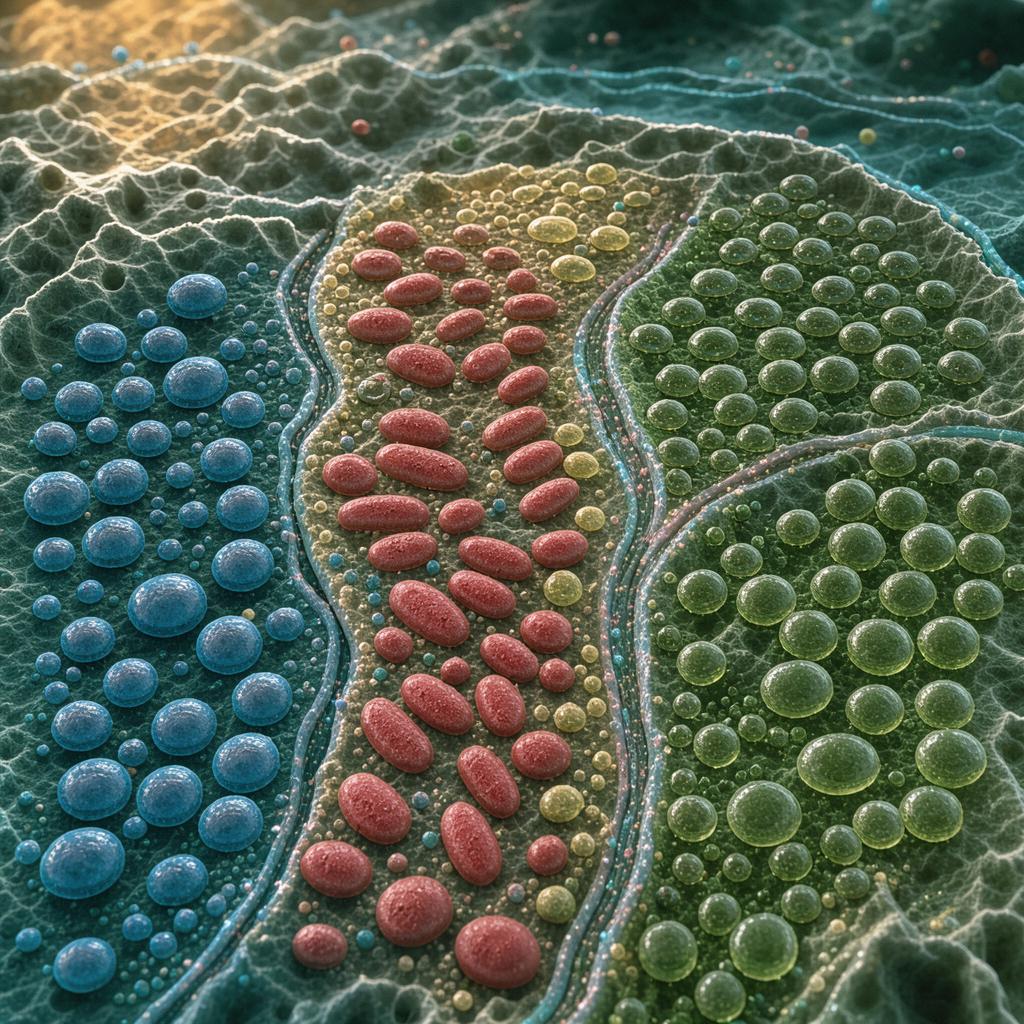
The paper, "NanTex enables computational multiplexing and phenotyping of organelles across super-resolution modalities" 10.1101/2025.09.16.676574, introduces a sophisticated approach to solving the critical bottleneck of spectral overlap and dye limitations in super-resolution microscopy. NanTex is posited as a data-efficient, deep-learning framework that leverages nanoscale nanotexture features to probabilistically demix and multiplex multiple organelles within a single-channel super-resolution image NanTex enables computational multiplexing and phenotyping of organelles across super-resolution modalities. The framework demonstrates high performance across diverse imaging modalities, including SMLM/dSTORM, MINFLUX, STED, and live-airyscan, showcasing its potential for robust, label-efficient cell phenotyping NanTex enables computational multiplexing and phenotyping of organelles across super-resolution modalities.
Assessment of Scientific Methodology and Rigor
The core innovation lies in utilizing nanotexture—such as Haralick features—as a universal, descriptive identity for specific organelles, rather than relying solely on spectral information, which is often unavailable in single-channel acquisitions NanTex enables computational multiplexing and phenotyping of organelles across super-resolution modalities. This approach is computationally rigorous, employing a U-Net-based probabilistic demixing architecture and demonstrating strong fidelity using perceptual metrics like SSIM and MS-SSIM, achieving local and global fidelity up to 0.96 in live-cell lysosome demixing NanTex enables computational multiplexing and phenotyping of organelles across super-resolution modalities.
However, several critical limitations and potential blind spots must be addressed for the methodology to achieve world-class rigor:
Epistemic Conclusion
The authors present a highly promising, computationally innovative solution for super-resolution microscopy. The framework shifts the paradigm from spectral discrimination to textural classification. However, the high scientific scores (e.g., Scientific Quality 9/10) must be contextualized by the documented dependence on training data size and the existence of a patent conflict of interest. Evidence suggests strong theoretical potential, but broad applicability requires validation across a wider variety of cellular contexts and hardware specifications, especially regarding cross-modality transfer robustness NanTex enables computational multiplexing and phenotyping of organelles across super-resolution modalities.

 Explore by Goal
 Quick Explanation
 Long Explanation
 Top Data Sources
 Ask a Follow-Up
 Key Insight
 Keep Exploring
 DataGen
 Discussion
