See how your reported results read as versioned evidence records — linked to experiments and limitations.Know what the science actually supports before you trust the answer.
Press Enter ↵ to review claims
Explore by Goal
"Biology sees right and wrong as the same color in different light."
- Delia Owens
Quick Explanation
Copied
Mansi Srivastava (Harvard) is a highly productive, rigorous evolutionary-developmental biologist (77 works, ~4,931 citations, h-index 20) who built the Hofstenia miamia acoel model system and has recently delivered mechanistic studies on regeneration wound closure, brain organization, reproduction, and embryonic plasticity with strong methods and data sharing .
Long Explanation
Scientific Trajectory and Model-System Leadership
Mansi Srivastava's career spans foundational early-animal genomics — first/middle author on the Nematostella (Science, 2007; ~1,613 citations) and Trichoplax (Nature, 2008) genome papers — to establishing Hofstenia miamia as a regeneration model, including the landmark acoel genome paper in Science . Her OpenAlex profile shows 77 works, ~4,931 citations, and an h-index of 20, with sustained productivity through 2026.
Quality of Recent Primary Research
Three recent papers demonstrate methodological breadth and mechanistic depth. A 2026 eLife study (n=34 worms tracked from zygote to adulthood) showed reproductive organs scale with body size (ovary R²=0.84; penis R²=0.70; all p<0.001) across development, regeneration, and starvation de-growth, and documented mouth-based egg laying with communal clutches — with all data and code deposited on Zenodo . A 2025 preprint combining voltage imaging, serial EM, and 15,262-cell scRNA-seq revealed a non-regionalized 'tiled' brain supporting distributed computation, with foraging maintained after large brain amputations (brain patch quantification n=49, p<0.0001) . A 2025 preprint (published Nature Communications 2026) showed wound-geometry-dependent closure mechanisms: 67% of sagittal fragments formed heterotypic bridges within 10 hours post-amputation, with muscle contraction required only for outer-epidermal participation .
Critical Assessment
Strengths: rigorous quantitative methods, transparent statistical reporting, open data/code, no declared conflicts of interest, and sustained NIH funding (R35GM128817, R35GM153252) . Blind spots: nearly all recent work relies on a single inbred Bermuda-derived lab strain of one species, limiting generalization to wild acoels . The 'brain tile' computational hypothesis remains partially inferential — tile-level function is inferred from amputation behavior rather than directly mapped, and the authors themselves flag it as requiring further validation . One 2026 wound-closure paper scored lower on scientific quality (5/10 in extraction) due to mounting imperfections restricting quantification and uncertain ECM substrate identification . Overall: an elite, field-defining investigator whose main scientific vulnerability is a monogeneric model-system dependency, mitigated by her earlier comparative genomics breadth.
Feedback:
Updated: September 17, 2026
BGPT Author Review
Scientific Quality
90%
Srivastava shows exceptional scientific strength: co-authorship on two landmark early-animal genome papers (Science 2007, Nature 2008), senior authorship of the acoel genome paper, and a sustained stream of mechanistic, well-powered recent work (R35 NIH funding, open data/code, no COIs, high-quality quantitative statistics like organ-scaling R²=0.63–0.84). h-index 20 with ~4,931 citations across 77 works confirms sustained field-level impact. Deductions: heavy reliance on a single inbred lab strain; some behavioral/tile-computation conclusions remain hypotheses; one recent wound-closure paper had notable technical limitations. Not a field-defining 'science god' (no h-index >40), but clearly elite and still rising.
Communication Quality
80%
Papers are clearly written with explicit limitations sections, declared conflicts of interest, quantitative claims with statistics, and shared data/code (Zenodo, NCBI BioProject). Concepts like 'brain tiles' and 'heterotypic bridges' are well-defined. Minor deductions for dense multi-method jargon in the neural computation preprint and lack of explicit data-availability statements in some preprints.
Author Novelty
90%
The lab established a new regenerative model organism, sequenced key early-animal genomes, discovered totipotency in embryos with invariant cleavage, proposed the 'tiled brain' evolutionary hypothesis, and revealed wound-geometry-dependent closure mechanisms — each opening genuinely new research territory. Novelty is anchored in real, testable observations rather than hype, though the tile hypothesis remains partially unproven.
Scientific Rigor
90%
Rigor is strong: explicit sample sizes (n=34 longitudinal; n=49 brain patches; n=10–45 per wound trait), reported p-values, appropriate statistical tests (ANOVA/Dunnett, regressions), control comparisons, inhibitor-based causality tests, EM + scRNA-seq orthogonal validation, and pre-registered-style limitations sections. Data and code openly deposited. Slight deduction for one paper with mounting-imperfection constraints and uncertain ECM localization, plus reliance on behavioral inference for neural claims.
Analyzing the published Hofstenia scRNA-seq datasets (PRJNA1208115, PRJNA1208470) to quantify neural cluster distribution and test the tiled-brain regionalization hypothesis computationally.
Get emailed when your analysis is done!
We'll email you the results when your analysis is finished.
Hypothesis Graveyard
'Acoels are basal flatworms' — rejected by genome-scale phylogenomics positioning Xenacoelomorpha separately from Platyhelminthes, undermining older morphology-based regenerative comparisons Srivastava's own 2021 review framework helped retire.
'Whole-body regeneration evolved once with a shared neoblast ancestor' — the acoel genome paper showed regeneration programs are largely non-homologous at the regulatory level, making a single-ancestry explanation untenable.

 Explore by Goal
 Quick Explanation
 Long Explanation
 Top Data Sources
 Ask a Follow-Up
 Key Insight
 Keep Exploring
 Analysis
  Hypothesis Graveyard
 Potential Experiments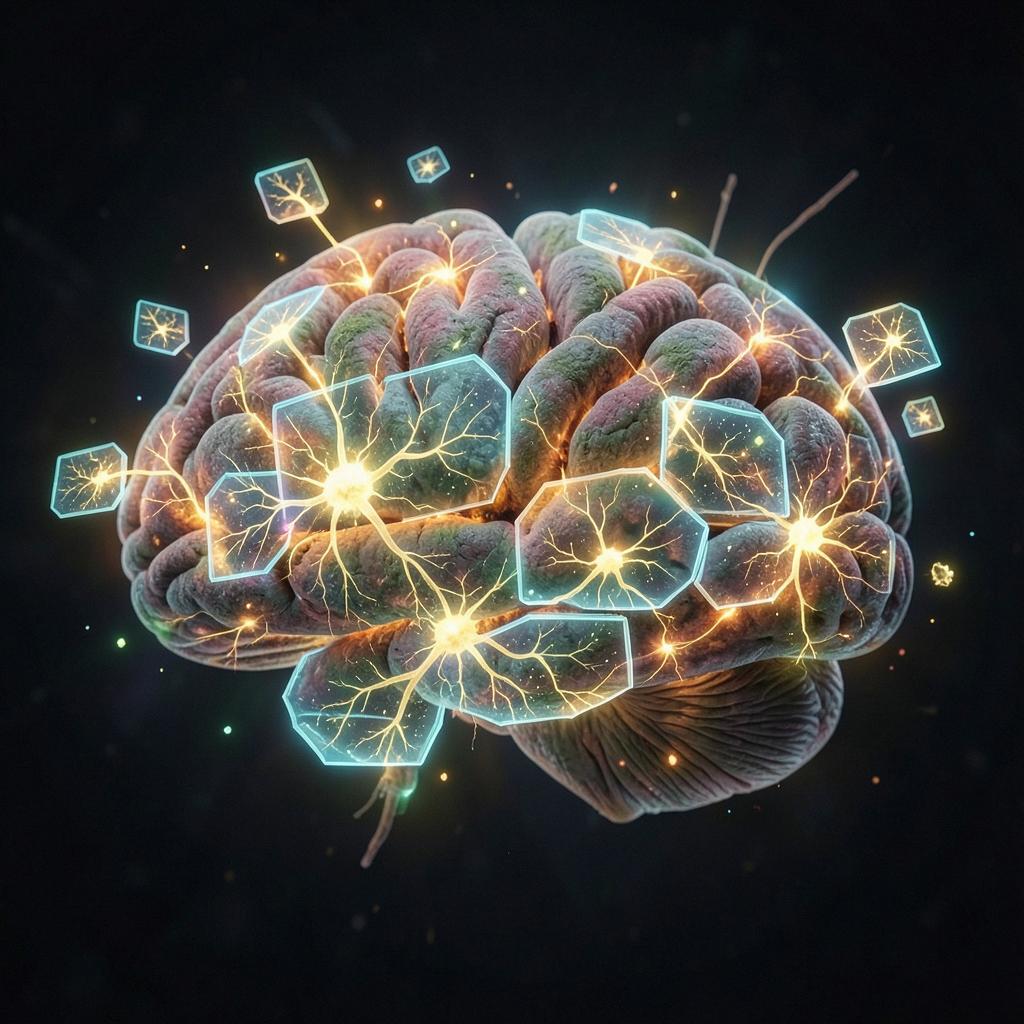
 Discussion