See how your reported results read as versioned evidence records — linked to experiments and limitations.Know what the science actually supports before you trust the answer.
Press Enter ↵ to review claims
Explore by Goal
"The scientific man does not aim at an immediate result. He does not expect that his advanced ideas will be readily taken up. His work is like that of the planter - for the future. His duty is to lay the foundation for those who are to come, and point the way."
- Nikola Tesla
Quick Explanation
Copied
Author Review: Le Tinh (scientific-strength critique)
Based on the provided OpenAlex-like author snapshot and the two supplied paper records (fungal plant disease; essential oil volatility), the author profile shows multi-disciplinary chemistry/biology coverage and moderate-to-high external impact (citations/h-index), but the evidence strength for “mechanistic biological innovation” can’t be confirmed without full text, experimental designs, and replication details.
Key limitation: the input mixes multiple “Le Tinh” name variants, so identity conflation is a major risk.
Epistemic warning: “Le Tinh” is an ambiguous name string. Your provided OpenAlex query returns multiple distinct author entities (e.g., Giang Truong Le, Duc Le, etc.). Any “scientific strength” judgment is therefore conditioned on which identity is correct.
What this does & doesn’t prove: Citation volume and works count do not establish mechanistic biological insight. They mainly indicate research productivity and reuse, and they are also sensitive to author-name disambiguation.
Provided topic profile (top author match)
Direct paper-evidence review (only from the two supplied records)
The two supplied records show two different scientific areas: plant pathology / fungal population biology and plant essential oil analytical chemistry. This is evidence of breadth, but it’s not yet evidence of deep, field-defining biological mechanistic novelty.
Main biological/epistemic limitations (risk of overclaim)
Plant disease: “Genetic and Phenotypic Diversity of Sclerotium rolfsii…”
Field sampling across multiple provinces; ITS-rDNA grouping; pathogenicity assays on a defined cultivar; quantitative phenotyping (growth rate, sclerotia metrics); antifungal sensitivity testing by growth inhibition; mycelial compatibility testing.
ITS may under-resolve true intraspecific diversity; possible ITS copy-number/polymorphism complexity; limited resolution linking ITS groups → function/pathogenicity; lack of fungicide-use history blocks resistance–practice inference; mycelial compatibility is macroscopic and may not equal underlying genetic relatedness.
Chemical ecology / analytics: “Analysis of the Volatile Constituents of Alpinia pinnanensis”
Tissue-specific essential oil yields; chromatographic methods with instrumental triplicates; retention indices vs n-alkanes; GC-MS library identification and co-injection “where possible”; clear method parameters.
Single location + single time window (seasonal/geographic variability untested); identification based on library matches/retention indices may misassign isomers without orthogonal confirmation; no biological replicates beyond instrumental triplicates.
Tool/method citation checkpoints
The plant-pathology record states use of MEGA4 for phylogenetic analysis; MEGA4 is described in Kumar et al. .
Strength (breadth + measurable outcomes): The supplied records contain quantification (incidence ranges, growth rate/sclerotia metrics, inhibition percentages, yield %, major volatile constituents), reducing pure narrative bias.
Uncertainty (identity + completeness): The provided “Le Tinh” name is ambiguous, and OpenAlex returns multiple candidate authors; without ORCID/affiliation-level disambiguation, “author” conclusions are fragile.
Mechanistic depth not fully demonstrated: From extraction alone, we cannot confirm whether biological mechanisms were rigorously tested versus inferred from phenotypes/analytical profiles.
Reproducibility signal is mixed: Both records describe method parameters, but each has critical gaps: disease work may be under-resolved genetically (ITS limitation); essential-oil work may be underpowered for biological variability (single location/time).
Counterfactuals that could change the conclusion: More discriminatory genotyping (beyond ITS) could reveal larger structure than three ITS groups; orthogonal chemical identification (e.g., standards for more constituents, or additional confirmation) could change the major-compound assignments materially.
Confidence
Confidence is moderate-low because the dataset is incomplete for full author-level evaluation: we have (i) ambiguous identity matches, (ii) only two extracted records for scientific content, and (iii) no full-text access here to judge experimental controls, effect sizes, blinding, and reporting completeness.
Feedback:
Updated: April 17, 2026
BGPT Author Review
Scientific Quality
50%
Moderate scientific quality signal: the provided records include quantitative, multi-step experimental designs (field sampling + pathogenicity + fungicide sensitivity; and GC/GC-MS volatile profiling with explicit method parameters). However, author identity ambiguity (“Le Tinh” conflation risk) plus known resolution limits (ITS-only phylogenies; single location/time for oils) prevent strong claims of mechanistic innovation or maximum rigor.
Communication Quality
60%
Communication quality can’t be fully judged from extraction alone. Still, method specificity (primers, apparatus conditions, concentrations, calculation formulas, and explicit quantitative ranges) suggests at least adequate technical reporting, but the extraction does not demonstrate clarity of interpretation or restraint in causal claims.
Author Novelty
40%
Novelty is uncertain. The topics shown are real and potentially useful, but the provided extraction does not demonstrate uniquely new biological mechanisms—only application of established approaches (ITS grouping, GC-MS chemoprofiling, compatibility/phenotyping).
Scientific Rigor
50%
Rigor appears moderate: there are defined experimental systems, quantitative outcomes, and named tools (e.g., MEGA for phylogeny). Yet key design limitations are visible from extraction: genetic resolution may be limited (ITS), fungicide-history confounding is not addressed, and essential oil sampling is geographically/temporally narrow. These constrain causal inference and generalizability.
Parses extracted numeric ranges (incidence, growth, inhibition; oil yields and key constituents) into structured tables and generates comparative plots to support a rigorous evidence-strength audit across records.
Get emailed when your analysis is done!
We'll email you the results when your analysis is finished.
Hypothesis Graveyard
The strongest alternative explanation to “ITS groups map to population structure controlling pathogenicity” is that ITS copies/polymorphism and sampling structure dominate observed clustering; without high-resolution markers, functional mapping could be illusory.
The strongest alternative to “library+retention index identifies true major volatiles” is systematic isomer misassignment; without broader standard confirmation, the reported “major compounds” might be chemically consistent-but-wrong at the isomer level, undermining chemotaxonomic claims.
Science Art
Science Movie
Make a narrated HD Science movie for this answer ($32 per minute)

 Explore by Goal
 Quick Explanation
 Long Explanation
 Top Data Sources
 Ask a Follow-Up
 Key Insight
 Analysis
  Hypothesis Graveyard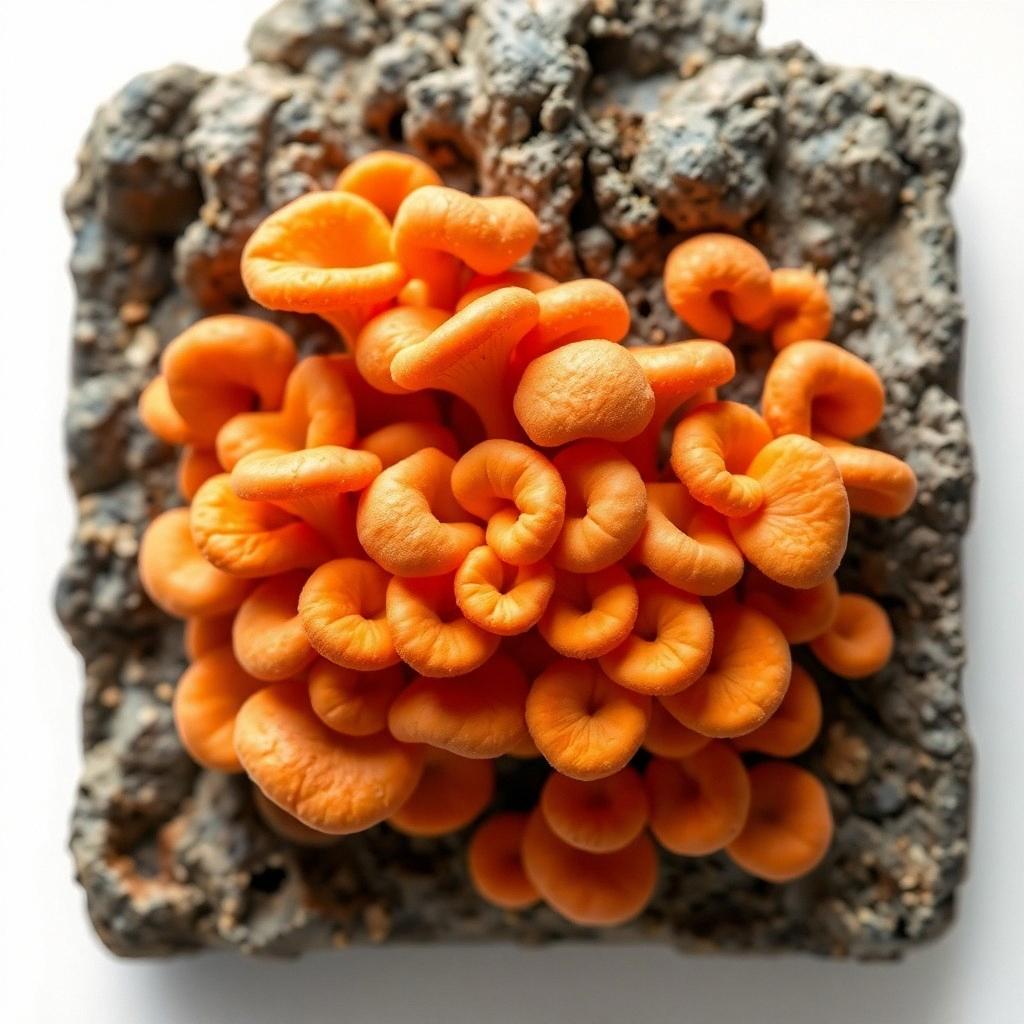
 Discussion