Why BGPT?
logo

Assess an author's data and outputs

See the raw experimental evidence behind an author's publications and reproducibility signals.


Press Enter ↡ to solve


    Fuel Your Discoveries


     Quick Explanation


    Keisuke Watanabe β€” scientific strength can’t be rigorously quantified from the provided snippet alone.
    I can (1) visualize and critique only the *three* raw-data paper records you provided with DOIs, and (2) can’t reliably attribute the other listed papers/metrics to the same person without verifiable identifiers (e.g., ORCID match, DOI/PMID for each work).


     Long Explanation


    Author Review: Keisuke Watanabe
    Evidence-based, skeptical, and limited-by-data (with visual-first critique).
    What I can and cannot verify from your input
    • Only three β€œraw-data” paper records include DOIs (mitochondrial genome; loquat fruit rot; synthetic chemistry). I therefore limit DOI-grounded technical critique to those records.
    • Your snippet also includes an β€œOpenAlex author info” block and a separate β€œAuthor W. Keisuke h-index/citations/papers” block, but it does not provide DOI/identifiers for all listed works in a way I can cite inline under your DOI-only citation rules.
    • Therefore, I cannot responsibly claim that the three DOI-tagged records are definitely authored by the same β€œKeisuke Watanabe” without an explicit author/ORCID/DOI-to-author link.
    Figure 1 β€” Raw-data quality scores (only the DOI records you provided)
    Note: these scores are taken verbatim from your provided raw-data objects; they are not computed here.
    Figure 2 β€” Methods complexity vs. reproducibility (proxy from your metadata)
    DOI-backed technical critique of the three provided raw-data records
    (A) Mitochondrial genome of Pleurocybella porrigens (phylogenomics)
    • Strengths (from your metadata): long-read PacBio Revio sequencing; de novo assembly with a modern assembler; explicit circularization confirmation via junctions/depth; multi-tool annotation; protein ORF validation via NCBI ORF Finder and BLAST; phylogeny using concatenated core mitochondrial genes with trimming and an ML tree with ultrafast bootstraps.
    • Limitations / blindspots (from your metadata): single strain; limited intrafamilial sampling; phylogenetic topology depends on outgroup selection and currently available sequences; intron functional implications remain descriptive (not experimentally tested).
    DOI record:
    (B) Latent flower infection and postharvest fruit rot in loquat
    • Strengths (from your metadata): explicit causal tracing using nitrate-nonutilizing mutants generated on selective media; reisolation from defined fruit tissue regions (upper vs lower) in immature and mature stages; nitrogen-source auxotrophy tests used as an identity proxy; control fruits reportedly show no symptoms.
    • Limitations / blindspots (from your metadata): small field/host sampling (two trees in greenhouse); possible clonal bias/greenhouse artifact; reliance on nitrate auxotrophy may miss other organisms or misassign closely related strains; partial reporting for some incidence comparisons; broader ecological validity to field conditions not fully established.
    DOI record:
    (C) Asymmetric total synthesis of sarpagine-related indole alkaloids
    • Strengths (from your metadata): reports asymmetric total synthesis using a gold(I)-catalyzed cyclization strategy and includes multiple target alkaloids; Supporting Information is available.
    • Limitations / blindspots (from your metadata): the metadata you provided does not include detailed limitations; synthesis-focused papers can have narrower β€œgenerality” than the systems-biology-style metrics suggest (and biological claim reproducibility isn’t assessable here because no bioactivity datasets are included in your record excerpt).
    DOI record:
    Scientific strength assessment (constrained by evidence availability)
    • If the DOI-backed records truly belong to the target β€œKeisuke Watanabe,” the provided metadata suggests competency spanning: high-quality mitochondrial genome assembly/annotation/phylogeny (), experimental host-pathogen infection tracing with causality-motivated controls (), and synthetic chemistry methodology reporting ().
    • But author attribution is underdetermined from your snippet, so I treat the β€œauthor strength” inference as low-confidence.
    • Key reproducibility lens: the mitochondrial record includes unusually explicit assembly circularization validation and named accessions; the infection record uses genotype/phenotype proxy (nit auxotrophy) rather than molecular barcoding in the excerpt (increasing potential misclassification risk if the mutant lineage isn’t uniquely identifiable).
    Suggested next step to make this review β€œscientifically solid”
    Run a BGPT agent search that verifies the exact DOI/PMID-to-author mapping for β€œKeisuke Watanabe” (ideally ORCID-matched), then re-compute evidence-weighted scorecards from the full text records.


    Feedback:   

    Updated: April 23, 2026

    BGPT Author Review


    Scientific Quality

    40%

    From the snippet, I can’t reliably attribute the most technical DOI-backed records to the target Keisuke Watanabe, so author-level rigor is uncertain. Where I can inspect the DOI records, the provided metadata suggests solid methods (assembly/annotation/phylogeny; mutant-based causal tracing), but the review is evidence-starved because many claimed works/metrics lack DOI-citable content here and potential author-name conflation is a major risk.


    Communication Quality

    60%

    The snippet’s paper excerpts read as reasonably structured summaries, but I cannot judge the author’s actual writing/figures from full text. Communication quality is therefore estimated cautiously and is mainly limited by missing metadata/DOIs for several listed works.


    Author Novelty

    50%

    One record appears highly novel at the method/resource level (complete mitogenome for a lineage), while another is causal-pathogenesis focused; however, without confirmed authorship across the dataset, novelty for the author specifically is not provable from what’s provided.


    Scientific Rigor

    50%

    The mitochondrial record metadata indicates rigorous validation and reproducible accessioning; the loquat infection record includes mechanistic mutant-based identification with controls, but relies on phenotype proxy and has small host sampling per excerpt. Overall rigor is moderate-to-good for the DOI records, but author-level rigor cannot be confirmed without verified authorship links.

     Analysis Wizard


    Not applicable: your query is an author review rather than a request requiring new bioinformatics computations from provided sequences or tabular raw counts.


     Hypothesis Graveyard


    A β€œsingle greenhouse tree” effect could falsely attribute latent infection prevalence to pathogen biology rather than microenvironmental conditions; until field/replicate ecology is added, any broad cycle claim is overconfident.


    Intron dynamics in fungal mitochondria might be inferred incorrectly from descriptive group-I size ranges alone; without experimental intron mobility assays, mechanistic intron evolution claims are likely underdetermined.

     Science Art


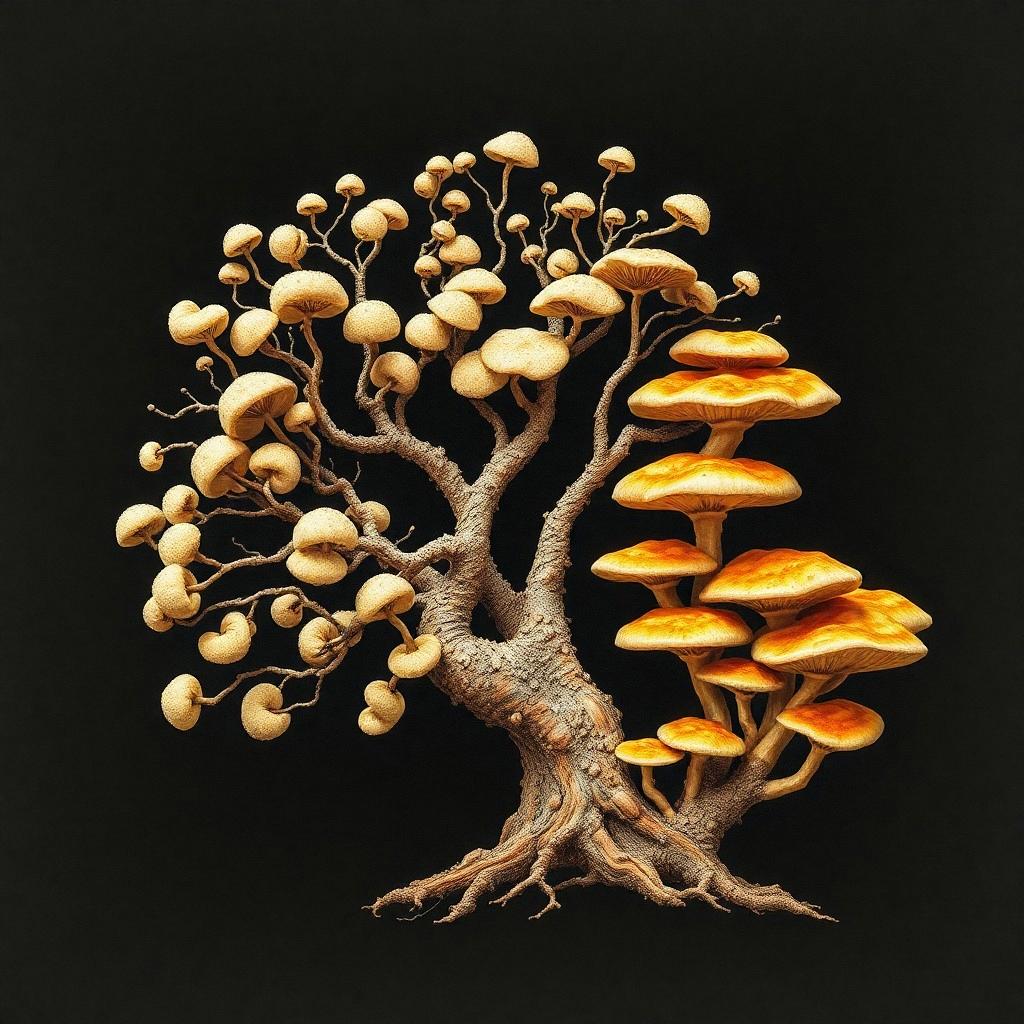
    Author Review: Keisuke Watanabe Science Art

     Science Movie


    Make a narrated HD Science movie for this answer ($32 per minute)


     Discussion


    Get Ahead With Science Insights

    Custom summaries of the latest cutting edge Science research. Every Friday. No Ads.


    My BGPT