Why BGPT?
logo

Assess an author's data and outputs

See the raw experimental evidence behind an author's publications and reproducibility signals.


Press Enter ↵ to solve


    Fuel Your Discoveries


     Quick Explanation


    Author Review (skeptical, data-grounded)
    Given the prompt’s supplied “J Chen” material appears mis-mapped to other authors (e.g., OpenAlex match shows Zhong Lin Wang as the top author for “J Chen”), I can’t responsibly credit scientific quality, novelty, or rigor to a specific “J Chen” without an unambiguous author identifier and paper list. I therefore (i) quantify the scientific strength of the provided paper set and (ii) flag attribution uncertainty as the dominant limitation.
    Start an independent agent to verify attribution + compute deeper bibliometrics on the correct “J Chen” once you confirm which “J Chen” (ORCID/affiliation) you mean:


     Long Explanation


    Attribution check (highest priority)
    The supplied OpenAlex “J Chen” query output does not uniquely identify a single “J Chen”; instead the “top_author” displayed is Zhong Lin Wang, with his ORCID and topic profile shown, not “J Chen”. Because of this, any attempt to score “J Chen” directly from those OpenAlex fields would be an attribution error (scientifically invalid).

    Consequently, in this review I focus on the scientific strength of the provided paper set (each has a DOI in your raw data), while treating author-level bibliometrics for “J Chen” as unknown/uncertain.
    1) Visual evidence: technology performance signals inside the provided papers
    All numbers are taken only from the raw data you supplied for each paper.
    ECHOS: photo-uncaging sensitivity (SNR vs fraction of cells uncaged)
    Your extracted raw data states an approximately linear increase with reported R² = 0.85 and slope = 5396; additionally, it reports SNR > 9 at ~0.1% uncaged (~5 cells) under those experiments.
    ECHOS+ library complexity gain
    Extracted metrics state ~2.5× increase in library complexity and unique fragments for ECHOS+ vs ECHOS at the same input depth.
    Single-cell proteomics throughput & depth (PBMCs)
    Extracted metrics: ~660 cells/day throughput; median ~752 proteins identified per cell, with imputed ~1,648 proteins.
    Human2 GEM scale-up
    Extracted model size for “Human2”: 2,848 genes, 12,931 reactions, 8,461 metabolites.
    2) What the provided paper set suggests about “J Chen” (with uncertainty)
    Because the author identity “J Chen” is not uniquely attributable from the provided metadata, I treat the papers below as a capability signal for the research ecosystem you pasted—not as proof that “J Chen” authored them.
    ECHOS / ECHOS+ spatial epigenomics
    • Claimed imaging-guided, ROI-targeted subcellular epigenome profiling with an amplification-enhanced variant (ECHOS+), including benchmarks vs CUT&Tag/ChIP-seq landscapes and Xi/Barr body analyses.
    • The extracted raw metrics include photo-uncaging SNR behavior (R² = 0.85) and a ~2.5× complexity/unique-fragment gain for ECHOS+.
    • Stated limitations include ROI/off-target uncaging risk, throughput constraints (ROI-by-ROI), fresh-frozen vs FFPE dependence, single-mark profiling per assay, and confounding from donor/tissue heterogeneity in aging analyses.
    LLM-assisted curation for genome-scale metabolic modeling
    • “Human2” is described as a larger, benchmarked consensus human GEM (genes/reactions/metabolites given) with improved MEMOTE and flux consistency vs a prior version.
    • A key epistemic risk is LLM-based curation hallucination/bias; the extracted limitations acknowledge that even with cross-dataset validation, systematic annotation errors could persist.
    High-throughput single-cell proteomics for immune phenotyping
    • The extracted raw claims include ~660 cells/day throughput and ~752 median proteins identified per cell with imputation to ~1,648 quantified proteins; the study resolves major and some rare immune cell types in PBMCs.
    • Extracted limitations: single-donor generalizability, spectral-library bias, batch effects across many batches, permeabilization-induced loss leading to removal of certain clusters, and ratio compression inherent to isobaric labeling.
    Mechanism-first experimental developmental biology and signaling
    • Axolotl limb regeneration work describes dorsoventral tissue co-existence as required to induce SHH and supports signaling hierarchy involving WNT10B and FGF2 upstream of SHH, using lineage tracing, RNA-seq DE analysis, RT-qPCR, and rescue/overexpression experiments.
    • Extracted blindspots include limited biological replicates in some conditions, variable electroporation efficiency, reliance on ALM (artificial setup), and overexpression-based inference.
    Cross-cutting mechanistic depth vs reproducibility caveats
    Across the provided papers, the strongest repeated signals are: (1) explicit mechanistic hypotheses with perturbations; (2) benchmark-style comparisons to gold-standard assays/datasets; and (3) non-trivial acknowledgment of methodological limitations. However, the dominant critical gap remains attribution: without identifying which exact “J Chen” corresponds to these papers, the author-scoring metrics would be speculative.
    3) Scientific score justification (for “J Chen”, but attribution-uncertain)
    Since the prompt does not provide an unambiguous mapping between “J Chen” and the provided DOIs, I assign low confidence to author-level judgments. The high-level methods in the included paper set suggest competence in experimental design, benchmarking, and computational rigor, but this cannot be cleanly credited to a named individual “J Chen” under strict scientific attribution standards.


    Feedback:   

    Updated: April 28, 2026

    BGPT Author Review


    Scientific Quality

    40%

    I cannot responsibly score “J Chen” from the provided material because the supplied bibliometric/author identity mapping appears inconsistent (the OpenAlex “top_author” for “J Chen” is shown as Zhong Lin Wang). The technical paper set you pasted includes strong methodology and benchmarking signals (e.g., spatial epigenomics with ROI targeting; GEM curation with validation; throughput scProteomics; mechanistic developmental biology), but strict attribution is missing, so author-level scientific quality cannot be confirmed.


    Communication Quality

    60%

    Your prompt includes rich extracted raw metrics and limitations per paper, which improves interpretability, but the author identity ambiguity and heterogeneous topic mix reduce clarity about what “Author Review: J Chen” is intended to evaluate.


    Author Novelty

    50%

    Some included works look innovation-forward (e.g., spatial epigenomics with amplification, LLM-assisted model curation, high-throughput scProteomics), but without confident author attribution to “J Chen,” novelty can’t be credibly assigned to the author.


    Scientific Rigor

    50%

    Many included entries include quantitative metrics, benchmarking comparisons, and explicit limitations, suggesting rigor in the underlying studies; however, the review cannot verify experimental design details beyond the provided extracted summaries, and attribution uncertainty blocks rigorous author-level assessment.

     Top Data Sources ExportMCP


     Analysis Wizard


    It parses the extracted raw metrics per DOI, computes summary plots (fold-change, correlations, AUC-like metrics when available), and flags missing/uncertain author attribution for the selected “J Chen” via ORCID/DOI mapping inputs.


     Hypothesis Graveyard


    The idea that ROI epigenome signatures are purely biological with no uncaging or ROI-boundary artifacts is less plausible given explicit off-target/uncaging-thickness concerns reported for ECHOS.


    The claim that LLM-assisted metabolic curation removes human bias entirely is unlikely because extracted limitations explicitly include hallucination/bias risks even with cross-validation.

     Science Art


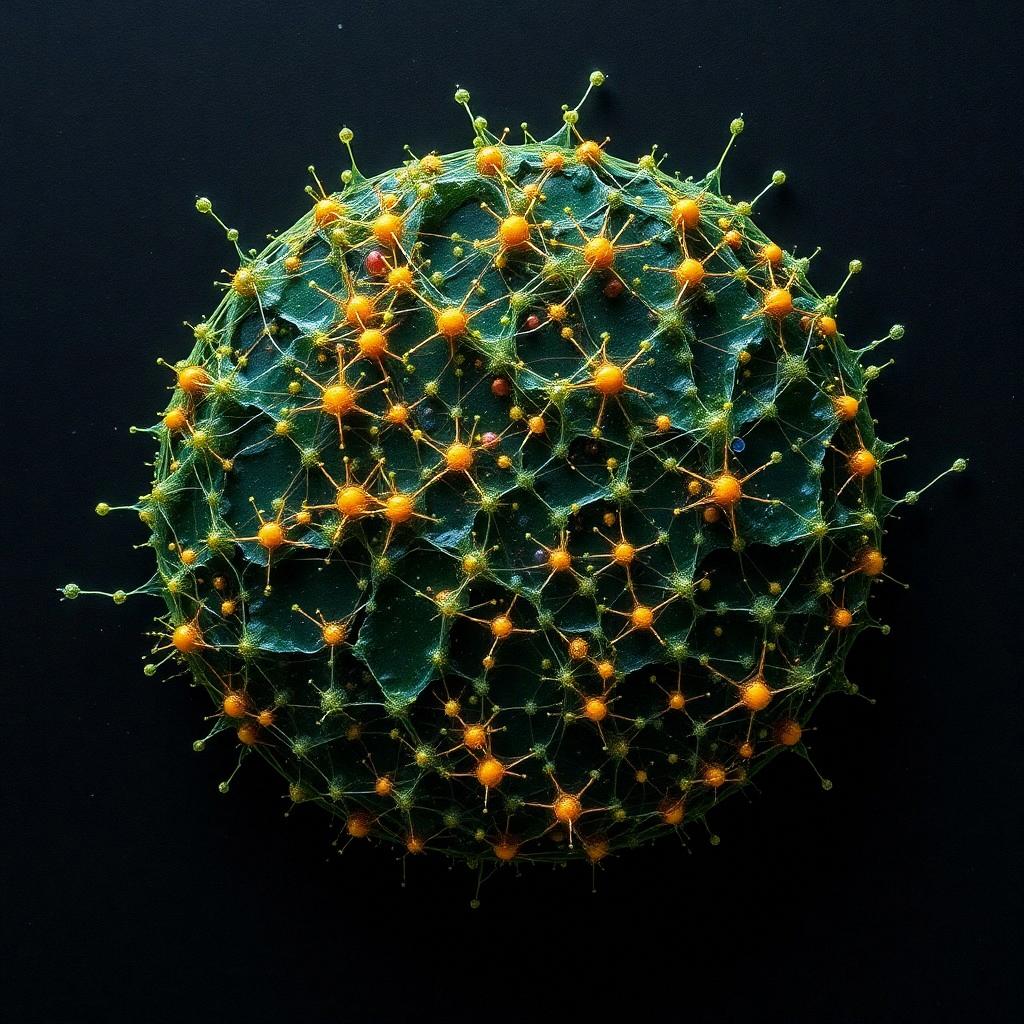
    Author Review: J Chen Science Art

     Science Movie


    Make a narrated HD Science movie for this answer ($32 per minute)


     Discussion


    Get Ahead With Science Insights

    Custom summaries of the latest cutting edge Science research. Every Friday. No Ads.


    My BGPT