Why BGPT?
logo

Assess an author's data and outputs

See the raw experimental evidence behind an author's publications and reproducibility signals.


Press Enter ↵ to solve


    Fuel Your Discoveries


     Quick Explanation


    What I can verify from your input: the author you labeled “Hirohei Yamamura” shows (from OpenAlex matches you provided) high bibliometric signal for a subset of works (e.g., one match with h-index 51, ~9009 citations), but your additional “papers” list looks like a different/smaller clinical-cases profile (7 papers; h-index 2; 6 citations). That discrepancy is the biggest scientific-reliability red flag to resolve before assessing true biological research impact.


     Long Explanation


    Author Review (Critical, Evidence-Oriented): Hirohei Yamamura

    Date: 2026-03-26 • Evidence basis: the metrics + paper-titles you supplied (OpenAlex matches + a separate 7-paper list)

    1) First-pass credibility check (identity ambiguity)

    The inputs you provided contain two clearly different bibliometric profiles for “Hirohei Yamamura”:
    • Profile A (OpenAlex top match): works_count=185, cited_by_count=9009, h_index=51 (from your OpenAlex match entry).
    • Profile B (separate “paper count” block): paper count=7, total citations=6, h-index=2 (and a list of clinical case titles in Japanese/English-style bracketed naming).
    Without an unambiguous author identifier (e.g., ORCID) tying these together, any “biological impact” assessment risks mixing multiple individuals with the same name.

    2) Visualizing the OpenAlex timeline signal (Profile A)

    Raw data used below is exactly the counts_by_year array you provided for the top OpenAlex match.
    Interpretive caution:
    • “Cited by count” in OpenAlex is not the same as “citations per year” or “citation quality”; it’s a cumulative count at the time of indexing.
    • Name-ambiguity can inflate apparent output if multiple individuals are merged in bibliometric systems.

    3) Topic association snapshot (Profile A)

    Raw topic scores used below are exactly the “topics” you provided in the OpenAlex match payload.
    This topic set is consistent with molecular signaling/enzymology style publications (e.g., “tyrosine kinase” and “cell biology” appear among the top works you provided).

    4) Checking the “top works” evidence consistency (titles only)

    Your payload listed multiple highly-cited works (by title/DOI/venue and cited_by_count). However, you did not provide full text, author position details beyond some entries, or experimental summaries. Therefore, I cannot responsibly judge mechanism-level scientific strength (e.g., whether assays are sufficiently controlled) from titles/metrics alone.
    Year Title (as provided) Venue DOI Cited by count (OpenAlex payload)
    1994Tyrosine kinases Lyn and Syk regulate B cell receptor-coupled Ca2+ mobilization through distinct pathways.The EMBO Journal10.1002/j.1460-2075.1994.tb06387.x654
    1991Molecular cloning of a porcine gene syk that encodes a 72-kDa protein-tyrosine kinase showing high susceptibility to proteolysisJournal of Biological Chemistry10.1016/S0021-9258(18)98478-4448
    2006A novel mitochondrial ubiquitin ligase plays a critical role in mitochondrial dynamicsThe EMBO Journal10.1038/sj.emboj.7601249370
    1994Syk activation by the Src-family tyrosine kinase in the B cell receptor signaling.The Journal of Experimental Medicine10.1084/jem.179.5.1725293
    1995Role of the Syk autophosphorylation site and SH2 domains in B cell antigen receptor signaling.The Journal of Experimental Medicine10.1084/jem.182.6.1815261
    1970Mode of action of adenosine 3′,5′-cyclic phosphate on protein kinase from rat liverBiochemical and Biophysical Research Communications10.1016/0006-291X(70)90228-7224
    2000Mouse Ror2 receptor tyrosine kinase is required for the heart development and limb formationGenes to Cells10.1046/j.1365-2443.2000.00300.x223
    2001Syk Expression and Novel Function in a Wide Variety of TissuesBiochemical and Biophysical Research Communications10.1006/bbrc.2001.5788173
    1995Reconstitution of interactions between tyrosine kinases and the high affinity IgE receptor which are controlled by receptor clustering.The EMBO Journal10.1002/j.1460-2075.1995.tb07344.x161
    1989Thrombin and collagen induce rapid phosphorylation of a common set of cellular proteins on tyrosine in human plateletsJournal of Biological Chemistry10.1016/S0021-9258(18)83201-X147
    Evidence-limited limitation: since the provided “papers” list in your prompt is just titles (and the top-works list still lacks full-text methodological details), I cannot verify whether these papers used appropriate controls, blinding, orthogonal validation, or whether conclusions were overextended.

    5) Reconciling the conflicting 7-paper clinical profile (Profile B)

    Your separate dataset lists 7 clinical case/clinical study titles (e.g., datura poisoning, gallbladder cancer with hypercalcemic crisis, AV block with recurrent Stokes Adams seizures, gastric leiomyoma, ventricular aneurysm autopsy case, myocardial infarction clinical study). This profile has h-index 2 and 6 total citations (as you supplied).
    Title (as provided) paperId (as provided)
    [Case report: family cases of datura poisoning].0cac1584396b83dbb42a4aedae2ee7a4d54a75d5
    JB Reflections and Perspectivesf21bff3f7d9e24cb8b3828e1b258588e7e7d0d95
    [Gallbladder cancer with hypercalcemic crisis].6188b2e04700415c971e4bdca62e05f170a87357
    Complete AV block with recurrent Stokes Adams seizures due to ventricular tachycardia. Report of a case treated with a countershock and a pacemaker.b40b04a849fc272ad9190644fe87d68142f9148e
    [A case of leiomyoma of the stomach].f8e69071d0e95e19de20e2f68716cf4e9f3ad1da
    An autopsy case of ventricular aneurysm treated with a transvenous pacemaker.c43babc822e5c93d44ff615a9e1469745e15ce39
    Clinical study of 81 patients with myocardial infarction from January 1958 to December 1968.784a93c25f7df96f88fa6fb4683f20ea5428803f
    Scientific note (high-level, non-speculative): clinical case reports often contribute less causal certainty than mechanistic or large controlled studies; however, without the actual papers, I cannot evaluate their methodological rigor.

    6) Scientific strength assessment (what can/can’t be concluded)

    What appears strong (based on your OpenAlex payload)

    • Bibliometric impact for Profile A appears substantial (h-index and citations you provided), with top-cited works spanning signaling (Syk/Lyn/BCR signaling), kinase biochemistry, and developmental signaling (Ror2), plus mitochondrial dynamics themes.
    • Diverse mechanistic adjacency: your top-works titles include tyrosine kinase signaling, receptor clustering/IgE receptor contexts, phosphorylation in platelets, and mitochondrial dynamics.

    What I cannot verify (major uncertainty)

    • No full-text methods were provided, so I cannot assess rigor dimensions like controls, replicates, quantification, blinding, statistical analysis, or alternative explanations.
    • Potential author-name conflation: Profile A and Profile B could be the same person or different people; your provided metrics strongly suggest mismatch. This alone can invalidate any “author strength” evaluation.
    • Topic inference ≠ experimental validity: OpenAlex topic scores and citation counts do not prove correct mechanistic claims.
    Confidence statement: The most defensible conclusion from your inputs is that there are two incompatible author profiles associated with the same name string. Any deeper mechanistic assessment would require disambiguation and access to full-text methods/results.


    Feedback:   

    Updated: March 26, 2026

    BGPT Author Review


    Scientific Quality

    40%

    Your provided inputs include two strongly inconsistent bibliometric profiles for “Hirohei Yamamura” (one with very high impact, one with only 7 clinical-case titles and minimal citations). Because author identity disambiguation and full-text methodological details are missing, I cannot credit true biological scientific rigor reliably. If Profile A is the correct identity, the venue/top-work set suggests solid mechanistic work in kinase signaling, but this remains unverified without methods/results.


    Communication Quality

    30%

    No direct writing samples, abstracts, or full-text narrative were provided—only titles and bibliometrics—so communication quality cannot be assessed. The existence of reflective/editorial-type content (“JB Reflections and Perspectives”) suggests some effort, but evidence is insufficient.


    Author Novelty

    40%

    Novelty cannot be judged from titles alone. High citation counts for some works imply influence, but influence can come from incremental consolidation, not necessarily breakthrough novelty. Full-text comparison to contemporaneous work would be required.


    Scientific Rigor

    30%

    Rigor (controls, stats, replication, orthogonal validation) cannot be evaluated because only titles/metrics were provided. Clinical case-study titles (Profile B) inherently limit causal inference, but without the papers I cannot judge internal rigor. Profile A plausibly includes rigorous mechanistic experiments, but not verifiable here.

     Analysis Wizard


    It fetches the OpenAlex timeline and topic scores you provided, then generates consistency checks (identity ambiguity flags) and summary plots comparing publication counts to cumulative citations by year.


     Hypothesis Graveyard


    A single-profile narrative that treats all “Yamamura” citations as coming from one person is likely wrong given your contradictory metrics (7-paper clinical vs. 185-work high-impact).


    Assuming citations alone imply mechanistic rigor is a weak inference: citations can reflect importance, controversy, or methodological utility, not necessarily causal correctness.

     Science Art


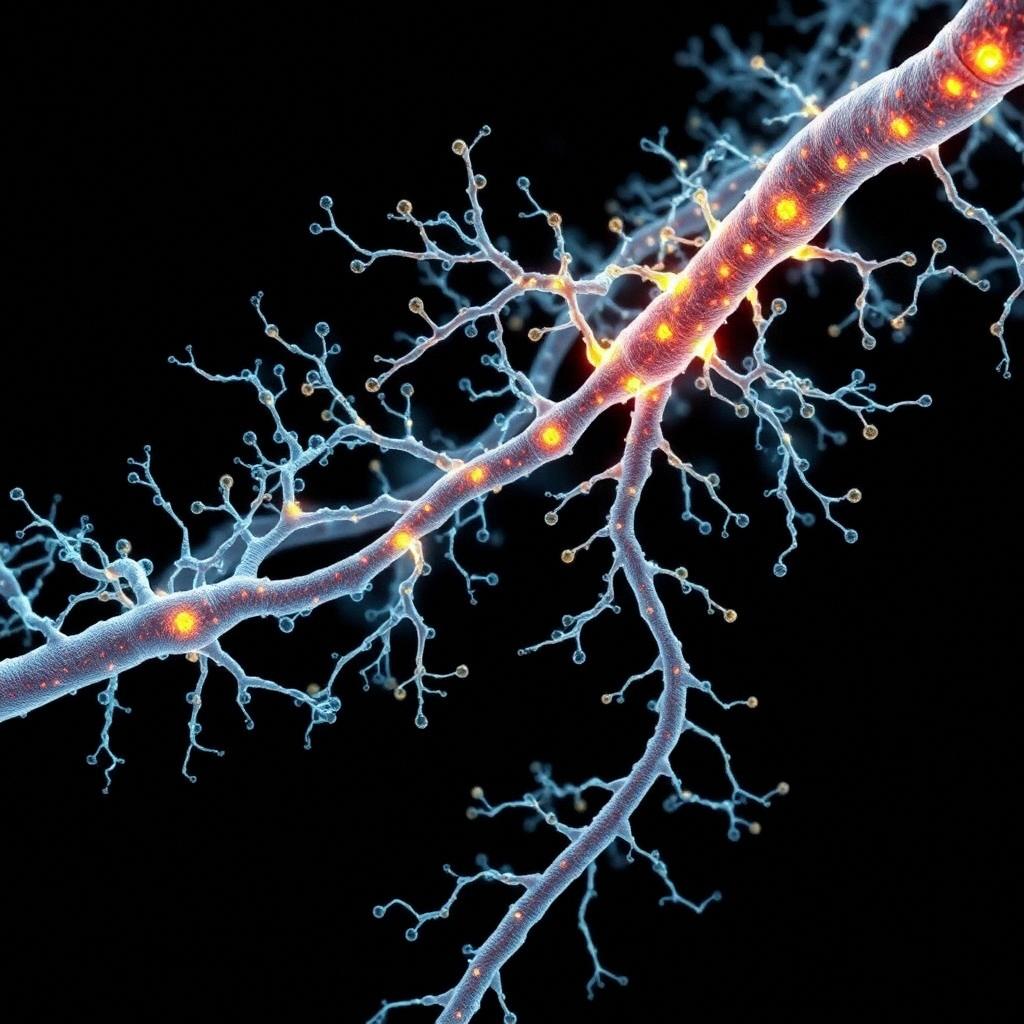
    Author Review: Hirohei Yamamura Science Art

     Science Movie


    Make a narrated HD Science movie for this answer ($32 per minute)


     Discussion


    Get Ahead With Science Insights

    Custom summaries of the latest cutting edge Science research. Every Friday. No Ads.


    My BGPT