See how your reported results read as versioned evidence records — linked to experiments and limitations.Know what the science actually supports before you trust the answer.
Press Enter ↵ to review claims
Explore by Goal
"The most important scientific revolutions all include, as their only common feature, the dethronement of human arrogance from one pedestal after another of previous convictions about our centrality in the cosmos."
- Stephen Jay Gould
Quick Explanation
Copied
Grégory Resch is an internationally recognized phage-therapy expert (OpenAlex h-index 30, ~4,001 citations across 100 works) who co-authored the landmark PhagoBurn RCT (874 citations) and the 100-case personalized phage therapy study (430 citations). The two supplied 2026 preprints—targeted endolysin microbiome modulation and second-order phage pharmacokinetics—show high methodological rigor and genuine novelty, with the main weaknesses being small sample sizes and limited generalizability to humans.
Long Explanation
Citation Profile and Field Standing
OpenAlex data place Grégory Resch at the University of Lausanne with 100 works, ~4,001 citations, and an h-index of 30 . His flagship output—the PhagoBurn randomized controlled trial in The Lancet Infectious Diseases (874 citations) and the retrospective 100-case personalized phage therapy study in Nature Microbiology (430 citations)—anchors him among the few authors with both clinical-trial leadership and mechanistic phage expertise . Note the earlier Semantic Scholar-style listing (h-index 3, 45 citations over 11 papers) reflects only a narrow disambiguated slice (mostly photonic-crystal nanotweezer papers); the OpenAlex profile is the more credible global view, and this discrepancy is a common author-disambiguation blindspot.
Scientific Strength of the Two 2026 Primary Works
1. Phage endolysin for targeted microbiota manipulation. This preprint demonstrates selective depletion of Streptococcus salivarius across three tiers of evidence: monoculture (46/49 isolates inhibited; no activity against S. mitis or S. thermophilus), stool-derived in vitro communities (2–3 log reduction, p<0.0001), and an undernourished mouse model (≈3.6-fold fecal reduction at D23; jejunum p=0.065) . Strengths: multi-tier validation, careful 16S/SIC methodology, transparent limitations. Weaknesses: only three African donor stools, small mouse cohort (n=6/group), p-values for jejunal (0.065) and ileal (0.132) reductions fall short of conventional significance, and long-term ecological effects are untested.
2. Second-order phage pharmacokinetics. In a rat tissue-cage model, inverse-titer plots were strongly linear (R²=0.921–0.998) across five phages, and re-analysis of 13 published datasets (total n=18) showed second-order models fit significantly better than first-order (ΔAICc p<0.001) . This is a conceptually important challenge to the default first-order assumption in phage dosing, though uninfected tissue cages, male-only rats, and route/repeat-dosing experiments restricted to ΦK limit direct clinical translation.
Overall Verdict
Resch combines rare breadth: foundational mechanistic work (endolysins, phage-antibiotic synergy), translational leadership (PhagoBurn, personalized therapy), and methodological innovation (on-chip optical nanotweezers for single-cell susceptibility testing). The main epistemic cautions: the endolysin work is preprint-stage with modest statistical power, the PK claim rests on model-comparison AICc logic that should be validated in infected hosts, and clinical phage trials to date have not shown the efficacy many early enthusiasts expected—an area where Resch's own honest reporting (PhagoBurn) strengthens his scientific credibility rather than weakening it.
Feedback:
Updated: September 07, 2026
BGPT Author Review
Scientific Quality
80%
Resch is a senior, internationally cited phage-therapy researcher (OpenAlex h-index 30, ~4,001 citations, 100 works) with leadership or co-authorship on one of the field's few RCTs (PhagoBurn, Lancet ID, 874 citations), a landmark 100-case personalized therapy study (Nature Microbiology, 430), mechanistic endocarditis models, endolysin engineering, and now pharmacokinetic innovation. The narrow Semantic Scholar slice (h-index 3) is a disambiguation artifact. Strengths: clinical-trial rigor, honest reporting of negative/neutral results, breadth from single-molecule tools to population-level studies. Weaknesses: some work is preprint-only, in vivo mouse results were underpowered (jejunal/ileal p-values 0.065/0.132), and no citation data reveal independent senior authorship of the two 2026 preprints—both are multi-group collaborations.
Communication Quality
70%
Both 2026 works are written clearly, with explicit falsification logic, transparent limitations, and quantified model comparisons (R², AICc, RMSE)—signs of strong scientific writing. However, both are preprints without reference counts in the PK paper (77 refs in the endolysin paper, 0 reported for the PK preprint), and abstract-level communication to broader audiences is harder to judge from supplied data. The 100-case study abstract is notably clear and balanced, contrasting real-world outcomes with failed non-personalized RCTs.
Author Novelty
70%
The second-order pharmacokinetics claim is genuinely novel—directly challenging the default first-order assumption for phage clearance with cross-species corroboration. The endolysin microbiota manipulation is moderately novel, combining established lysin technology with the newer angle of niche-overlap discovery and undernutrition-relevant application. Resch's historical contributions (PhagoBurn trial design, quality/safety requirements for phage products, phage-antibiotic synergy in endocarditis) were field-defining at their time. Optical nanotweezer work is technically innovative but incremental in conceptual terms.
Scientific Rigor
70%
The PK study exemplifies good rigor: multi-model comparison with AICc/RMSE, replication across five phages, re-analysis of 13 independent published datasets, and pre-stated falsification criteria. The endolysin study uses a sensible three-tier evidence hierarchy (monoculture → SICs → mice) but shows rigor gaps: small mouse cohorts (n=6/group), non-significant organ-level p-values presented alongside positive framing, only three donor stools, and no blinded outcome assessment reported. The PhagoBurn trial, being an RCT, represents high rigor; the 100-case study is retrospective and observational by design, which limits causal claims—properly acknowledged by the authors.
Analyzing Grégory Resch's OpenAlex citation trajectory and coauthor network to quantify his field influence, while cross-referencing phage PK and endolysin evidence units for dose-ecology insight synthesis.
Get emailed when your analysis is done!
We'll email you the results when your analysis is finished.
Hypothesis Graveyard
'Phage PK follows mammalian drug-like first-order elimination' — directly falsified by linear inverse-titer plots (R² 0.921–0.998) across 18 datasets spanning species, sex, and phage morphotype.
'Non-personalized phage cocktails fail RCTs simply because phages do not work in humans' — the 100-case observational dataset and PhagoBurn tolerability data make efficacy-implementation mismatch (dose, route, individualization) a better-supported explanation.

 Explore by Goal
 Quick Explanation
 Long Explanation
 Top Data Sources
 Ask a Follow-Up
 Key Insight
 Keep Exploring
 Analysis
  Hypothesis Graveyard
 Potential Experiments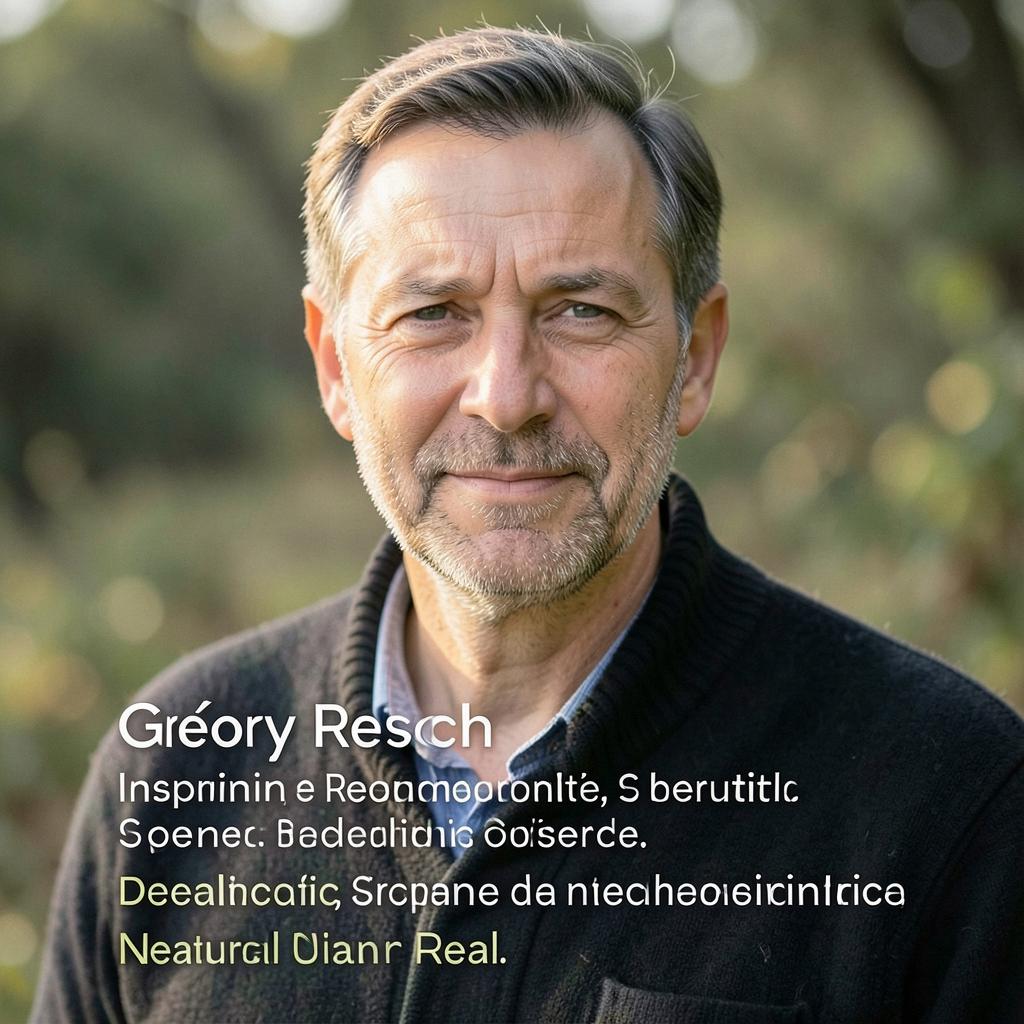
 Discussion