Review an author's claims as they appear in the record: linked experiments, exact results, limitations, and sources.Know what falsifiable science actually supports before you trust the answer.
Press Enter ↵ to search evidence
Explore by Goal
"Imagination is more important than knowledge. Knowledge is limited. Imagination encircles the world."
- Albert Einstein
Quick Explanation
Copied
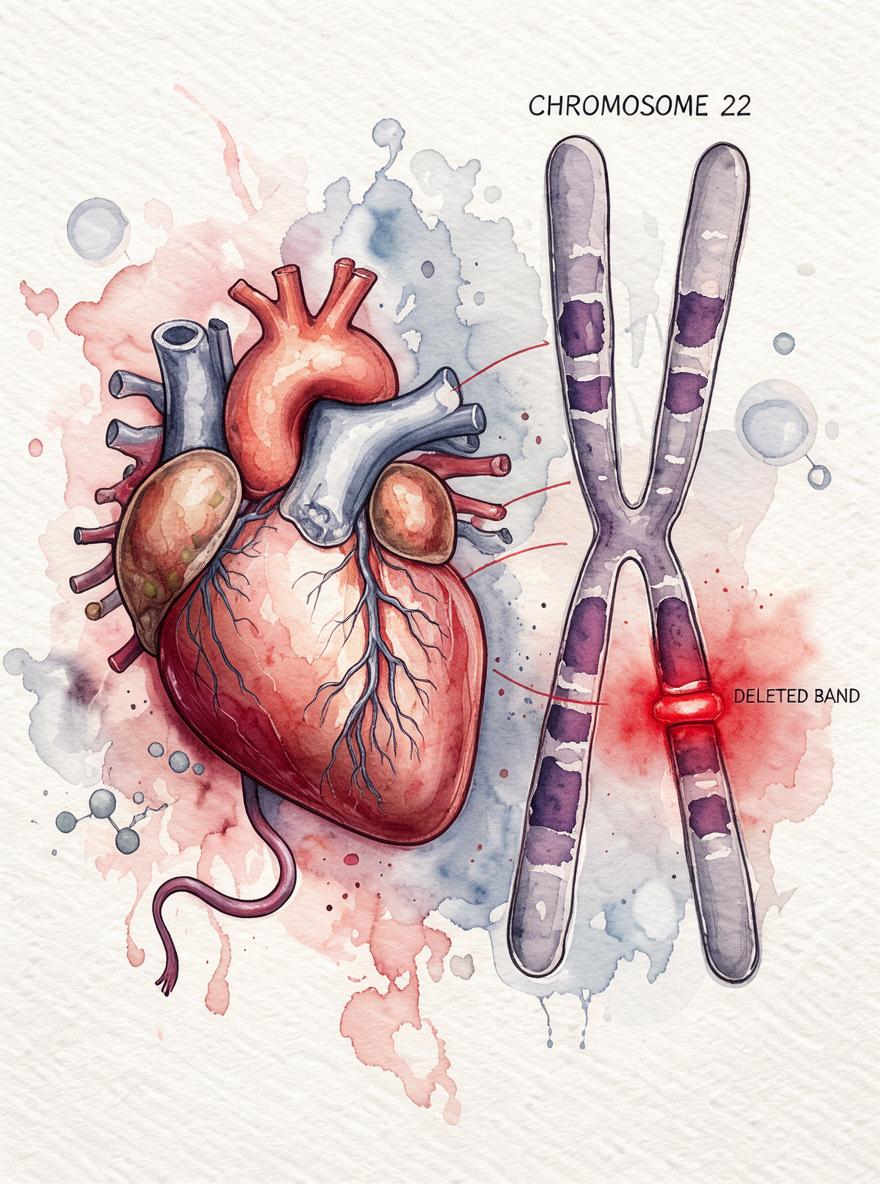
Elizabeth Goldmuntz (OpenAlex h-index 70, ~18,879 citations; Semantic Scholar h-index 66, ~16,993 citations) is a leading physician-scientist in the genetics of congenital heart disease, best known for quantifying 22q11 deletion frequencies in conotruncal defects and late-diagnosed cardiovascular anomalies in the deletion syndrome .
Long Explanation
Career Impact and Citation Metrics
Elizabeth Goldmuntz is a physician-scientist at the Children's Hospital of Philadelphia whose career centers on the genetics of congenital heart disease (CHD). Bibliometric data differ by database: OpenAlex reports 296 works, 18,879 citations, and an h-index of 70 (ORCID 0000-0003-2936-4396), while Semantic Scholar reports 312 papers, 16,993 citations, and h-index 66. Sustained productivity is evident across three decades, with publication counts peaking at 22-23 works/year (2018, 2020) and continued output into 2026.
Her most-cited contributions are large collaborative genomics efforts in which she is a co-author: De novo mutations in histone-modifying genes in congenital heart disease (Nature, 2013; 1,008 citations), Contribution of rare inherited and de novo variants in 2,871 congenital heart disease probands (Nature Genetics, 2017; 920 citations), and De novo mutations in congenital heart disease with neurodevelopmental and other congenital anomalies (Science, 2015; 913 citations). These landmark exome-sequencing studies reshaped understanding of CHD's genetic architecture . She is also a co-author of the influential AHA scientific statement Genetic Basis for Congenital Heart Defects: Current Knowledge (Circulation, 2007; ~999 citations) .
Her 1998 prospective JACC study remains a foundational, practice-defining contribution: of 251 prospectively enrolled conotruncal patients, 45 (17.9%) carried 22q11 deletions, with deletion risk strongly lesion-dependent and independently associated with arch/vascular anomalies .
Follow-up work established that cardiovascular anomalies occur even in older, later-diagnosed deletion patients: in 29 patients diagnosed beyond 6 months, 38% had anomalies (aortic arch anomalies and vascular rings), arguing for routine cardiovascular screening outside infancy .
Knowledge Synthesis and Clinical Translation
Her 2020 review in AJMG Part C synthesizes the field: CHD prevalence in 22q11.2 deletion cohorts ranges 48.5%-79% depending on ascertainment and diagnostic rigor; conotruncal defects dominate; FISH misses nested/atypical deletions whereas MLPA/microarrays detect them; and AHA guidance recommends targeted genetic screening for typical cardiac phenotypes .
Critical Assessment
Strengths: A rare clinician-scientist who combines first-author clinical-genetic epidemiology (prospective cohorts, falsifiable prevalence estimates, explicit statistical methods) with senior authorship on the field's defining large-scale genomic consortium studies. Her work demonstrably changed screening guidelines and remains highly cited decades later. Limitations/blindspots: Her signature studies are single-center (CHOP) and not population-based, with small subgroup sizes and potential tertiary-referral selection bias; the late-diagnosis study (N=29) is hypothesis-generating rather than definitive; and as a narrative review author, she is exposed to citation-selection and ascertainment heterogeneity bias. No financial conflicts of interest were disclosed in the extracted primary studies. What would change this assessment: evidence that her prevalence estimates fail replication in population-based cohorts, or retraction/data-integrity concerns in the consortium papers, would materially lower the rating.
Feedback:
Updated: November 21, 2026
BGPT Author Review
Scientific Quality
90%
World-class physician-scientist: first-authored the prospective 251-patient JACC study that established lesion-specific 22q11 deletion rates and drove screening guidelines, plus co-authorship on Nature/Science/Nature Genetics consortium papers defining CHD genetics (h-index 66-70, ~17k-19k citations over 30 years). Deducted point for reliance on single-center tertiary cohorts and some small-N studies (e.g., N=29 late-diagnosis study).
Communication Quality
80%
Writes clear, clinically actionable prose; her review explicitly tabulates screening indications and diagnostic-method tradeoffs (FISH vs MLPA). Some highly technical genomics consortium papers are dense for general audiences, and results like regression-based counseling probabilities are acknowledged as imprecise.
Author Novelty
70%
Highly novel for its era: quantified 22q11 deletion frequency in a prospective cohort before such screening was standard, and later contributed to defining de novo chromatin-mutator architecture of CHD. Later reviews are synthesis rather than new discovery.
Scientific Rigor
90%
Prospective enrollment, explicit statistical methods (chi-square, logistic regression, SAS/Epi Info), disclosed limitations (single center, missed eligible patients, imprecise subgroup estimates, possible undetected smaller deletions), no COI disclosures in primary studies. Minor deductions for small subgroups and non-population-based sampling.
Computing lesion-specific 22q11 deletion rates and 95% confidence intervals from the extracted 251-patient Goldmuntz cohort to quantify screening-yield precision by cardiac diagnosis.
Get emailed when your analysis is done!
We'll email you the results when your analysis is finished.
Hypothesis Graveyard
22q11 deletion frequency in TGA equals that of other conotruncal defects - falsified: 0/45 TGA patients carried deletions even after testing 21 cases at D22S66 for smaller deletions.

 Explore by Goal
 Quick Explanation
 Long Explanation
 Top Data Sources
 Ask a Follow-Up
 Key Insight
 Keep Exploring
 Analysis
 Hypothesis Graveyard
 Potential Experiments
 Discussion
