Ask questions across claims linked to experiments, exact results, limitations, and sources.Know what the science actually supports before you trust the answer.
Press Enter ↵ to search evidence
Explore by Goal
"I think it's much more interesting to live not knowing than to have answers which might be wrong."
- Richard Feynman
Quick Explanation
Copied
Chunhai Fan is a world-class DNA nanotechnology/bionanoscience leader (OpenAlex: 1,186 works, 98,636 citations, h-index 154) whose work spans DNA machines, DNA data storage, graphene biosensing, and cancer diagnostics, with consistently high reported novelty (7-9) but moderate reproducibility reporting (5-7) and limited public data/code release.
Long Explanation
Profile and impact. Chunhai Fan (ORCID 0000-0002-7171-7338) is a prolific, highly cited researcher in DNA nanotechnology, biosensors, and nanomedicine. OpenAlex attributes 1,186 works, ~98,636 citations, and an h-index of 154 to the primary author record, with citations rising steadily from ~2,500/year (2012) to ~8,000/year (2021-2025) . A striking minority of citations come from a handful of mega-cited works, most notably a 2016 autophagy guidelines consensus paper with >6,100 citations where Fan is a middle author of a >1,000-author list — an important skeptical caveat when interpreting raw metrics.
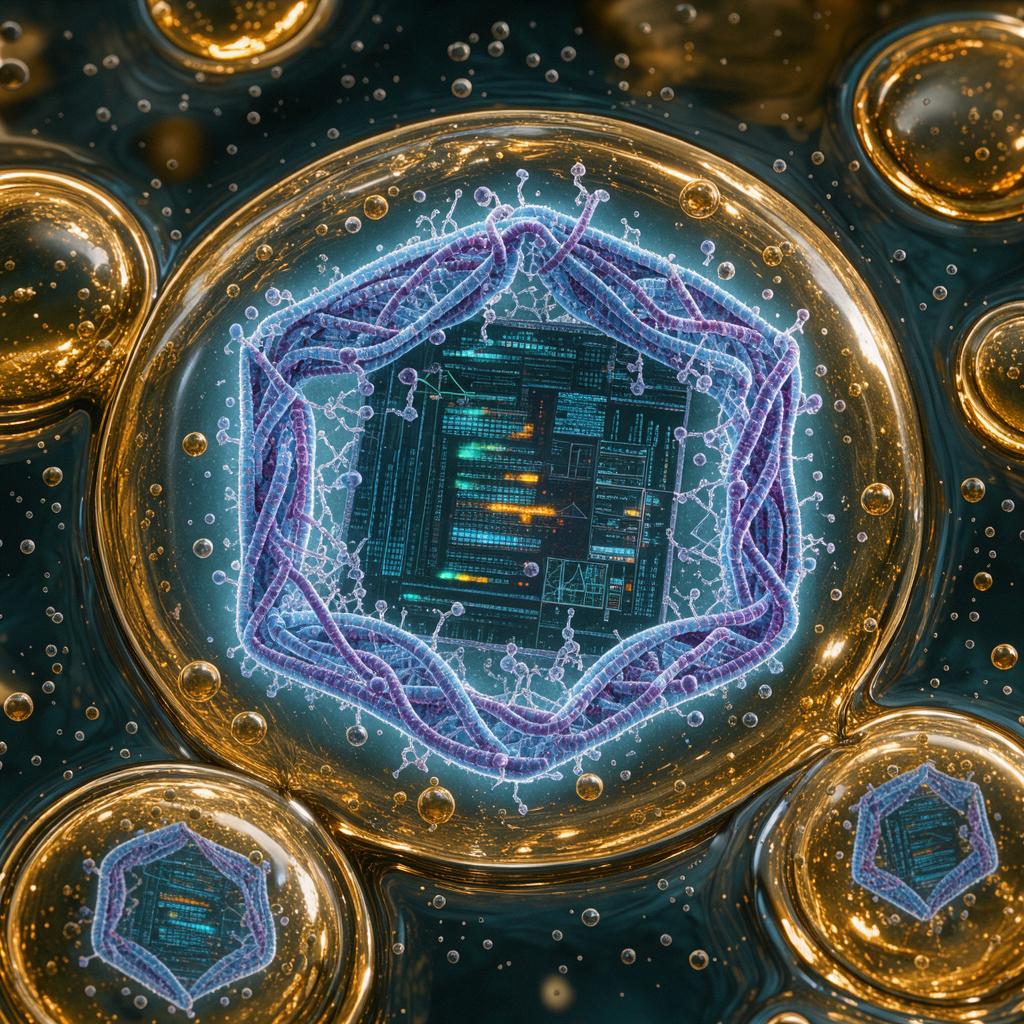
Core scientific contributions from supplied full-text evidence. Seven primary papers define a coherent research arc: (1) pioneering electrochemical DNA detection via ferrocene-tagged molecular beacons ; (2) graphene-oxide bio-interfacing, including electron-transfer wiring of cytochrome c (ET rate 12.6 s⁻¹), myoglobin, and HRP with preserved protein structure , antibacterial graphene paper (2,139 citations) , and GO fluorescent DNA nanoprobes (1,430 citations) ; (3) modification-free polyA-diblock DNA-AuNP conjugates with tunable hybridization efficiency (42%→90% from A5→A30) and 0.5 nM plasmonic detection ; (4) DNA origami rotary nanomachines regulating GOx/HRP cascades ; (5) clinical F(ab')2 cancer protein microarrays validated against IRMA in 139 patient sera (R 0.955-0.977) ; and two 2026 flagship efforts in (6) ML-directed programmable PCR amplification (2483 reaction records, ensemble R² 0.862 vs 0.624 conventional, 2.7-fold broader tunable dynamic range, 0.1% FGFR3-TACC3 fusion detection at 10,000× depth) and (7) LLPS-based reconfigurable DNA memory with ~7×10¹⁰ GB/g density, 6-cycle editing, and Arrhenius-extrapolated millennial stability .
Critical assessment. Reported novelty is consistently high (7-9) and scientific quality generally strong, but reproducibility scores cluster at 5-7, and none of the seven supplied papers provides public code or data repositories; key claims such as 1.4-million-year DNA half-life rest on Arrhenius extrapolation . What would change this verdict: independent cross-lab replication of the ML-PCR tunability and DNA-memory editing results, and release of underlying datasets.
Feedback:
Updated: November 16, 2026
BGPT Author Review
Scientific Quality
90%
Exceptional productivity and impact (h-index 154, ~98,600 citations) with a 20+ year arc from foundational electrochemical DNA sensors through graphene bio-interfacing to frontier DNA data storage and ML-guided amplification. Deductions: some citation inflation from mega-author consensus papers, several works with limited generality (single AuNP size, three proteins, in vitro only), and no public code/data release in supplied papers.
Communication Quality
80%
Papers are clearly structured with quantitative detail (regression coefficients, FRAP half-lives, decoding accuracies) and explicit falsification framing in recent work. Weaknesses: some key values reported only as trends without uncertainties (extension-time effects), and the 2006 microarray paper uses ambiguous unit notation ('y15 U/mL').
Author Novelty
80%
Repeated first-mover contributions: reagentless electrochemical DNA detection (2003), graphene antibacterial paper (2010), polyA diblock AuNP functionalization (2012), LLPS-based hierarchical DNA memory (2026). Many works are platform/engineering advances rather than paradigm shifts, and some nanobiosensor concepts were concurrently developed elsewhere, so not a full 10.
Scientific Rigor
70%
Strong quantitative characterization (HRTEM gap sizing, 13-size SERS series, 2483-record ML dataset with SHAP) and explicit controls in several studies. However: no public data/code, replicate counts unreported in early work, missing randomization/blinding in the clinical microarray study, Arrhenius extrapolations presented without uncertainty bounds, and reliance on plasmid-only templates in the ML-PCR work limit rigor.
We'll email you the results when your analysis is finished.
Hypothesis Graveyard
Graphene materials are intrinsically cytotoxic to bacteria and cells independent of corona formation — superseded by the protein-corona result showing FBS adsorption mitigates GO cytotoxicity, showing biological identity is environment-dependent.
DNA hydrogels (palindromic P-6 type) are optimal for archival storage — falsified by the NP-6 vs P-6 comparison showing kinetically trapped gels (t1/2 188.87 min) prevent practical data loading; fluidity, not rigidity, enables access.

 Explore by Goal
 Quick Explanation
 Long Explanation
 Top Data Sources
 Ask a Follow-Up
 Key Insight
 Keep Exploring
 Hypothesis Graveyard
 Potential Experiments
 Discussion
