Why BGPT?
logo

Assess an author's data and outputs

See the raw experimental evidence behind an author's publications and reproducibility signals.


Press Enter ↡ to solve


    Fuel Your Discoveries


     Quick Explanation


    Charles Gauthier β€” Science-focused author critique (evidence-based, skeptical)

    Based on the provided corpus, C. Gauthier’s strongest signal is rigorous carbohydrate/vaccine synthesis review scholarship and high-dimensional immunology/epigenetics data integration, but the visible author record (h-index/citations/paper list) is small and some cited strengths come primarily from review articles, which are inherently limited for causal claims.


     Long Explanation


    Author Review: Charles Gauthier

    Date context: 2026-03-20. This review is strictly grounded in the information you provided plus the explicitly included paper records and their extracted scientific summaries.

    1) What BGPT can verify from your provided record

    • Publication metrics (from provided metadata): h-index 1, total citations 6, paper count 8.
    • OpenAlex lookup: your request to query OpenAlex timed out, so I cannot independently verify those metrics via OpenAlex here (no external claim beyond the timeout).
    • Visible scientific content in your dataset: 3 provided full/summary records with DOIs, including (i) a Burkholderia polysaccharides vaccine/chemistry review and (ii) a Campylobacter glycan vaccine review plus (iii) a sepsis immunology epigenetics study with quantitative Omni-ATAC accessibility trajectories .

    2) Visual evidence: what the provided quantitative record supports

    2A) Sepsis cohort composition (from provided sample counts)

    2B) Promoter remodeling magnitude: RAP vs CCI (provided promoter DAR counts)

    These values come from the extracted result summaries for promoter regions (Β±1 kb from TSS). The evidence supports large changes in RAP and different-direction dynamics in CCI, but the study design is observational/correlational as explicitly noted .

    2C) Protein-immune mechanism link strength (conceptual network)

    A lightweight directed network showing how the provided study summary links promoter accessibility changes to recovery vs chronic immunosuppression via specific immune-regulatory markers (ARG1, S100A8/9, CD274) .

    3) Scientific strength by theme (what the author appears to do well vs what remains uncertain)

    3A) Carbohydrate vaccine chemistry synthesis & structure–function framing (strong signal in reviews)

    • High informational density with synthesis constraints: the Burkholderia review explicitly discusses multiple carbohydrate synthetic strategies (including donor chemistry and protecting-group logic), and it distinguishes native polysaccharide contexts (LPS/CPS/EPS) from synthetic oligosaccharide mimics .
    • Mechanistic emphasis rather than purely descriptive vaccine cataloging: the Campylobacter review emphasizes MeOPN’s lability/importance and explains why preclinical success can fail to translate (limited human immune responses), which is a good skeptical translational stance .
    Butβ€”review-paper limitation (important): because these are literature syntheses, they do not independently verify the causal strength of vaccine mechanisms; conclusions inherit the selection bias and heterogeneity of the underlying preclinical and clinical reports .

    3B) High-dimensional immunology (Omni-ATAC) trajectory comparison (stronger evidence than reviews)

    • Appropriate measurement scale for the claim: promoter accessibility dynamics are quantified (promoter DAR counts), enabling mechanistic hypothesis generation about epigenetic plasticity vs a locked immunosuppressive state .
    • Methodological transparency (from extraction): nf-core/atacseq pipeline, spike-in normalization, peak calling, differential accessibility, and GO/IPA are described in the provided summary .
    Key scientific caveats (explicit from provided summary + standard skepticism):
    • Causality not proven: the work is observational; chromatin changes are correlative with trajectories .
    • Single-center & modest sample size: increases risk of confounding/batch/selection effects .
    • Subset heterogeneity: CD66b+ MDSC enrichment feasibility and standardization can vary .

    4) Reproducibility/rigor assessment (only from the provided records)

    This chart is not an external reproducibility audit; it visualizes only the extracted scores included in your provided dataset.

    The most rigorous piece (methodologically) in your provided data is the sepsis Omni-ATAC study record, because the extraction includes pipeline steps, spike-in normalization, and differential accessibility logic .

    5) What would most change (disprove) this author-level assessment?

    • If the author’s non-review primary research output is actually sparse and not reproducible, the apparent strength from reviews and one extracted immunology study would overstate overall scientific impact.
    • If the sepsis Omni-ATAC findings fail replication in an independent cohort, the link between promoter accessibility trajectories in CD66b+ MDSCs and recovery vs chronic immunosuppression would weaken substantially .
    • If vaccine review conclusions are shown to depend heavily on selective reporting of positive protective results, the generalizable vaccine design β€œpromise” could be less robust than implied .


    Feedback:   

    Updated: March 20, 2026

     Top Data Sources ExportMCP


     Analysis Wizard


    It parses the provided promoter DAR and cohort-count summaries, then renders two QC-style plots (cohort composition and promoter DAR magnitude/direction) to support skeptical visualization of the extracted sepsis results.


     Hypothesis Graveyard


    The idea that antibody titers alone (without specificity for MeOPN/structural microstates) determine protection is unlikely if human immune response magnitude fails to correlate with functional protective outcomes in the summarized translation context.


    A single marker (e.g., ARG1 promoter accessibility) alone determining recovery trajectory is unlikely because the extracted summary suggests multiple immune-regulatory genes and pathway-level programs differ across RAP vs CCI.

     Science Art


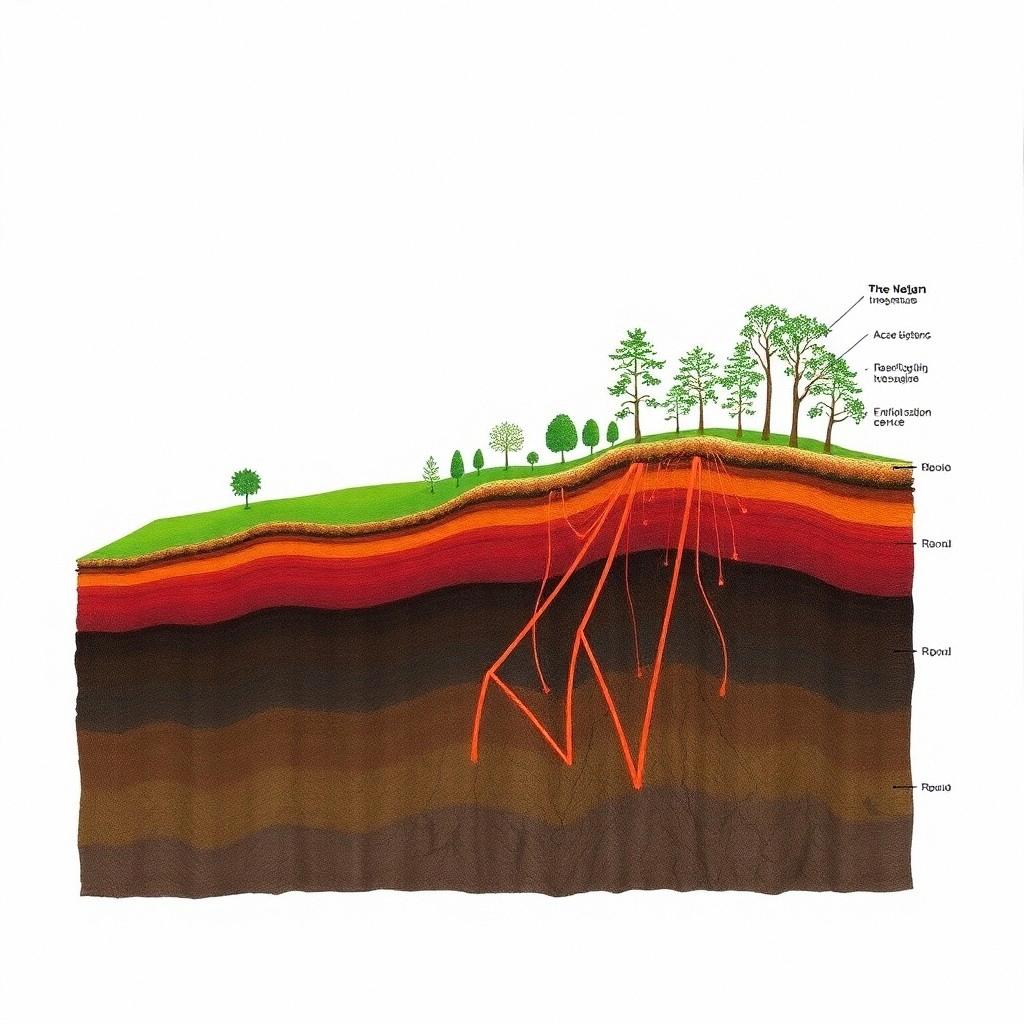
    Author Review: Charles Gauthier Science Art

     Science Movie


    Make a narrated HD Science movie for this answer ($32 per minute)


     Discussion


    Get Ahead With Science Insights

    Custom summaries of the latest cutting edge Science research. Every Friday. No Ads.


    My BGPT