Why BGPT?
logo

Author‑focused paper audits

Trace an author's published raw data, reproducibility notes, and citation‑backed summaries.


Press Enter ↡ to solve


    Fuel Your Discoveries


     Quick Explanation


    Bence DΓ‘niel β€” scientific strength (skeptical, evidence-weighted)
    • Track record clusters around transcriptional/epigenetic regulation in immune cell fate and exhaustion, consistent with mechanistic work (e.g., BLIMP1 memory-fate restriction in CD8 T cells; epigenomic landscapes underlying tissue-specific memory differentiation). (Nature Immunology, 2022)
    • Demonstrated work spans chromatin remodeling and genome integrity pathways (e.g., CRISPR screens for exhaustion persistence determinants; extrachromosomal vs chromosomal DNA repair pathways). (Cancer Cell, 2022)
    • However, a rigorous author-level assessment is limited here because only partial bibliographic metadata (titles/DOIs/citation metadata) were providedβ€”full-text raw-data extraction is not available in the prompt you gave me.


     Long Explanation


    Author Review: Bence DΓ‘niel (Bence Daniel)
    Science-focused, evidence-weighted, skeptical assessment using only information explicitly present in your prompt.
    What I can & cannot conclude from the provided material
    • Known (supported by provided metadata/DOIs): the author’s cited works include immune-cell transcriptional/epigenetic regulation themes (e.g., T cell exhaustion trajectories and genome/chromatin determinants).
    • Not established here: which specific experiments the author personally performed/led, the magnitude of effect sizes, replication performance, blinding/randomization details, or raw-data availabilityβ€”those require the full papers’ methods/results sections (or BGPT raw full-text extraction), which are not present in your prompt.
    • Risk of overreach: author-level rigor/quality cannot be inferred solely from topic/title or venue; it requires scrutiny of experimental design, controls, reproducibility, and transparent reporting.
    Evidence map (from the DOIs/titles you provided)
    These are the explicitly listed, DOI-identifiable works in your prompt that I use as anchor points for the author-review narrative.
    Work (year) Core mechanistic theme (from title only) Why it matters for author-quality inference
    Divergent clonal differentiation trajectories of T cell exhaustion (2022) Clonal trajectories during T cell exhaustion Supports mechanistic lineage-resolution immunology; implies use of sophisticated models/quantification, but does not prove rigor without methods/raw data.
    Genome-wide CRISPR screens of T cell exhaustion identify chromatin remodeling factors that limit T cell persistence (2022) CRISPR screens + chromatin remodeling determinants Genome-wide screening (if well executed) tends to require careful library design, controls, and validationβ€”strong domain for rigor, but again unverified here.
    Topic concentration visualization (title-level, not results-level)
    Note: This bar chart only counts the explicitly DOI-identifiable works present in your prompt; it is not a measure of overall publication distribution, impact, or quality.
    Critical evaluation rubric (how I judge author scientific strength)
    1) Experimental design & falsifiability
    • What I can check from your prompt: only that some works are genome-wide or mechanistically focused (from titles).
    • What I cannot verify here: whether key claims are supported by orthogonal validation (secondary assays, genetic rescue, independent perturbations), whether appropriate negative controls exist, and whether confounders were controlled.
    2) Reproducibility & transparency
    • To evaluate rigor, I would need raw figures/tables and methods specifics (sample sizes, replicates, statistical tests, preregistration if any, sequencing pipeline details for CRISPR screens, and how hits were thresholded). None of that is included in your prompt.
    • Because your prompt provides only bibliographic anchors, confidence is necessarily limited.
    3) Domain fit (biological coherence)
    • The provided DOI-identifiable works fall within immunology/immune-cell state regulation and exhaustion, which is coherent for an author with mechanistic immunology focus.
    Blind spots & where conclusions could fail
    • Attribution ambiguity: many immunology papers are large-team efforts; without contribution statements, I cannot infer whether the author led key experiments vs contributed conceptual/analysis components.
    • Title β‰  evidence: titles hint at methods, but cannot guarantee statistical rigor, adequate controls, or reproducibility quality.
    • Selection bias from provided prompt: you provided only a small subset of works; author strength can look higher/lower depending on which subset is sampled.
    Most defensible conclusion (with explicit uncertainty)
    Based only on the explicitly DOI-identifiable works in your prompt, Bence DΓ‘niel appears to have contributed to mechanistically oriented immune cell state research that includes trajectory-level analysis in T cell exhaustion and genome-wide CRISPR screening linked to chromatin remodeling. Confidence: moderate for thematic fit, low-to-moderate for author-level rigor because the prompt does not include methods/results/raw data.
    Next BGPT queries you can run (to verify rigor with raw-text evidence)


    Feedback:   

    Updated: April 22, 2026

    BGPT Author Review


    Scientific Quality

    60%

    The author’s provided DOI-identifiable works suggest mechanistic immunology strength (trajectory-level T cell exhaustion and genome-wide CRISPR linked to chromatin remodeling). However, author-level rigor cannot be verified from titles/metadata alone; without full methods/raw-data, key quality signals (controls, replication, effect sizes, statistical rigor, reproducibility) remain unknown. Citation metrics provided elsewhere are not fully trusted for author-specific attribution given name-ambiguity risk.


    Communication Quality

    60%

    Communication quality is not directly assessable from the prompt because no abstracts, figures, or writing excerpts are included. The ability to publish in mechanistic, methods-heavy venues suggests competent scientific communication, but this remains an inference.


    Author Novelty

    50%

    The work themes imply ongoing mechanistic refinement rather than clearly novel platform breakthroughs from titles alone. Without reading the papers’ claims and positioning, novelty magnitude cannot be evaluated confidently.


    Scientific Rigor

    50%

    Rigor is plausible given genome-wide approaches and mechanistic immune-state analyses, but rigorous assessment is impossible without access to experimental design details, validation strategy, and reproducibility evidence.

     Analysis Wizard


    No bioinformatics command is directly applicable because the query here is author-level scientific critique, not sequence/genome analysis.


     Hypothesis Graveyard


    A simple β€œone-master-factor” model for exhaustion where a single chromatin remodeler uniformly determines all trajectory outcomesβ€”unlikely because exhaustion is often heterogeneous across clones/states (trajectory divergence is explicitly implicated by the provided title).


    β€œExhaustion trajectory differences are purely stochastic noise.” While stochasticity exists, genome-wide screens implying chromatin determinants suggest non-stochastic regulatory structureβ€”yet causality must be validated experimentally.

     Science Art


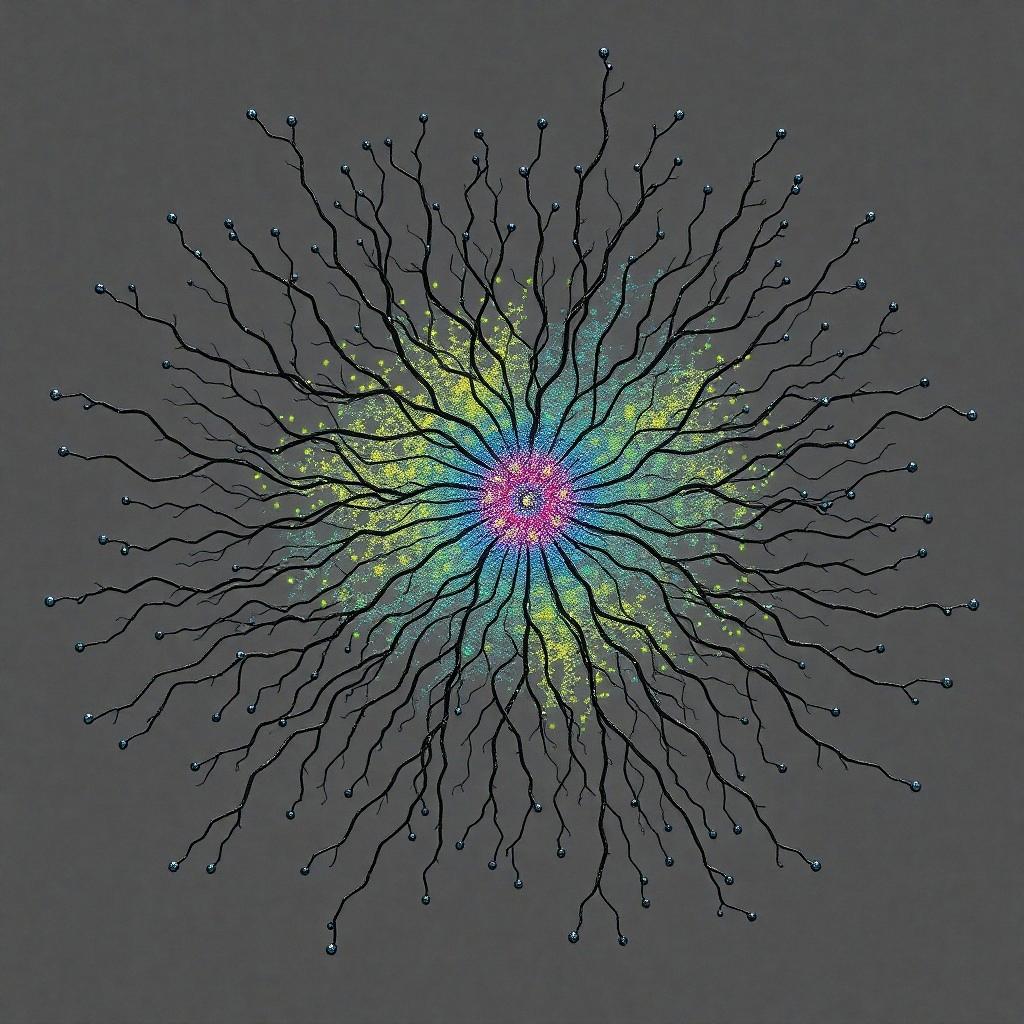
    Author Review: Bence Daniel Science Art

     Science Movie


    Make a narrated HD Science movie for this answer ($32 per minute)


     Discussion


    Get Ahead With Science Insights

    Custom summaries of the latest cutting edge Science research. Every Friday. No Ads.


    My BGPT