Examine the evidence base and provenance of specific claims made by authors or groups.Know what the science actually supports before you trust the answer.
Press Enter ↵ to review
Explore by Goal
"The greatest challenge to any thinker is stating the problem in a way that will allow a solution."
- Bertrand Russell
Quick Explanation
Copied
Barbara Treutlein is a leading single-cell genomics and organoid researcher (OpenAlex: h-index 52, 206 works, 13,731 citations), whose groups pioneered cerebral organoid atlases, cross-species brain development comparisons, and pancreatic cancer tumoroid platforms, with consistently high-rated (9/10) rigorous, open-data studies.
Long Explanation
Evidence base and career trajectory. Barbara Treutlein (ORCID 0000-0002-3299-5597) has 206 indexed works, 13,731 citations, and an h-index of 52 per OpenAlex . Her most cited first-author work, reconstructing distal lung epithelium lineages by scRNA-seq, has 1,342 citations . A note on citation-data uncertainty: a smaller Semantic Scholar-style record reports h-index 8 across 11 papers, a severe undercount relative to OpenAlex, so metric-based conclusions here lean on the more complete OpenAlex profile .
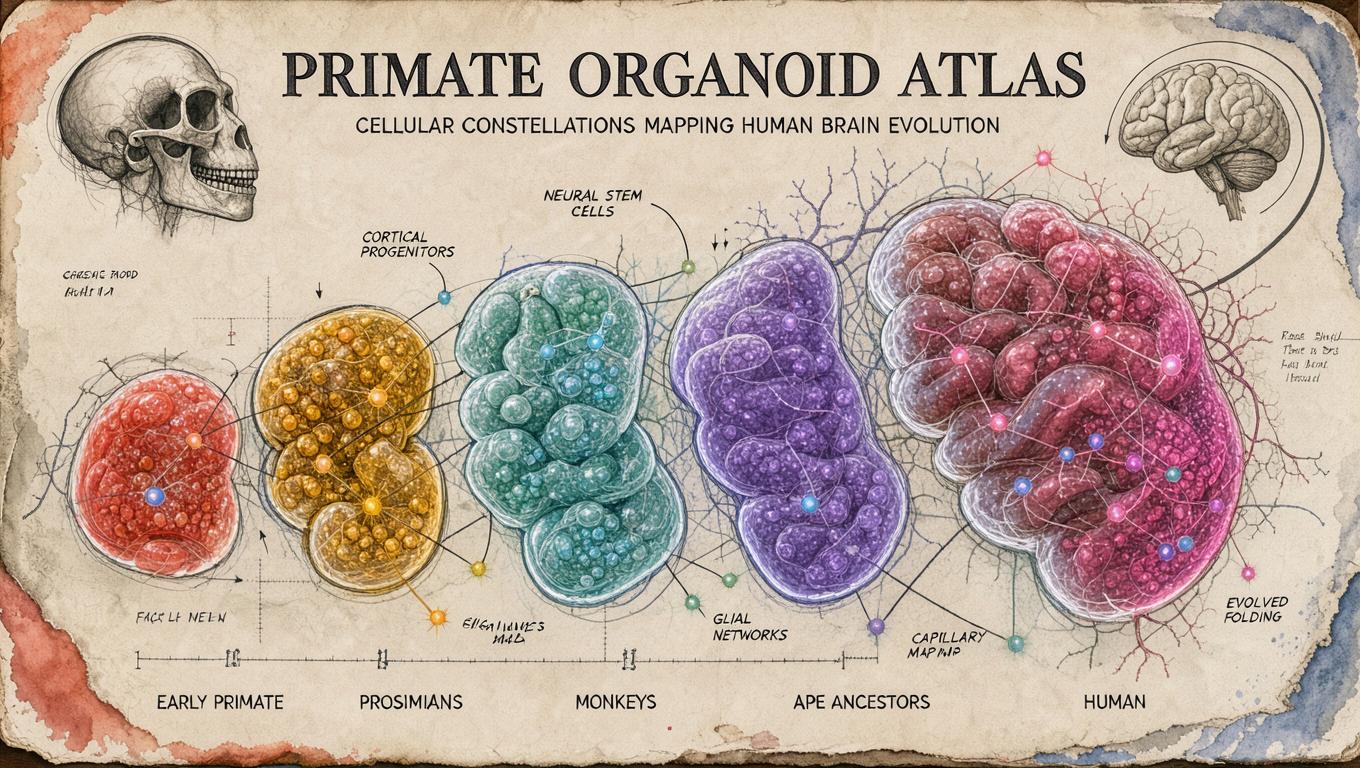
Sustained high-quality, high-novelty output. Recent flagship work includes multiplexed scRNA-seq screens of 100,538 cells across 97 morphogen conditions plus 209,902 cells in a reproducibility set, mapping how SHH, WNT, FGF8, RA, and BMPs pattern human neural organoids, with explicit line- and induction-method dependencies reported . Her 2019 Nature organoid atlas profiled ~130,000 organoid cells and ~134,000 adult snRNA-seq nuclei across human, chimp, bonobo, macaque, and orangutan, identifying delayed human cortical maturation and 62 HAR-overlapping differentially accessible peaks . Translational work includes an integrated PDAC atlas (200 samples, ~673,000 cells) plus tumoroid co-cultures identifying SDC1 blockade as a therapeutic avenue . Early career biophysics work on RNAP II open-complex dynamics demonstrates breadth beyond genomics.
Critical assessment and blind spots. Strengths: methodological rigor (multiplexing, integration benchmarking, robustness subsampling), open data/code (ArrayExpress, Zenodo, GitHub), and self-reported limitations including organoid culture bias, cross-species mapping bias, and limited bonobo/orangutan samples. Caveats: the PDAC preprint involves Roche-affiliated employees (declared, no additional influence claimed); organoid generalization to in vivo development remains inferential; 2026 paper record for SALL1/microglia work is unextracted, so quality there cannot be assessed. Data quality is high and reproducibility infrastructure strong; the main uncertainty is field-wide organoid-to-organism extrapolation.
Feedback:
Updated: November 01, 2026
BGPT Author Review
Scientific Quality
90%
Communication Quality
80%
Papers include explicit limitations, data accessions, and browser tools (scApeX, UCSC Cell Browser), aiding accessibility. Dense multi-modal papers are technically demanding for lay readers; clear but not simplified.
Author Novelty
90%
Pioneered cross-species primate organoid atlases, systematic organoid morphogen screens, and stroma-rich tumoroid platforms—each a field-defining methodological contribution rather than incremental work.
Scientific Rigor
90%
High rigor: robustness subsampling, multiplexing controls, integration benchmarking, explicit falsification pathways, and comprehensive data deposition. Residual risks are mapping biases in cross-species analysis and non-patient-matched CAFs in tumoroids, which are self-reported.
We'll email you the results when your analysis is finished.
Hypothesis Graveyard
Organoid cell-type composition is mainly protocol-determined: the 2025 morphogen screens show hPSC line identity and induction method dominate outcomes, falsifying protocol-centric assumptions.
Tumoroid systems capture the full PDAC microenvironment: the PDAC study itself lacks immune components, limiting this claim.

 Explore by Goal
 Quick Explanation
 Long Explanation
 Top Data Sources
 Ask a Follow-Up
 Key Insight
 Keep Exploring
 Hypothesis Graveyard
 Potential Experiments
 Discussion
