Examine the evidence base and provenance of specific claims made by authors or groups.Know what the science actually supports before you trust the answer.
Press Enter ↵ to review
Explore by Goal
"Biology gives you a brain. Life turns it into a mind."
- Jeffrey Eugenides
Quick Explanation
Copied
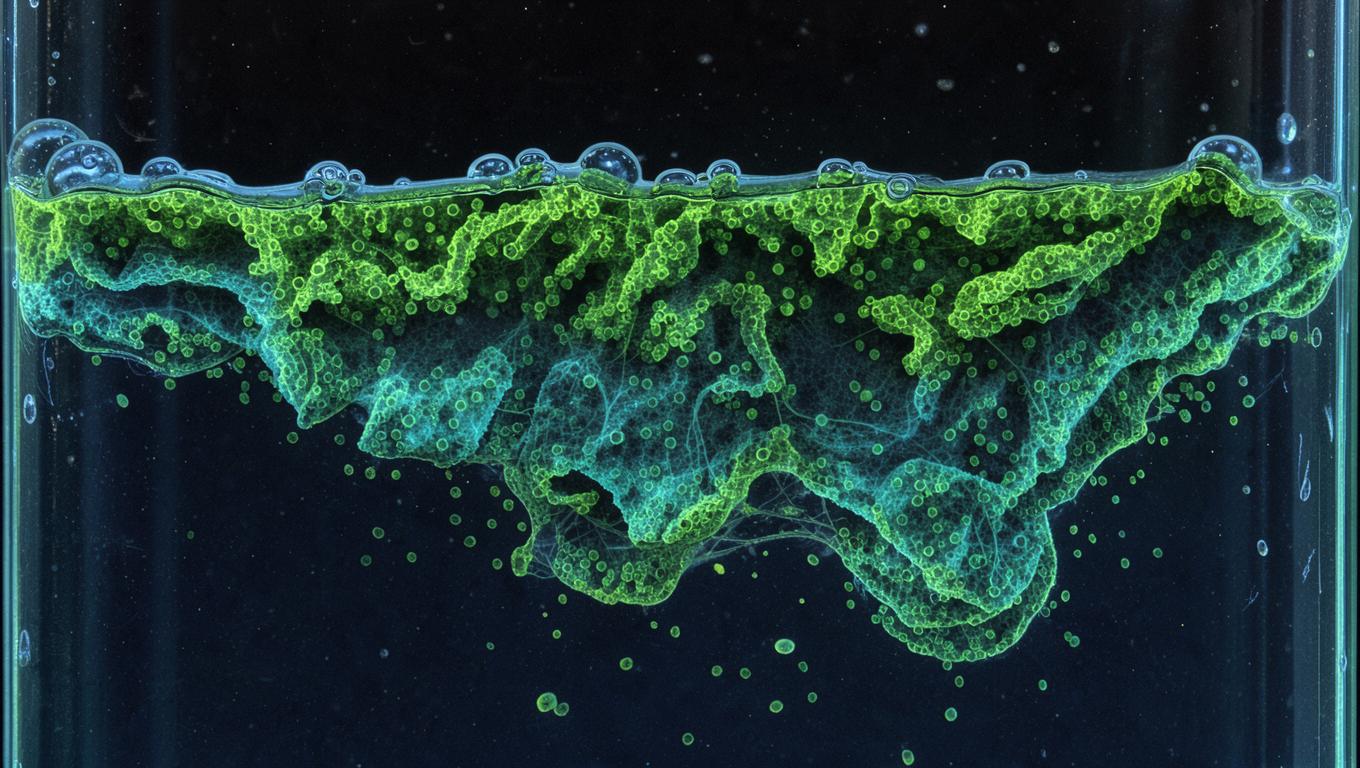
Andrew J. Spiers is a mature experimental-evolution microbiologist (h-index 29-31, ~5,159-6,191 citations across 96-101 works) best known for the Pseudomonas fluorescens SBW25 Wrinkly Spreader system and the cellulosic air-liquid interface biofilm, with co-authorship on landmark papers in antagonistic coevolution and plasmid evolution .
Long Explanation
Career Metrics and Trajectory
Spiers' bibliometric profile is solid for an experimental-microbiology group leader: OpenAlex records 101 works, 6,191 citations, and h-index 31, while Semantic Scholar-style records report h-index 29 and 5,159 citations across 96 papers. Citation flow is strong and sustained: annual citation counts from 2012-2026 remain in the 188-403 range, indicating durable, ongoing influence rather than a single spike . His top work, the MIGS genome-data standard, alone accounts for 1,148 citations.
Scientific Contribution and Rigor
Spiers' core strength is mechanistic experimental evolution: as first author he defined the genetic and phenotypic basis of Wrinkly Spreader fitness , and established that acetylated cellulose underpins air-liquid interface biofilm formation. Recent work extends this with quantitative multi-strain phenotyping (eight strains with AHL-lactonase activity of 48-129 mm² inhibition zones, swimming 24.3-36.8 mm/24h) in quorum-quenching biocontrol against Vibrio parahaemolyticus EMS, with sequences deposited at GenBank (ON197135-ON197138) . A notable caveat in that 2023 work is that 16S-based species identifications are tentative (one strain tentatively called B. anthracis, which is unlikely and requires confirmation) — an honest but visible rigor lapse. He also engages pedagogy (school evolution demonstrations) and contributed to the aspartame safety review, which carries declared NutraSweet Company author affiliations .
Blindspots and Confidence
Recurring limitations across his portfolio: small replicate numbers (n = 3-5 in microcosm fitness assays, with p = 0.0547 for the key static-vs-shaken fitness contrast ), in vitro microcosms that may not translate to field conditions, and reliance on colony morphology for phenotype identification. The 2011 teaching paper shows an unusual fitness comparison: shaken microcosm populations grew from ~10^4 to ~5×10^10 cfu in 5 days while static final counts were not explicitly stated — a reporting gap. The high citation counts partly reflect consortium/standard papers (MIGS) and group co-authorships (Nature coevolution, Current Biology plasmid work), so per-paper leadership should be assessed selectively. Overall: a rigorous, mechanistically grounded, well-cited specialist with a coherent niche in biofilm eco-evolution, modest translational reach, and honest but occasionally under-powered quantitative reporting.
Feedback:
Updated: October 31, 2026
BGPT Author Review
Scientific Quality
80%
Spiers demonstrates deep mechanistic expertise in experimental evolution and biofilm biology, with first-author work on WS fitness genetics, a 434-citation cellulose-biofilm paper, and co-authorship on a 547-citation Nature coevolution paper. Career h-index 29-31 across ~100 works is solid, and he sustains 250-400 citations/year through 2026. Weaknesses: heavy reliance on one model system (SBW25), tentative 16S identifications in the 2023 bacilli work, tentative/lapsed reporting (static microcosm final counts unreported), and citation inflation from consortium papers. A mature, credible, non-novelty-seeking but solidly expert scientist.
Communication Quality
80%
Communication is a genuine strength: the 2011 Journal of Biological Education paper explicitly designs evolution demonstrations for schools with precise protocols (dilution series, fitness equations, plating volumes), showing ability to make complex eco-evo concepts teachable. Reviews and research papers are structured and quantitative. Deduction for occasional reporting gaps (missing static-microcosm counts, ambiguous qualitative biofilm phenotype codes in the 2023 EMS paper).
Author Novelty
70%
Within experimental evolution, Spiers contributed genuinely novel mechanistic insight — identifying acetylated cellulose as the niche-construction basis for air-liquid biofilms and elaborating WspR/c-di-GMP regulation — pioneering the Wrinkly Spreader as a teaching and research model. However, most later work (EMS biocontrol screening, Raman profiling, biosurfactant surveys) is incremental extension within his established framework rather than new conceptual ground.
Scientific Rigor
70%
Rigor is generally good: explicit fitness calculations, sequence deposits, replicate design, and diverse quantitative phenotyping (surface tension, MATH, biofilm strength). Weaknesses: fitness assays with only n = 3 replicates yielding p = 0.0547 (statistically marginal but presented as a difference), tentative 16S-based species IDs (including an implausible B. anthracis call), unreported static-microcosm final counts, and reliance on colony morphology. In the aspartame review he participates in an industry-affiliated synthesis with acknowledged sponsorship bias.
We'll email you the results when your analysis is finished.
Hypothesis Graveyard
That WS fitness advantage generalizes to shaken conditions — falsified by measured W = 0.98 ± 0.03 in shaken microcosms, showing niche-dependence, not intrinsic superiority.
That 16S rDNA alone reliably identifies Bacillus isolates for biocontrol deployment — undermined by the implausible tentative S1 = B. anthracis identification requiring independent confirmation.

 Explore by Goal
 Quick Explanation
 Long Explanation
 Top Data Sources
 Ask a Follow-Up
 Key Insight
 Keep Exploring
 Hypothesis Graveyard
 Potential Experiments
 Discussion
